Wash Repair Guide: Step-by-Step Washer Fixes for Homeowners
Learn how to diagnose and repair common washing machine problems with our comprehensive, step-by-step wash repair guide. Practical tools, safety tips, and maintenance insights.


You will learn how to diagnose and repair common washing machine issues with a safe, step-by-step approach. This quick guide highlights essential tools, safety checks, and practical fixes you can perform at home. By following these steps, you’ll save time and keep your washer running smoothly. This guide is designed for homeowners and renters.
How a washing machine works
A typical washing machine contains several core components: a drum (the tub that holds clothes), a drive system (belt-driven or direct-drive motor), an inlet valve for water intake, a pump and drain hose for wastewater, a control board, and a lid or door switch that signals when the cycle can start. Understanding how these parts interact explains many wash repair scenarios. For example, if the drum won't spin, the issue could be a worn belt or a faulty lid switch rather than a motor failure.
According to Home Repair Guide, knowing these parts helps narrow failures quickly, especially for DIYers tackling wash repair at home. Start with the simplest explanation: is the machine getting power? Is the water supply open? Is the lid switch triggering correctly? These checks require only basic tools and can save you from unnecessary disassembly.
Next, familiarize yourself with a typical cycle: fill to the correct level, agitate or tumble, drain, rinse, and spin dry. Modern washers often monitor sensors and display error codes when something is off. Having a mental map of these stages helps you interpret symptoms and plan safe, efficient diagnostics.
Common failure signs and quick triage
Washing machines communicate problems through noises, leaks, and error codes. Common signs include: the machine not starting at all; failure to fill with water or to drain; the drum not rotating during the wash cycle; loud grinding or banging during agitation; visible leaks around hoses or the pump; and frequent error codes displayed by the digital panel. When you notice these symptoms, start with basic safety: unplug the unit, shut off the water supply, and locate the cause of the failure with a simple checklist.
Based on Home Repair Guide research, many issues stem from clogged inlet filters, worn belts, faulty lid switches, or a blocked drain pump. A quick triage approach is to confirm power, inspect the lid switch, verify water supply is uninterrupted, and check the drain pump for obstructions. If the unit still misbehaves after these checks, move to a more thorough diagnostic flow.
Safe, essential tools and prep
Before you begin, clear the area, remove pets, and ensure kids are away. Gather basic tools and protective gear. A user-friendly set includes a flathead and Phillips screwdriver, a nut driver, pliers, an adjustable wrench, a multimeter, a flashlight, towels, and a bucket. If you have an older machine, a panel removal tool may help avoid damaging outer panels. Lay a protective mat to catch spills and plan a dedicated workspace for small parts so nothing gets misplaced.
Diagnostic flow: inlet, fill, agitation, drain
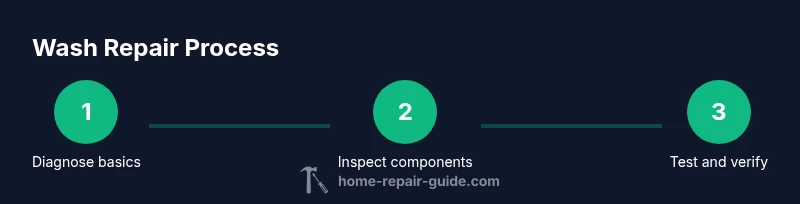
Adopt a system-based approach to isolate the problem. Start with the inlet and fill: verify water is reaching the valve and that filters are clear. Move to agitation: inspect the drive belt (if present), motor, and transmission for wear or failure. Then check the drain: examine the pump, hoses, and drain line for blockages, cracks, or kinks. Finally, test the spin and control logic to ensure the sequence proceeds correctly. This structured flow helps you avoid unnecessary disassembly and focuses your effort where it matters. Based on Home Repair Guide analysis, starting with the inlet and fill helps catch leaks early and prevents batch disassembly.
DIY fixes you can safely perform
Not every washer repair requires a pro. Some fixes are well within a confident DIY skill set. Begin with non-invasive tasks: clean or replace the lint/inlet filter, tighten loose hoses, and remove visible lint or debris from the pump area. If the belt is worn on a belt-driven model, replace it following the manufacturer’s instructions. Check hoses for cracks or bulges and replace if needed. When resealing connections, use the appropriate clamp size and avoid overtightening. Always test on a short cycle to verify proper operation before loading a full laundry load.
When to call a professional and budget considerations
If the repair requires exposed electrical components, refrigerant-like systems, or high-pressure water work, professional service is the safer option. The Home Repair Guide team recommends evaluating repair costs against the price of a new unit, energy efficiency gains, and potential reliability improvements. If a single fix would be repeatable or if multiple issues recur within a short period, replacement may be the more economical choice in the long run.
Maintenance to prevent future wash repairs
Preventive care goes a long way to extend the life of your washer. Regularly clean the lint/filters, check and replace worn hoses, and perform a simple every-six-month inspection of the drain pump area for clogs. Keep the area around the washer dry to prevent rust and mold, and follow the manufacturer’s maintenance schedule. High-use households may benefit from a quarterly quick-check routine to catch small problems before they escalate, saving time and money in the long term. The Home Repair Guide team recommends establishing a simple maintenance log to track parts life and service dates.
Tools & Materials
- Flathead screwdriver(For panel/screw access on older models)
- Phillips screwdriver(General assembly and disassembly)
- Nut driver set(Remove hose clamps and fasteners)
- Pliers (slip-joint)(Grip hoses and small parts)
- Adjustable wrench(Loosen fittings and hoses)
- Multimeter(Test electrical continuity safely)
- Flashlight(Inspect dark areas and behind parts)
- Bucket(Catch residual water)
- Towels or rags(Clean up spills and dry surfaces)
- Gloves(Protect hands from sharp edges)
- Panel removal tool (optional)(Prevent panel damage on some models)
- Replacement hoses and clamps (optional)(For worn or cracked hoses)
- Owner's manual or model-specific guide (optional)(Identify specific steps for your model)
Steps
Estimated time: 60-90 minutes
- 1
Power down and disconnect
Unplug the washer from the wall outlet and, if feasible, shut off the domestic hot and cold water supplies. This prevents electrical shocks and water leaks while you inspect components. Take note of where power cords and hoses connect so reassembly is straightforward.
Tip: Label or photograph connections before disconnecting to simplify reassembly. - 2
Check lid switch and door seal
With the unit unplugged, locate the lid switch (or door switch) and verify it engages when the lid is closed. A faulty switch is a common reason for a washer not starting. If accessible, test continuity with a multimeter.
Tip: If the switch feels loose or wobbly, replace it to restore reliable start detection. - 3
Inspect water inlet and hoses
Look for kinks, leaks, or blockages in the inlet hoses. Confirm the water supply is on and the inlet valve is receiving power. Clear any mineral buildup in the valve screen carefully to restore proper water flow.
Tip: Do not run hot water through lines if the screen or filter appears damaged; replace components as needed. - 4
Examine drive belt and motor (belt-driven models)
If your washer uses a belt, inspect the belt for wear, cracks, or slack. A loose or worn belt can stop the drum from turning. Replace with the correct belt size for your model and recheck tension after reinstalling.
Tip: Take a photo of belt routing before removal to ensure correct placement. - 5
Check the drain pump and drain hose
Inspect the drain pump for debris and ensure the drain hose is clear and properly connected. A clogged pump or kinked hose can prevent draining and cause reset or spin failures. After clearing obstructions, run a short test cycle to observe drainage.
Tip: Use a flashlight to look for hair, lint, or coins that silently block the impeller.
FAQ
What are the most common causes of a washing machine not spinning?
Common culprits include a faulty lid switch, worn drive belt (on belt-driven machines), a failed motor, or a malfunctioning control board. Start by testing the lid switch and belt before stepping into deeper diagnostics.
Most not-spinning issues come from the lid switch, a worn belt, or motor/control problems. Start with the switch and belt checks.
Is it safe to repair a washer by yourself?
Basic maintenance and non-electrical tasks are generally safe if you unplug the unit and shut water off first. For corded electrical work or high-pressure components, consider calling a professional.
DIY is fine for simple tasks if you unplug first; for complex electrical work, call a pro.
Should I drain the water before inspecting a washer?
Yes. Drain the water to avoid spills and potential burns. Use towels and a bucket to manage residual water before opening panels.
Yes, drain first and keep towels handy.
How do I reset error codes on a washer?
Most models reset by unplugging for a minute or following model-specific reset steps in the manual. Check the control panel for an error code glossary.
Unplug for a minute or follow your model's reset steps.
When should I replace rather than repair a washer?
If repairs are frequent, costly, or the unit is energy-inefficient, replacement may be more economical in the long run.
If repairs keep recurring or the unit is old and inefficient, replacement may be best.
Watch Video
Key Takeaways
- Identify root causes with a system-oriented approach
- Prioritize safety by power and water isolation
- Document steps to simplify reassembly
- Regular maintenance reduces future wash repairs