Repair stoves near me: a practical, trusted repair guide
Find trusted stove repair near you. Learn to evaluate technicians, compare quotes, and ensure safe, durable fixes for gas and electric stoves.


Repair stoves near me is a search for local, licensed technicians who can diagnose ignition, gas safety, and burner issues quickly and safely. This quick answer points homeowners to practical steps for vetting pros, obtaining clear quotes, and understanding what a durable stove repair should cover. According to Home Repair Guide, prioritize safety, warranties, and transparent communication when choosing a service.
Local stove repair landscape
The search phrase repair stoves near me reflects a homeowner need for quick, reliable local help. In practice, you’ll encounter three main types of providers: independent technicians who specialize in appliances; dealer service centers affiliated with a stove brand; and national or regional repair chains. Each option has strengths and tradeoffs. Independent pros often offer flexible scheduling and personalized service, but may lack formal warranties. Dealer centers provide model-specific expertise and access to genuine parts, yet can be pricier. Chains deliver consistent processes and clearer guarantees, yet technician quality can vary. When evaluating options, consider proximity, response times, and the provider’s experience with your stove type (gas, electric, or dual-fuel). A local pro who carries appropriate insurance and can produce verifiable references helps reduce risk. Also, confirm they follow safety practices for gas lines, venting, and electrical connections. Local availability matters: closer technicians can coordinate same-day or next-day service, reducing downtime and the chance of recurrent malfunctions. Community referrals from neighbors, friends, or online reviews provide practical insight beyond glossy marketing.
How to pick a trained stove repair pro
Choosing the right stove repair professional requires a structured approach. Start by confirming licensure or certification specific to your locale, and verify current insurance coverage and a valid business address. Ask for references and reach out to past customers about reliability and responsiveness. Request written, itemized estimates that detail diagnostic fees, labor, parts, and any potential surcharges. Clarify whether the price includes a warranty on both parts and labor, and which parts are OEM versus aftermarket. A good technician will perform a careful diagnostic before quoting, explain the root cause in plain terms, and present a few repair options with pros and cons. Compare quotes from at least two providers to ensure you’re not paying for unnecessary extras. Transparency about part sourcing, expected downtime, and contingency plans if a repair doesn’t solve the issue is essential. Home Repair Guide emphasizes that the best choice balances cost, reliability, and the technician’s ability to communicate clearly about the work.
Gas vs electric stove repair: key differences
Gas and electric stoves require different skill sets and safety considerations. Gas stoves demand leak testing, proper venting, and gas line integrity checks, making licensing and gas-safety knowledge critical. Electric stoves may involve heating element coils, control boards, and wiring that require electrical safety standards and up-to-date training. When hiring, ensure the technician has current credentials for the specific fuel type and stove model you own. If a technician cannot clearly explain the diagnostic steps or cannot demonstrate familiarity with your model, keep looking. Gas models, in particular, benefit from a provider who can perform a thorough gas safety inspection and verify that shutoff valves and regulators function correctly. A clear written plan that covers both safety and long-term reliability should accompany every gas or electric repair. Home Repair Guide notes that model-specific expertise frequently correlates with higher repair success and longer-lasting results.
The diagnostic process when you call a tech
A competent stove technician begins with an intake that captures model details, symptoms, and recent changes. They will ask to verify the stove type (gas or electric), model number, and any error codes. On-site diagnostics typically include a visual inspection, component testing (igniters, coils, sensors, safety switches), and an assessment of electrical connections or gas lines. Parts that fail are identified, but a good tech will also consider whether the issue is caused by wear, improper use, or unsafe conditions. Expect a written diagnostic report that outlines the root cause, recommended repairs, and a transparent cost estimate. If multiple issues are found, the technician should prioritize safe, immediate fixes (such as faulty igniters or gas leaks) before addressing less critical problems. A reputable company will offer a warranty on the diagnosis itself, in addition to the repair work.
Safety, permits, and warranties you should expect
Stove repairs frequently involve safety-critical systems. For gas models, professionals should verify gas line integrity, regulator function, and venting while adhering to local codes. Electric models require safe handling of high-voltage components and correct wiring practices. Depending on your jurisdiction, some repairs—even minor ones—may require a permit or inspection. Always ask about permit requirements and whether the technician handles permit submission. Warranties are a crucial part of any repair: confirm the length and scope of coverage for both parts and labor, and clarify what happens if a repair fails within the warranty period. A trustworthy technician will provide written warranties and explain exclusions (for example, wear or pre-existing issues).
Cost considerations and budgeting tips
Budgeting for stove repair involves more than the quoted labor price. It’s wise to ask for a full written estimate that breaks out diagnostic fees, labor hours, and part costs, including potential disposal or delivery charges. Be wary of unusually low estimates that suggest cutting corners on parts or warranties. If your stove is older, discuss whether replacement parts are still readily available and whether a repair offers meaningful longevity relative to replacement. Some providers offer tiered pricing with options for OEM parts versus aftermarket equivalents and different warranty lengths. Remember that the cheapest repair up front may lead to higher total costs if it fails sooner. Home Repair Guide recommends weighing long-term value and safety over immediate savings, especially for gas appliances.
DIY checks you can do safely
Homeowners can perform a few non-destructive checks to better communicate with a technician. Ensure the stove is unplugged during any inspection of electrical components and that gas valves are fully off before any gas-related checks. Clean the area around knobs, ignition ports, and burners so the technician can identify real issues rather than dirt or debris. If your stove has a visible error code, document it with photos to share with the technician. Do not attempt to disassemble control boards or gas lines yourself; such actions require professional training and can void warranties. Use these safe, simple checks to improve diagnostic accuracy and shorten service time.
Maintenance habits to extend stove life
Establish a regular maintenance routine to prolong stove life and prevent recurring problems. Clean burners and igniters regularly to prevent clogs. Wipe the cooktop and control surfaces to reduce wear on electronics. Inspect venting paths for obstructions in gas models and keep the area around the appliance free of combustible materials. For electric models, ensure proper clearance around the unit to avoid overheating. Schedule periodic professional checkups, especially after a major event like a power outage, gas odor, or a failure in ignition. A proactive maintenance habit not only reduces the need for emergency repairs but also improves safety and energy efficiency. Home Repair Guide suggests documenting each service date and parts used to track performance over time.
Stove repair service benchmarks
| Aspect | Details | Notes |
|---|---|---|
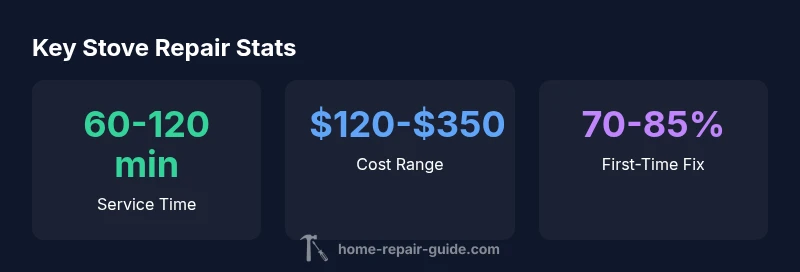
| Typical service time | 60-120 minutes | Varies by model and issue |
| Common issues addressed | Ignition/burner faults; coil replacements; gas safety checks | Gas vs electric differences |
| Warranty duration | 90 days–1 year | Provider dependent |
| In-home vs remote diagnosis | On-site usually required | Remote triage only if allowed |
FAQ
How do I verify a stove repair technician is licensed?
Check your state or provincial licensing requirements and confirm current status with the issuing agency. Ask for a copy of the tech's license and proof of insurance, then verify those details online or with the issuer. Request references and contact them to assess reliability and workmanship.
Check license and insurance, then verify with the issuing agency and call references to confirm reliability.
What should I expect during a stove repair appointment?
A technician will diagnose the issue, explain root causes in plain terms, and provide a written estimate with repair options. They should outline safety considerations, potential downtime, and warranty terms before starting work.
Expect a clear diagnosis, options with costs, and a written warranty before any work starts.
Gas stove repairs vs electric stove repairs: what's different?
Gas repairs emphasize leak testing, proper venting, and gas-line safety. Electric repairs focus on heating elements, control boards, and wiring safety. The appropriate technician should hold credentials for the fuel type and model you own.
Gas repairs involve safety checks for lines and venting; electric repairs focus on coils and control boards.
When is it better to replace rather than repair?
If the stove is old, repeatedly breaking down, or energy-inefficient, replacement may offer better long-term value. Compare repair costs plus future maintenance against a new unit with improved efficiency and warranty terms.
If it’s old or frequently breaking down, replacement can be wiser.
Are there safety checks I can perform before calling a tech?
Check for obvious gas odors away from flames, ensure the appliance is unplugged before handling, and keep the area clear of combustibles. Document any error codes or symptoms to share with the technician.
Look for gas odors, unplug the unit, and note any error codes before calling a pro.
How long should a typical stove repair take?
Most standard repairs are resolved within a few hours, but more complex issues can require a follow-up visit. The technician will provide a realistic timeline after the diagnostic phase.
Most repairs take a few hours; complex issues may need an additional visit.
“Durable stove repairs start with an accurate diagnosis and transparent, written communication about safety and warranty. A solid technician explains parts used and expected outcomes before any work begins.”
Key Takeaways
- Vet licensed technicians with clear quotes.
- Prioritize safety around gas and electrical systems.
- Ask about warranty and parts used.
- Get a written estimate before work begins.
- Choose local options for faster service.