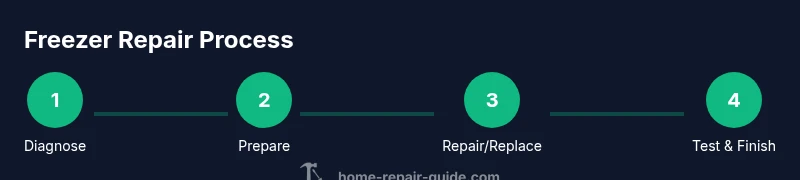
Repair freezer: A practical, step-by-step home guide
Learn how to diagnose, troubleshoot, and repair your freezer with safe, proven steps. This guide covers common issues, required tools, step-by-step fixes, maintenance tips, and when to call a professional. From frost buildup to thermostat problems, empower yourself to keep food safe and save money.


Goal: learn how to diagnose and fix common freezer issues safely at home. You’ll identify symptoms like frost buildup, unusual noises, water leaks, and warm compartments; confirm electrical and thermostat problems; and perform the repair using basic tools. This quick guide also flags safety precautions and tells you when to call a professional.
How a freezer works and why common problems occur
A freezer preserves perishable foods by removing heat and keeping a steady temperature, typically around 0°F (-18°C). When it stops performing, it’s usually because a sensor, door seal, condenser, or defrost system isn’t doing its job. Understanding the basics helps you diagnose problems without unnecessary fear. As you learn to repair freezer issues, you’ll gain confidence in identifying root causes rather than chasing symptoms. According to Home Repair Guide, many faults stem from simple, user-serviceable parts like a faulty door gasket or a blocked coil. Start with the most common culprits and progress methodically. Recognize that some issues require a professional, but many are addressable with just a few tools and good safety practices. This foundational knowledge keeps your food safer, saves energy, and reduces waste over time.
Quick check before you start
Before you touch anything, unplug the unit and pull it away from the wall to access coils, seals, and the back panel. Keep a flashlight handy and have a few towels ready for any condensation. If you smell burning or hear buzzing or sizzling, stop and seek professional help immediately. A clear plan and the right safety gear help you avoid electrical hazards and accidental damage to surrounding appliances.
Symptoms and probable causes: how to diagnose symptoms accurately
Frost on the inside walls, especially near the back, often points to defrost system trouble or door seal leaks. A consistently warm cabinet suggests thermostat or refrigerant-related issues, which may require parts testing with a multimeter. Leaking water at the bottom can indicate a blocked defrost drain or a damaged pan. Unusual noises could come from a failed fan motor or condenser coil debris. The key is to isolate whether the issue is cooling, sealing, or defrosting, then test each component with safe procedures.
Safety first: electrical hazards and protective steps
Electrical work carries risk, so always unplug the freezer before touching any wiring. If you must interact with electronic components, work on a dry surface and wear insulated gloves. Never operate the compressor directly without a plan, and avoid working with refrigerant or sharp edges. If you’re unsure about electrical wiring or codes in your area, step back and consult a professional. The goal is to prevent shocks, burns, and accidental equipment damage while you learn.
Inspecting key components you can safely test
Begin with accessible parts: door seals, light switch, fan (when accessible), and the condenser coils (usually under the unit). Clean coils gently with a soft brush; dust buildup reduces efficiency and can cause overheating. Use a multimeter to test the thermostat and defrost timer if you have one, following the device’s manual. If the freezer uses an adaptive defrost system, look for corrosion on the defrost heater. Always document readings and photos to track changes over time, which helps when you consult a professional.
Cleaning and maintenance to extend freezer life
Regular maintenance prevents many failures. Vacuum or brush away dust from coils annually, tighten loose screws, and ensure adequate clearance for airflow. Wipe the door gasket with a mild soap solution and check for cracks. Defrost as needed; if frost exceeds a quarter-inch, consider a manual defrost or replacing a faulty defrost heater. Clean, organized interiors reduce energy use and improve cooling efficiency, saving money and reducing waste.
When to repair vs replace: a practical decision guide
If testing reveals minor faults (sealed leakage, loose wiring, worn gasket) and replacement parts are affordable, repairing often makes sense. If the compressor is failing, refrigerant leaks are present, or energy use has spiked dramatically, replacement may be more economical in the long run. Consider the age of the unit, cost of parts, and labor, plus the impact on food safety. Home Repair Guide recommends weighing long-term reliability against upfront costs when deciding whether to repair or replace a freezer.
Quick home fixes you can perform today
For frost buildup, try a controlled defrost followed by coil cleaning; for door leaks, reseal or replace the gasket. For temperature swings, verify thermostat accuracy and door alignment. If noises originate from the fan or compressor, inspect for obstructions and test continuity with a multimeter. Document what you observe and test after each fix to confirm it resolved the issue. This proactive approach minimizes downtime and prolongs appliance life.
Preparing for professional service: what to tell a technician
If you call a technician, provide the model and serial number, recent maintenance steps, and a timeline of symptoms. Share any readings from your own tests, photos of coils and seals, and a brief history of previous repairs. Clear notes help the pro diagnose faster and reduce repeat visits. Having a checklist of symptoms, parts looked at, and work performed makes the service smoother and often cheaper.
Tools & Materials
- Screwdriver set (Phillips and flathead)(Include small and large flathead and Phillips bits)
- Multimeter(For testing thermostat, switches, and motors)
- Soft brush or microfiber cloth(For coil cleaning and wipe-downs)
- Vacuum with narrow nozzle(Helpful for deep coil cleaning)
- Replacement door gasket (if torn)(Choose the correct size and model)
- Thermostat (or thermostat probe kit)(Only if testing indicates replacement is needed)
- Defrost drain cleaner or funnel(Used if defrost drain is blocked)
- Gloves and safety glasses(Protect hands and eyes when handling parts)
- Bucket and towels(Contain spills during defrost or leaks)
- Digital thermometer or temperature strip(To verify internal temps for accuracy)
Steps
Estimated time: 60-120 minutes
- 1
Unplug and prepare the workspace
Power down the freezer and move it to a clear area. Remove any loose items from shelves and have towels ready for condensation or spills. Take a quick photo of wiring or labels before you disconnect anything to aid reassembly.
Tip: Label wires with masking tape to prevent mix-ups. - 2
Inspect the door gasket and seals
Close the door on a thin sheet of paper; if you can pull it out easily, the gasket may be worn. Clean the seal with mild soap and water, then dry completely before testing closure. A poor seal leads to frost buildup and ice wasting energy.
Tip: Replace a cracked or deformed gasket for a quick improvement. - 3
Check the condenser coils and airflow
Locate the coils (usually behind a grille or base panel). Vacuum or brush away dust. Poor airflow causes overheating and inefficient cooling; ensure 2-3 inches of clearance on all sides.
Tip: Always unplug before touching coils; avoid bending fins. - 4
Test thermostat and electrical components
Use a multimeter to verify the thermostat and switch continuity. If readings are out of spec, replace the faulty component. Document readings to compare after repairs.
Tip: If you’re unsure how to measure, consult the device’s service manual. - 5
Defrost and drain check
If frost buildup blocks airflow, perform a controlled defrost: unplug, allow thawing, and clean the defrost drain. Ensure the drain pan is positioned correctly to prevent water leakage.
Tip: Block ice quickly with a hairdryer on a low setting if needed, but keep it away from electrical parts. - 6
Reassemble and test operation
Reconnect power, return shelves, and monitor the temperature for 24–48 hours. Record readings and watch for new frost or leaks. If issues persist, move to more advanced testing or replacement.
Tip: Set a target freezer temperature and verify within 1–2 degrees of goal. - 7
Decision point: repair vs replace
Assess the age of the freezer and the cost of parts versus replacement. If the unit is old and energy-inefficient, replacement may be more economical in the long run.
Tip: Consult Home Repair Guide’s long-term budgeting tips for appliance upgrades.
FAQ
What are the most common freezer problems homeowners face?
Frost buildup, warm compartments, door leaks, and unusual noises are among the most frequent signs. Most issues stem from doors seals, defrost systems, or thermostat malfunctions. Start with seals and coils, then test the thermostat if symptoms persist.
Common freezer problems are frost buildup, warmth inside the cabinet, door leaks, and odd noises. Start with seals and coils, then test the thermostat.
Can I repair a freezer myself, or should I hire a professional?
Many minor issues can be repaired with basic tools and some patience, such as sealing gaps or cleaning coils. More complex problems like refrigerant leaks or compressor faults usually require a licensed technician. Always weigh safety and cost before proceeding.
Many minor issues you can fix yourself, but complex problems need a professional. Safety first.
How do I know when to replace instead of repairing?
Consider the unit’s age, repair cost, and energy efficiency. If the repairs exceed 50% of a new unit’s price or the freezer is over 10–15 years old, replacement may be wiser. Also factor in energy use and food safety concerns.
If repairs are costly or the unit is old and inefficient, replacement is often the better choice.
What safety steps are essential before attempting repairs?
Always unplug the appliance, work on a dry surface, wear protective gear, and avoid working around refrigerant zones. If you smell gas or chemical odors, stop and contact a professional.
Unplug first, work dry and protected, and avoid refrigerant areas. Call a pro if unsure.
Where can I find reliable replacement parts for a freezer?
Source parts through the manufacturer’s parts catalog or trusted retailers. Verify model numbers and compatibility before purchasing. Keep receipts and track warranty information.
Check the manufacturer’s catalog or trusted retailers for compatible parts.
Watch Video
Key Takeaways
- Identify the root cause before replacing parts.
- Safety first: unplug and protect yourself from shocks.
- Coil cleaning and door seals dramatically improve efficiency.
- Decide between repair and replacement based on cost vs. benefit.
- Document tests and outcomes for easier future maintenance.