iPhone Fix Near Me: A Practical Local Repair Guide
Learn how to find iphone fix near me, compare local repair shops, and choose safe, cost-effective options. A practical step-by-step guide covering warranties, parts, and data safety for common iPhone issues.


Learn how to find iphone fix near me, evaluate local repair shops, and choose safe, cost-effective options. This guide outlines steps to identify reputable technicians, compare service prices, and verify warranties for common iPhone issues.
Finding trustworthy iPhone repair near you
Locating a reliable iPhone repair shop starts with a clear plan. The Home Repair Guide team recommends starting your search near your location using terms like iphone fix near me and iPhone repair in your city. Look for shops that display certifications, warranty on parts and labor, and transparent pricing. Read recent customer reviews and check for an online presence such as a dedicated website or social profiles. If a shop cannot provide a written estimate before diagnostic work, walk away and keep searching. According to Home Repair Guide, reputable shops balance a fast turnaround with high-quality parts and clear service terms. This approach reduces the risk of low-quality repairs and unnecessary parts replacements. When you narrow down options, save the shop addresses, hours, and contact numbers in a simple list so you can compare quickly. A good shop will offer a diagnostic fee explanation, explain the problem in plain language, and present the repair scope before proceeding.
How to assess repair quality and parts
Not all replacement parts are created equal. Ask whether the shop uses OEM parts, refurbished parts, or aftermarket components, and what warranty covers those parts. A reputable technician should be able to name the expected lifespan of the repaired component and provide a written warranty for labor and parts. Keep in mind some devices—like certain iPhone models—have tight seals and water-resistant gaskets; improper resealing can compromise durability. If the estimate includes labor and parts but lacks a clear warranty, request clarification. The Home Repair Guide analysis shows that transparent part sourcing and warranty terms correlate with higher customer satisfaction and fewer follow-up visits. Also, request the diagnostic steps that will be used to confirm the issue, and whether data safety is guaranteed during the repair.
Common iPhone issues and repair feasibility
Common problems include cracked screens, degraded batteries, charging issues, camera malfunctions, speaker or microphone problems, and water exposure. The feasibility of repair depends on the model, age, and access to compatible replacement parts. For newer iPhones, professional repair services typically offer screen and battery replacements with parts sourced from authorized channels. If your device is older or has multiple failures, weight the cost against possible device replacement. This section helps you gauge whether a local shop can handle the fix or if an authorized service provider is more appropriate. The aim is to avoid DIY attempts that could void warranties or cause further damage while ensuring you understand what is realistically repairable locally.
How to choose a repair shop: questions to ask
Prepare a short list of questions before you visit. Ask about part origin (OEM vs aftermarket), expected turnaround time, warranty terms for both parts and labor, data protection during the repair, and what the diagnostic process entails. Request a written estimate and a copy of the warranty policy. Inquire about the shop’s credentials, technician certifications, and whether they provide a repair receipt with serial numbers for replaced components. A clear, thorough explanation reduces uncertainty and helps you compare options more effectively.
DIY considerations vs professional service
Some minor repairs or maintenance tasks can be attempted at home if you have the right tools and a careful approach. However, iPhone repairs involve delicate components and sealed devices; incorrect disassembly can cause irreparable damage or safety hazards. For most users, seeking a reputable local shop or an authorized service provider is safer and preserves device warranties. If you decide to DIY, start with non-destructive tasks like cleaning ports or updating software, and avoid replacing critical parts without proper guidance. Always ensure you have a clean workspace and an anti-static environment.
What to expect in the repair process
After you choose a shop, you’ll typically schedule a drop-off or pickup. The technician will diagnose the device, provide a written estimate, and confirm parts availability. Diagnostic time can range from 15–60 minutes, with repair time varying based on the issue and part lead times. Expect a warranty on parts and labor for a defined period. When complete, test the device thoroughly with calls, apps, cameras, and charging to confirm the fix. Keep all receipts and document any remaining issues for follow-up service.
AUTHORITY SOURCES
For safety and best practices, consult established guidance from reputable sources. You can review consumer protection and safety recommendations at:
- https://www.ftc.gov
- https://www.cpsc.gov
- https://www.osha.gov
Tools & Materials
- Pentalobe screwdriver (PH00) for iPhone screws(Ensure compatibility with your exact model (iPhone 8–X variants use different screw sizes))
- Spudger and plastic opening tools(Non-metal tools to prevent screen damage)
- Replacement parts (screen, battery, connectors)(Only if performing DIY; ensure compatibility with model and iOS version)
- Isopropyl alcohol (70%+) and lint-free cloth(For cleaning connectors after repair)
- ESD-safe wrist strap(Optional, reduces static risk)
- SIM ejector tool(Useful for hardware access on some models)
- Magnetic parts tray(Keeps screws organized)
Steps
Estimated time: 60-180 minutes
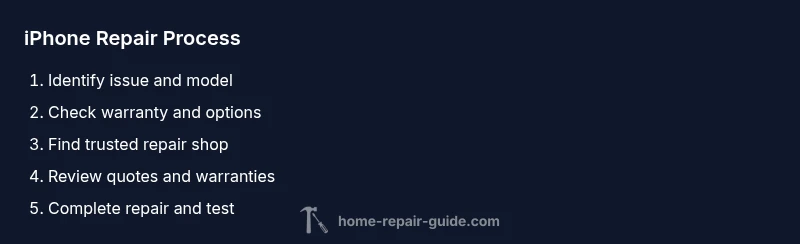
- 1
Identify the issue and iPhone model
Clarify the problem and confirm your iPhone model to tailor repair options. Note symptoms, recent drops, water exposure, and whether the device powers on. This step helps you avoid unnecessary repairs and choose the right service path.
Tip: Document symptoms and model family (e.g., iPhone 12 Pro) to speed up diagnostics. - 2
Check warranty and service options
Find the device's serial number and review warranty status with Apple or authorized providers. If covered, follow official repair routes to preserve coverage and avoid counterfeit parts.
Tip: Have your serial number ready; it simplifies verification of eligibility. - 3
Search for nearby repair centers
Use search terms like iphone fix near me and filter by distance, ratings, and whether they offer diagnostics before repair. Read recent customer reviews and verify shop hours and appointment options.
Tip: Compare at least three shops to avoid price pressure. - 4
Request quotes and ask the right questions
Ask about part sourcing, labor warranty, diagnostic fees, and turnaround time. Get a written estimate and confirm whether the quote includes taxes and disposal of old parts.
Tip: Request a quoted diagnostic path so you know what will be checked. - 5
Prepare for drop-off and data safety
Back up data, sign out of accounts if advised, and remove iCloud activation lock if possible. Bring your device, charger, and any related accessories to the appointment.
Tip: Backups protect data and allow a smoother repair experience. - 6
Inspect the repair and plan next steps
When service is completed, test critical functions (screen, touch, camera, speakers, charging). Review the warranty terms and keep the receipt for future support. If issues persist, request a follow-up or replacement under warranty.
Tip: Test before leaving the shop to avoid post-visit back-and-forth.
FAQ
What does iphone fix near me typically cover?
Typically covers screen and battery replacements, charging issues, camera problems, water damage, and software-related troubleshooting when warranted.
iPhone fix near me usually includes screen or battery replacements and common hardware issues, depending on the model.
How long does a repair usually take?
Repair duration varies by issue and shop; many common repairs can be completed the same day, while complex cases may take longer.
Repair time varies by issue; some fixes can be done the same day, others may take longer.
Should I repair or replace my iPhone?
If the device is relatively new and in good condition otherwise, repair can be cost-effective. For very old devices or multiple major failures, replacement may be wiser.
If the phone is still in good condition aside from one major failure, repair is often worth it; otherwise replacement may be better.
How can I verify that replacement parts are genuine?
Ask for OEM or manufacturer-approved parts and request warranty terms on the parts used. Avoid shops that cannot confirm part provenance.
Ask for genuine or OEM parts and get documentation about the parts used.
What’s the difference between a warranty and a service plan?
A warranty covers specific parts and labor for a defined period; a service plan is ongoing coverage. Read terms to understand what’s included and for how long.
A warranty covers parts and labor for a time; a service plan is ongoing coverage with different terms.
Watch Video
Key Takeaways
- Define the issue and model before repair
- Check warranty and authorized service options
- Ask about parts origin and warranties
- Compare multiple local shops
- Back up data before repair