Ice Machine Repair: A Step-by-Step Home Guide
Step-by-step ice machine repair guidance to diagnose, clean, and fix common ice maker issues with practical safety tips from Home Repair Guide.


With this guide you will diagnose common ice machine problems, gather the right tools, and safely repair or maintain your unit. You’ll learn when a DIY fix is appropriate and when to call a professional, plus practical maintenance tips from Home Repair Guide. This quick answer sets the stage for the deeper steps, safety checks, and long-term care described in the body.
How ice machines work and common failure points
Ice machines operate on a simple cycle: water fills the tray, the mold freezes, and a harvest mechanism ejects ice into the bin. In most household machines, a timer or sensor coordinates the cycle, while a water inlet valve, a heater (to clear ice), a thermostat, and a motor drive the process. When any part fails or becomes clogged, the cycle stalls, ice blocks form, or the unit leaks. According to Home Repair Guide, understanding this basic cycle helps homeowners identify where problems originate and plan effective fixes without unnecessary replacements. Common failure points include restricted water supply, mineral buildup, a faulty float switch, a defective thermostat, or a jammed harvest arm. Keeping the condenser clean, ensuring proper airflow, and using the recommended cleaning agents can extend life and reduce the need for professional service. This section lays the groundwork for diagnosing issues with confidence, based on years of field-tested guidance from the Home Repair Guide team.
Common failure modes and quick checks
No ice or slow harvest: Check water supply line for kinks or blockages, verify the inlet valve opens fully, and inspect the ice mold for warping or mineral build-up. Uneven ice size or hollow cubes can indicate a clogged dispenser or an underperforming heater. Leaks around the unit often trace to loose fittings or a cracked water line. Strange noises may point to a failing harvest motor or a stuck float switch. Start with the simplest fix: unplug, inspect the water line, remove any ice jams, and wipe away mineral scale with a vinegar solution. If the issue persists, test electrical components with a multimeter only after disconnecting power. By tackling the problem in a systematic way, homeowners can save time and avoid unnecessary replacements. The Home Repair Guide team emphasizes documenting symptoms and steps you take, which helps when seeking parts or professional assistance.
Safety and prerequisites before you begin
Before any repair, unplug the appliance and shut off the water supply to prevent shocks and flooding. Wear safety glasses and gloves to guard against sharp edges and refrigerant residue, and work in a dry area away from heat sources. Have a clean tray or towel handy to catch drips, and keep a camera or a notebook handy to document disassembly for reassembly. If your ice maker is built into a larger freezer or refrigerator, consult the owner's manual for any model-specific safety warnings. Safety comes first, especially when dealing with electrical components and water connections. Following these precautions reduces risk and ensures your repair steps stay focused and safe, a mindset the Home Repair Guide team consistently recommends.
Cleaning, maintenance, and preventative care
Regular cleaning keeps ice cubes clear and prevents mineral buildup that can impede performance. Start by emptying the ice bin, turning off power, and mixing a 1:1 solution of white vinegar and water. Run a cleaning cycle or manually swish the solution through the irrigation lines, then rinse with fresh water and run several cycles to flush residue. Wipe the ice mold, spray condensation coils if accessible, and check the air gap or grill for dust. Replace or clean the water filter if your model includes one. Schedule routine maintenance every 6-12 months and inspect seals for cooling efficiency. These steps help maintain ice quality and extend the lifespan of critical parts, aligning with Home Repair Guide’s practical maintenance recommendations.
Troubleshooting flowchart: DIY vs call a pro and decision guide
Start by verifying power, water supply, and ice mold condition. If the unit fills with water but does not harvest, test the harvest motor and float switch for continuity (after power shut-off). If the inlet valve fails to open, you may need to replace it or clean the screen; assess valve current against ratings and stop if you’re unsure. If the thermostat is not reaching the correct temperature or the heater element shows signs of damage, professional service is advisable. When in doubt, consult your appliance’s model-specific manual or reach out to a licensed technician. Use the decision guide provided by Home Repair Guide to decide whether a DIY approach is feasible or if professional intervention is needed. This flow helps you handle common scenarios with clarity, reducing downtime and guesswork.
Tools & Materials
- Phillips screwdriver (size #2)(Essential for removing access panels)
- Flat-head screwdriver(For prying covers without damage)
- Nut driver or hex key (3/16" or 4 mm)(Lifts valve connections)
- Needle-nose pliers(Grip fittings and wires)
- Multimeter (voltage/continuity)(Test sensors or switches)
- Towels or absorbent rags(Contain drips)
- White vinegar and spray bottle(Cleaning and descaling solution)
- Gloves and safety glasses(Personal protection)
- Replacement parts (water inlet valve, ice maker assembly)(Only if diagnosing faulty components; order by model)
- Camera or smartphone for photos(Document wiring before disassembly)
Steps
Estimated time: 60-90 minutes
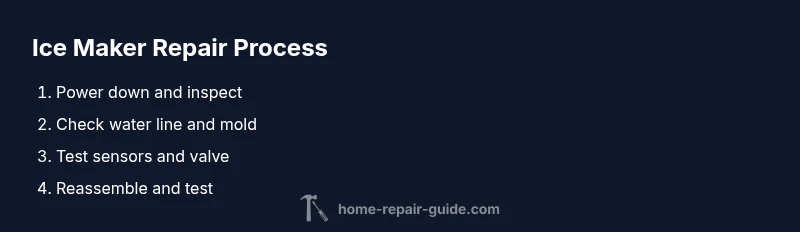
- 1
Disconnect power and close water supply
Power down the unit and unplug it. Shut off the household water valve to prevent leaks. Wait a few seconds to discharge any stored energy before you touch anything. This step protects you from shocks and accidental sprays.
Tip: Label connections as you remove them and take photos to help reassembly. - 2
Access the ice maker module and inspect the ice mold
Remove the access panel or front cover to expose the ice mold and harvest mechanism. Look for ice jams, warped molds, or mineral buildup on the mold edges. Gently free jams with a plastic tool to avoid damaging parts.
Tip: Work slowly and keep track of small screws; use a tray to hold loose parts. - 3
Check water supply and inlet valve
Trace the water line for kinks or blockages. If the valve doesn’t open fully when powered, test the coil and electrical connections and clean the screen. Descale mineral buildup with a vinegar solution before considering valve replacement.
Tip: Descaling improves flow and helps you decide if the valve is truly faulty. - 4
Test sensors and harvest mechanism
With power off, test the float switch and thermostat for proper continuity. Check the harvest motor for smooth operation and listen for abnormal noises. If a sensor or motor shows inconsistent readings, replacement is usually required.
Tip: Use a multimeter to compare readings with the model’s specs. - 5
Reassemble and run test cycles
Reconnect components, restore water and power, and run two full harvest cycles to confirm proper operation. Check for leaks, ice quality, and timely harvesting. If issues recur, revisit earlier steps or seek professional help.
Tip: Document any persistent issues and notes for the service technician.
FAQ
What are the most common causes of ice maker failure?
Many issues stem from mineral buildup, a frozen diffuser, a clogged water line, a faulty inlet valve, or a defective thermostat.
Common issues are mineral buildup, clogs, valve problems, or thermostat failure.
Is it safe to DIY ice machine repair?
DIY can be safe for minor fixes when you follow proper safety steps: unplug, shut off water, use the right tools, and avoid high-voltage components.
Yes, for small fixes if you follow safety steps.
When should you hire a professional?
If you encounter refrigerant issues, electrical faults beyond basic testing, or persistent leaks, a licensed technician is recommended.
Call a professional for refrigerant, major electrical issues, or leaks that persist.
How often should I clean my ice maker?
Aim for a cleaning every 6-12 months, plus periodic wipe-downs to remove mineral buildup and keep the condenser clear.
Clean every 6 to 12 months and wipe down monthly.
Can a clogged water line cause no ice?
Yes. A restricted water supply prevents freezing cycles; check line for kinks, cracks, or mineral buildup.
A clogged water line can stop ice from forming.
What tools do I need to start ice maker repair?
Basic tools include a screwdriver, pliers, multimeter, towels, vinegar, and safety gear; larger repairs may require replacement parts.
You’ll need common hand tools, a multimeter, cleaning supplies, and safety gear.
Watch Video
Key Takeaways
- Identify root causes before replacing parts
- Gather essential tools before starting
- Prioritize safety and shutoffs during repairs
- Know when to call a pro for refrigerant or electrical issues