How to Get Out of Repair Mode on Google Pixel: A Practical Guide
Learn safe steps to exit repair mode on Google Pixel and return to normal Android. This guide covers reboots, recovery options, backups, and when to seek professional help.


You can exit repair mode on a Google Pixel and boot back to normal Android by using a safe reboot or recovery menu option. Start with a charged device, then try 'Reboot system now' from the bootloader or recovery screen. If that fails, back up your data and perform a factory reset only as a last resort. According to Home Repair Guide, following structured steps minimizes data loss and boot issues.
Understanding repair mode on Google Pixel
Repair mode on Google Pixel is a maintenance-oriented environment that appears when the device needs service or when software encounters boot or update problems. In this mode, the device limits user-level operations to protect data integrity while you troubleshoot or reflash software. Your goal in this article is to return to normal Android by exiting repair mode safely. The phrase how to get out of repair mode google pixel anchors this discussion and guides you through careful, user-friendly steps.
According to Home Repair Guide, entering repair mode is a protective state designed to prevent further damage when something goes wrong during updates or repairs. The key is to move methodically from diagnosis to a safe reboot that restores normal operation without data loss.
Common triggers for repair mode
Devices may enter repair mode after failed updates, corrupt cache, driver issues, or hardware changes detected during service. Many Pixel owners encounter this after a factory modification or while flashing a ROM; the screen might show a warning, a status bar, or a menu that seems unfamiliar. Recognize these prompts as signals that the device is asking you to use a controlled exit path rather than a random reboot. Understanding triggers helps you apply the right exit method, reducing data loss and boot errors.
This is where Home Repair Guide’s research helps homeowners and renters who encounter smart device hiccups. By identifying triggers early, you can choose the safest exit path and avoid risky firmware changes that could complicate the repair process.
Safe exit method: on-device reboot options
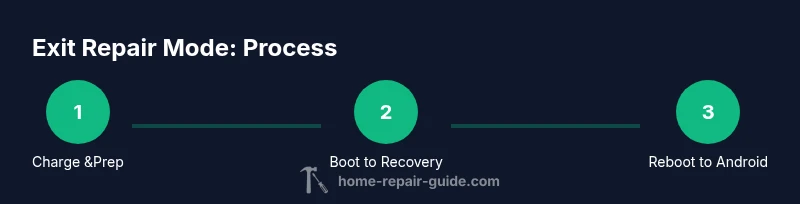
Follow these steps in order, using hardware keys and on-screen prompts when available. Start by charging your Pixel to at least 50% and connecting it to a reliable charger. Then, navigate the bootloader or recovery menu and select Reboot system now. If you do not see that option, choose Start or Reboot. After confirming, wait 60–120 seconds for the device to exit repair mode and boot to the Android home screen.
If the screen shows a different entry, select the closest equivalent like 'Reboot' or 'Start' and allow the device to complete its boot sequence without interrupting the process. Keep in mind that some Pixel models may present variations in wording, but the core action remains the same: initiate a clean reboot to return to normal operation.
When normal reboot doesn't work: advanced options
Sometimes the device remains stuck in repair mode. In those cases, you can attempt additional options while preserving your data where possible. From the recovery menu, you may wipe the cache partition to remove stale updates, or opt for a factory reset as a last resort if the system will not boot. ADB-based resets can also help if USB debugging is enabled, but require a connected computer and proper drivers.
If you have a recent backup, a factory reset becomes a viable last-resort option to restore a clean OS image. This is especially helpful when the device stubbornly refuses to boot after standard reboots. Remember: factory resets erase data, so back up first whenever possible.
Data safety: backups and precautions
Before attempting any exit from repair mode, back up essential data when possible. If the device boots to Android, back up photos, contacts, and important documents to cloud storage or a local PC. If a factory reset becomes necessary, be aware it will erase apps and data. The best practice is to guarantee a recent backup before you begin, so you can restore quickly if something goes wrong.
Keeping a routine backup schedule minimizes risk and ensures you can recover most information even if the device cannot boot normally. Consider enabling automatic cloud backups and periodically exporting essential files to a hard drive.
Getting help and official resources
Consult official Google Pixel support and reputable tech sites for guidance. Page-level tips from Google’s help center describe how to use the bootloader, recovery options, and safe reboot sequences. Additionally, reputable outlets like The Verge and CNET provide practical how-to content that aligns with Home Repair Guide’s approach: clear steps, safety warnings, and data protection. Rely on verified sources to avoid risky firmware changes.
When in doubt, verify the guidance against multiple sources and avoid flashing unsigned images or using untrusted repair tools. A cautious, well-documented approach keeps you on the right track.
Quick verification after exit
Once the device boots back to normal Android, unlock the screen and verify core features: calls, messaging, camera, Wi-Fi, and app functionality. Check that data remained intact and that apps open without errors. If you notice missing data or abnormal reboots, re-check backups and run a fresh backup, then consider a factory reset only if needed to stabilize performance.
A successful exit should leave you with a responsive device and no persistent boot loops. If issues persist, re-enter recovery mode and revisit the steps with a fresh backup ready.
Common mistakes to avoid
Don’t attempt to flash system images or modify the bootloader unless you are experienced and have explicit instructions from a trusted source. Avoid long, repeated boot loops by giving the device time to complete each step. Avoid unplugging the device mid-process, which can corrupt the boot sequence. Always use a charged battery and stay within recommended temperature ranges.
Skipping steps or rushing through the exit sequence increases the risk of data loss or bricking the device. Take your time and verify each step before proceeding.
Tools & Materials
- Fully charged Google Pixel device(Aim for 50-80% charge before starting)
- Reliable USB-C charger and cable(Original charger recommended; avoid third-party adapters)
- USB-C to USB-C/USB-A cable or OTG adapter(Useful for in-device recovery or ADB accessory setup)
- A computer with ADB installed(Needed if you plan to use ADB commands from sideload or recovery)
- Torx screwdriver set (T5/T4) and plastic pry tools(Only for service steps that require hardware access)
- Microfiber cloth and anti-static mat(Keep workspace clean and prevent screen scratches)
Steps
Estimated time: 25-60 minutes
- 1
Charge and secure the workspace
Connect the Pixel to a reliable charger and ensure it has at least 50% battery. Work in a static-free area, with a clean, smooth surface. This reduces the risk of unexpected shutdowns during the exit process.
Tip: A fully charged device minimizes the chance of mid-exit shutdowns. - 2
Power down and boot into bootloader/recovery
Turn off the device, then use hardware keys to enter the bootloader or recovery Mode. On most Pixel models, this is done by holding the Volume Down and Power buttons together until the bootloader screen appears.
Tip: If your device shows a different key combination, consult the official Pixel help page for your model. - 3
Select Reboot system now
Using the volume keys to navigate, highlight 'Reboot system now' and press the Power button to confirm. Allow the device to reboot completely and monitor for a return to the normal Android UI.
Tip: If 'Reboot system now' isn’t visible, select the closest option like 'Start' or 'Reboot' instead. - 4
If reboot fails, wipe cache partition
In the recovery menu, choose 'Wipe cache partition' to clear temporary system files that could cause boot loops. This step does not erase personal data but may remove problematic cache from updates.
Tip: Only perform this if you see signs of corrupted cache after a failed boot. - 5
Factory reset as a last resort
If the device still won’t exit repair mode, navigate to 'Factory reset' from the recovery menu. Be aware this will erase all user data; restore from backups afterward.
Tip: Back up data first if possible; otherwise, prepare for data loss with cloud backups. - 6
Verify a clean boot
After performing the steps, let the device boot fully to the Android lock screen. Verify core functions are accessible and test essential apps to ensure stability.
Tip: If problems persist, retry the process with a fresh backup and consider professional support. - 7
Optional ADB-based reboot
If USB debugging is enabled, connect the Pixel to a computer and use ADB to issue a 'adb reboot' command as an alternative exit path. This can bypass issues in the on-device menu.
Tip: Only use ADB if you are comfortable with command-line tools.
FAQ
What is repair mode on Google Pixel and how is it different from Recovery mode?
Repair mode is a service-oriented environment designed to facilitate maintenance, often limiting user operations. Recovery mode is a separate boot option used for system updates or reflashing. They serve different purposes, and exiting repair mode typically involves a safe reboot back to Android.
Repair mode is a maintenance space for service tasks, while Recovery mode handles updates and reflashing. Exiting usually just requires a safe reboot back to Android.
Will exiting repair mode erase my data?
Exiting repair mode with a simple reboot should not erase data. However, if you choose the factory reset option from Recovery, data will be erased. Always back up before attempting major steps.
A normal reboot won't erase your data, but a factory reset will, so back up first.
Can I exit repair mode without a computer?
Yes. Most Pixel devices allow exiting repair mode via on-device reboot through the bootloader or recovery menu. A computer is only needed for ADB-based methods.
Usually you can exit using the device controls; only use a computer if you’re comfortable with ADB.
What should I do if the phone won’t boot after exiting repair mode?
If boot issues persist, confirm battery health, try a different charger, and reattempt the recovery steps. If unresolved, restore from backup or seek official support.
If it still won’t boot, check your backup and contact support for next steps.
How long does exiting repair mode typically take?
Most devices resolve within a few minutes, depending on model and the extent of any software issues. Some steps may take longer if hardware checks are involved.
Usually a few minutes, but it can vary.
Is it safe to perform a factory reset on my Pixel?
Factory reset is safe when you have a current backup. It returns the device to factory state but erases all user data; use it only if other exit methods fail.
Factory reset is safe with a backup, but it erases data, so back up first.
Watch Video
Key Takeaways
- Back up data before exiting repair mode.
- Start with a safe on-device reboot; escalate only if necessary.
- Factory reset is a last resort due to data loss.
- Verify normal boot and essential functionality afterward.
- Consult official resources if uncertain to avoid firmware risks.