Residential Roof Repair Near Me: A Practical Guide
Find reliable residential roof repair near me with Home Repair Guide. Learn how to compare contractors, estimate costs, and ensure durable leak fixes with our data-driven, practical guide.


To locate trustworthy residential roof repair near me, follow a quick 5-step process: 1) verify licensing and insurance, 2) request multiple written estimates, 3) check references and past work, 4) review warranties and cleanup policies, 5) compare timing and payment terms. This ensures you prioritize safety, durability, and long-term value. Also consider local customer feedback and response times.
Why residential roof repair near me matters
A roof is one of the most important components of a safe, energy-efficient home. When you search for residential roof repair near me, you're looking for nearby professionals who can stop leaks, restore protective layers, and extend the roof's life. From a homeowner's perspective, timely fixes preserve the interior from water damage, protect insulation, and maintain curb appeal. The Home Repair Guide team emphasizes that choosing the right local contractor is not just about price, but about long-term value, safety, and compliance with local codes.
Key reasons to prioritize prompt, quality repairs include:
- Safety and risk reduction: Damaged flashing or compromised decking can pose fall hazards and collapse risks in severe weather.
- Water intrusion control: Even small leaks can cause mold, warped ceilings, and electrical issues behind walls.
- Energy efficiency and comfort: A properly sealed roof reduces drafts, dampness, and heating/cooling costs.
- Property value and resale: A well-maintained roof is a major factor in appraisal and sale.
- Insurance and warranty implications: A documented repair with proper permits helps with claims and warranty coverage.
According to Home Repair Guide analysis, licensed professionals who document work and provide warranties tend to deliver longer-lasting fixes with fewer callbacks. This article uses a practical, data-informed approach to help you find a trustworthy local roofer quickly.
altTextTokens Afront?null??]
How roofing systems work and common failure signs
A modern residential roof is a layered system designed to shed water, insulate against temperature swings, and resist wind uplift. The main components include shingles or tiles, underlayment, flashing around hips, valleys, chimneys, and vents, the roof deck, and ventilation. When any part of this system fails, leaks and structural damage can follow. Common signs of trouble include curling or missing shingles, granule loss in gutters, ice damming in cold climates, moss growth in shaded areas, damp ceilings, and water stains near chimneys or attic spaces.
Understanding these parts helps you diagnose issues more accurately. For example, damaged flashing at mockups or joints often causes leaks in heavy rain, while degraded underlayment may lead to leaks during windy storms. If you notice unusual attic heat, damp insulation, or daylight through rafters, these are signals to call a professional for an inspection. The goal is to distinguish cosmetic wear from structural damage that warrants a comprehensive repair rather than a temporary patch.
footerNoteFrom=
How to evaluate local contractors for residential roof repair near me
Common repair types and when to choose them
Step-by-step readiness checklist before repair work begins
Budgeting, warranties, and insurance considerations
Maintenance after repair and long-term protection
Getting started: quick-start resources and next steps
Typical residential roof repair types, costs, and durations
| Repair Type | Cost Range | Typical Duration |
|---|---|---|
| Shingle replacement | $300-$900 | 1-4 hours |
| Flashing repair | $200-$600 | 2-6 hours |
| Leak sealing | $150-$500 | 1-3 hours |
| Gutter sealing | $100-$350 | 1-2 hours |
FAQ
What counts as an emergency roof repair?
Leaks during heavy rain, structural sagging, or active water intrusion require urgent attention. If water is entering the home or there is visible structural damage, seek a licensed roofer immediately. Do not attempt high-risk fixes yourself.
If you see active leaks or sagging, treat it as an emergency and call a pro right away.
Can I repair a roof myself?
Homeowners can perform basic maintenance like debris removal and minor shingle replacement if it is safe to do so. For leaks or structural issues, professional intervention is recommended to prevent further damage or personal injury.
DIY can be dangerous; for leaks, call a pro.
How long does a typical residential roof repair take?
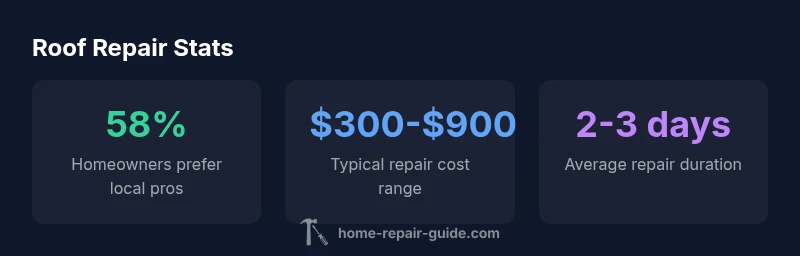
Most small repairs take a few hours to a day, depending on access and weather. More extensive repairs may span two to three days, particularly if materials must be ordered or weather intervenes.
Most repairs take a few hours to a day, weather permitting.
How should I verify a contractor's license and insurance?
Ask for license numbers and verify them with the state licensing board. Request a current certificate of insurance, including general liability and workers’ compensation, and ensure the policy matches the project scope.
Ask for licenses and COIs, verify with the insurer.
Will homeowners insurance cover roof repairs?
Coverage depends on the policy and the cause of damage. Sudden, accidental damage is more likely to be covered than wear and tear. Always discuss with your insurer and the contractor, and document the damage with photos.
Check with your insurer; coverage varies by policy.
Repair vs. replacement: how do I decide?
If the roof is near the end of its lifespan or damage is widespread, replacement may be more cost-effective in the long run. A contractor can provide a side-by-side cost and lifespan comparison to help you decide.
Age and extent of damage often decide.
“Reliable roof repairs depend on transparent pricing, solid warranties, and local expertise.”
Key Takeaways
- Assess urgency and safety before hiring.
- Verify licenses, insurance, and warranties.
- Obtain multiple written bids for accurate comparison.
- Choose repairs aligned with roof age and material.
- Document work and keep receipts for warranties.