Toilet Fill Valve Repair Guide: Step-by-Step Instructions
Learn how to diagnose, remove, and replace a toilet fill valve with a clear, practical guide. From tools to testing for leaks, this Home Repair Guide tutorial helps homeowners and renters fix running toilets and save water with a durable repair.


This guide helps you identify, remove, and replace a toilet fill valve, adjust the float, and test for leaks. You’ll learn safety basics, choose compatible parts, and troubleshoot common running-toilet issues for a durable, quiet repair. Follow these steps to restore proper tank fill and conserve water.
How a toilet fill valve works
A toilet fill valve regulates the flow of water into the tank after a flush. When the tank empties, the valve opens to let water in until the float reaches the correct level, then it shuts off. Over time, seals can wear, the float can become misadjusted, or debris can clog the inlet, causing the toilet to run or fail to fill properly. According to Home Repair Guide, understanding this basic mechanism helps you diagnose issues and decide whether a repair or replacement is the best course of action. In most homes, the fill valve sits at the top of the tank, connected to a supply line via a flexible hose. The float—whether a ball float or a canister/piston style—rises as water fills, signaling the valve to stop when the water reaches the designed level. Grasping this concept sets the foundation for accurate troubleshooting and durable repairs.
Common fill valve types: ballcock vs canister/piston
There are several popular configurations for fill valves. The traditional ballcock (a float ball on a buoyant arm) is common in older toilets, but newer designs use a canister or piston-style valve with an adjustable float. Ballcock valves tend to be more tolerant of minor wear, but can leak around the stem if the seal degrades. Canister and piston styles often provide more precise water level control and are easier to adjust without remounting. When choosing a replacement, consider tank height, the diameter of the fill valve hole, and your preferred adjustment style. Home Repair Guide emphasizes matching the valve to your tank’s dimensions and the mounting nut’s size, so you avoid fit problems and leaks.
Signs your fill valve may be failing
A failing fill valve can manifest in several ways. If the toilet runs continuously after flushing, the fill valve may be stuck open or the float level is too low. If the tank takes longer than normal to fill, the water level may be too low or the inlet screen is clogged. Leaks around the valve nut or a hissing sound while the tank fills can also indicate a fault. In some cases, debris can obstruct the inlet, causing inconsistent fill levels. Regular inspection helps you catch issues before they worsen and prevents costly water waste.
Replacement options and compatibility basics
Replacement valves come in various sizes and connection types. The most important compatibility factors are tank height, the distance from the fill valve to the overflow tube, and the size of the mounting nut. Some kits include new washers and locks, while others require separate purchases. If your tank uses a dual-flush mechanism or a nonstandard connection, you may need a universal fill valve with adjustable height and compatibility adapters. Always confirm the valve’s compatibility with your toilet model and measure the dimensions before purchasing.
Tools and safety prep before you begin
Before touching any plumbing, gather the tools you’ll need and ensure you can work safely. You’ll typically need an adjustable wrench, a screwdriver, pliers, a bucket, towels, and a replacement fill valve kit. Shutting off the water supply at the wall valve is essential to prevent splashing. Place towels around the base of the toilet and have a bucket ready to catch any residual water. If you’re unsure about your plumbing skills, consult a professional. Home Repair Guide recommends basic safety steps to minimize risk when handling metal fittings and fragile porcelain.
Step-by-step removal: preparing for replacement
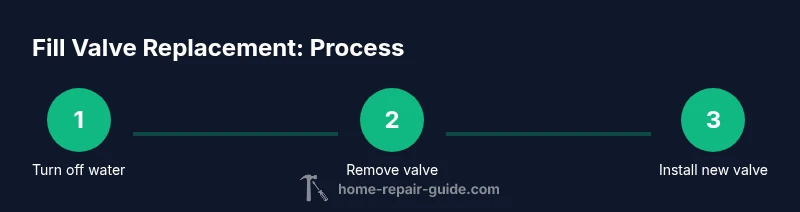
Begin by turning off the shutoff valve and draining the tank. Disconnect the water supply line from the fill valve with an adjustable wrench, catching any water with towels. Remove the fill valve cap and loosen the mounting nut underneath the tank. Lift out the old fill valve, taking care not to damage the porcelain. Clean the tank hole and threads to remove any mineral buildup or debris that could affect the new seal. This preparation prevents leaks and ensures a solid installation.
Step-by-step installation: installing a new fill valve
Insert the new fill valve into the tank through the mounting nut and secure from underneath with a wrench. Attach the supply line, then snug the nut without overtightening. Connect the refill hose to the overflow tube if required by your kit. Install the new washer or gasket, then tighten by hand and give a final turn with a wrench—avoid over-tightening, which can crack the tank. Place the tank lid back on and ensure the valve is seated properly. This sequence minimizes leaks and ensures reliable operation.
Adjustment and testing: fine-tuning the float and checking for leaks
With the valve installed, adjust the float to set the correct water level—typically about 1 inch below the top of the overflow tube, but refer to your kit instructions. Turn the water back on and let the tank fill. Observe a few refill cycles to ensure the valve shuts off cleanly and there are no leaks at the mounting nut or supply connection. If water runs continuously, recheck the float position and gasket seating. Testing multiple cycles confirms a durable seal and proper operation.
Maintenance tips to extend valve life and prevent future leaks
Regular maintenance helps prevent premature valve failure. Clean the inlet screen once in a while to remove mineral buildup, and inspect the mounting hardware for corrosion or loosening. If your water is particularly hard, consider using a brief flushing of the tank to remove sediment that can affect valve performance. Finally, replace worn gaskets and seals as part of your routine toilet maintenance to maintain efficiency and prevent leaks.
Tools & Materials
- Adjustable wrench(Essential for loosening/tightening fittings; size fits most nuts on supply lines)
- Screwdriver (flathead and Phillips)(Useful for removing caps or screws on some valve assemblies)
- Pliers(Helpful for gripping nuts in tight spaces)
- Bucket(Catch residual water to avoid spills)
- Towels or rags(Absorb water and protect the floor)
- Replacement fill valve kit(Ensure kit matches your tank type and includes necessary washers and adapters)
- PTFE tape or thread sealant(Optional for sealing threaded connections; use sparingly)
- Flashlight(Better visibility inside the tank during installation)
Steps
Estimated time: 60-90 minutes
- 1
Turn off water and drain the tank
Shut off the wall valve and flush the toilet to empty the tank. Use towels to soak up any remaining water and set up a bucket for drips. This prevents spills and makes the next steps clean and predictable.
Tip: Taking a quick photo of the old setup helps you reassemble the new parts correctly. - 2
Disconnect the supply line
Place a bucket under the connection and use an adjustable wrench to loosen the nut on the supply line. Detach the line carefully to avoid bending the line or damaging the shank. Have towels nearby to capture any residual water.
Tip: Hold the valve body steady to prevent twisting while loosening the nut. - 3
Loosen and remove the old fill valve
From beneath the tank, loosen the mounting nut that secures the fill valve. Remove the valve from the tank by guiding it through the hole. Clean the threaded hole and inspect for damage or mineral buildup.
Tip: If the nut is corroded, apply penetrating oil and wait a few minutes before trying again. - 4
Prepare the tank for the new valve
Wipe the tank hole and threads clean. Check for any cracks or defects around the fill valve opening. Apply a new gasket or washer if provided with the kit before inserting the new valve.
Tip: Dry fit the valve first to confirm alignment before final assembly. - 5
Install the new fill valve
Insert the new valve through the tank hole and tighten the mounting nut from underneath until snug. Attach the refill tube to the overflow outlet if your kit requires it. Reconnect the supply line loosely to check alignment, then tighten fully.
Tip: Avoid overtightening; it can crack the tank or strip threads. - 6
Reconnect the supply line and seal
Reconnect the water supply line and ensure the nut seats evenly. Turn the supply valve on slowly to avoid a surge. Check for obvious leaks around the nut and connections.
Tip: If you notice a leak, reseat the nut and re-tighten a quarter-turn at a time. - 7
Adjust the float and set water level
Adjust the float according to the kit instructions to set the proper water height. The typical target is a little below the overflow tube opening. If the kit has a screw or clip, use it to fine-tune the level.
Tip: Small adjustments can make big differences in flush performance. - 8
Test the fill cycle
Turn the water on and allow the tank to fill. Listen for running water or hissing, and watch the fill level. If it runs beyond the target level, recheck float height and valve seating.
Tip: Run multiple refill cycles to confirm stability before closing up. - 9
Finalize and monitor
Replace the tank cap and lid, then monitor the toilet over the next 24 hours for drops in water usage or additional leaks. Keep a small maintenance log for future reference.
Tip: Document any changes you make and note the date for future maintenance.
FAQ
What is a toilet fill valve?
A toilet fill valve controls how much water enters the tank after a flush. It opens to fill and then shuts off when the float reaches the set level.
The fill valve controls how full the toilet tank gets after you flush; it opens to fill and stops when the float reaches the right level.
Can I replace the fill valve myself?
Yes. With basic plumbing tools and careful following of the kit instructions, most homeowners can replace a fill valve successfully.
Yes. With basic tools and careful steps, you can replace the fill valve yourself.
How do I know which fill valve to buy?
Check your toilet model or measure the tank opening and the distance to the overflow tube. A universal kit with adjustable height works for many tanks, but confirm compatibility before purchase.
Look up your toilet model or measure the tank inlets. A universal kit often fits many tanks, but check compatibility first.
What should I do if water keeps running after replacement?
Recheck the float position and ensure the fill valve is seated properly. Minor adjustments to the float or gasket seating can stop the running.
If water runs on after replacement, adjust the float and check the seals again.
Is replacement risky for a ceramic tank?
The main risk is cracking the tank from overtightening or improper handling. Follow the kit instructions and handle the valve with care.
The main risk is cracking the tank if you overtighten or mishandle parts. Be careful and follow instructions.
How long does a fill valve typically last?
Lifespan varies with use and water quality. Replacing worn components promptly can prevent leaks and improve efficiency.
Lifespan depends on use and water quality. Replace worn parts promptly to prevent leaks.
Watch Video
Key Takeaways
- Turn off water and drain before starting.
- Choose a compatible fill valve kit for your tank.
- Adjust float to the correct level and test for leaks.
- Document the process and maintain the valve for longevity.