Repair AC Clutch: Safe Step-by-Step Guide
Learn how to diagnose and repair an AC clutch with a safe, step-by-step approach. This Home Repair Guide tutorial covers symptoms, tools, replacement options, and maintenance to extend clutch life.


Goal: Diagnose and safely repair a worn or slipping AC compressor clutch in an automotive HVAC system. You’ll learn how to identify symptoms, verify clutch engagement, choose the right replacement, and perform a careful replacement or service steps. According to Home Repair Guide, the guide emphasizes safety, tool readiness, and knowing when professional help is required.
Understanding AC clutch systems
A typical AC clutch system includes the drive belt, the clutch pulley, the electrical coil/solenoid, the clutch plate, the compressor hub, and the alignment components. When the coil is energized, magnetism pulls the clutch plate so the pulley and compressor shaft rotate together. If the coil is weak, the plate sticks, or the bearings wear out, the compressor may fail to engage, making the system ineffective or noisy. By understanding the basic parts, you can narrow down whether the issue is electrical, mechanical, or a blend of both. Home Repair Guide analysis shows that early attention to clutch problems often saves expensive compressor repairs, especially when the system is already showing signs of wear or refrigerant imbalance.
In both automotive AC and some portable/heating appliances, the clutch assembly must align precisely with the compressor shaft. Misalignment can create rubbing, noise, or belt wear. Always consult the service manual for torque specs, bearing clearances, and the correct replacement part to avoid damaging the compressor assembly or voiding warranties.
Symptoms of a failing AC clutch
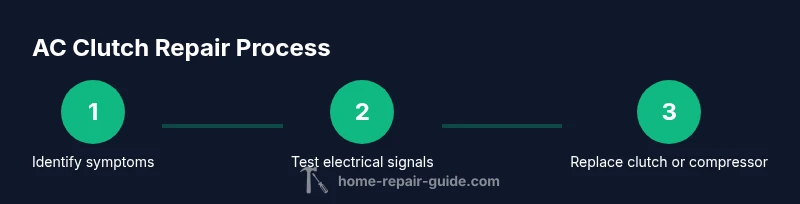
Symptoms vary by system, but common indicators include: (1) No cooling or weak cooling when the system runs, (2) Clutch not engaging even with the compressor pulley spinning, (3) A grinding or squealing noise when the belt is running, (4) Intermittent clutch engagement or overheating on startup, (5) Electrical smells or blown fuses/relays near the clutch wiring. If you notice oil or refrigerant residue near the clutch, that may indicate gasket or seal leakage and contaminants in the refrigerant circuit. A careful symptom audit helps decide whether you should attempt a repair or escalate to a pro. Remember, early diagnosis can prevent more costly failures later on.
Safety and prerequisites before you begin
Safety first is non-negotiable. Disconnect power to the system and PPE: gloves, eye protection, and long sleeves. If you’re dealing with an automotive A/C system, refrigerant handling requires proper recovery equipment and training; do not vent refrigerant into the atmosphere. For home HVAC or window units, ensure the unit is powered off and isolated from any mains sources before touching moving parts. Never operate the system with the belt removed for testing, as this can cause pulleys to spin unexpectedly and injure hands. If you’re unsure about refrigerant handling or electrical safety, seek a licensed technician to avoid hazardous exposure and legal issues.
Diagnostic steps you can perform (non-destructive)
First, visually inspect the clutch coil and electrical harness for corrosion or damaged insulation. With the system powered off, use a multimeter to test coil resistance against the manufacturer’s specification. Check for continuity across the coil and the drive pulley circuit. If the coil shows an open or shorted circuit, replacement is likely needed. Next, verify that the control relay or ECU is sending the correct voltage when the climate control is engaged. Improper signals can mimic a faulty clutch without actual mechanical failure. Finally, rotate the belt by hand when safe to ensure the pulley spins freely and doesn’t drag or rub against the housing.
Remember: if refrigerant is involved, do not attempt to depressurize or recover it without proper equipment and certification. When in doubt, consult a service manual or a professional.
Replacement options: clutch vs whole compressor
If the compressor is older or has sustained internal damage, replacing only the clutch may not solve the root problem. A worn bearing, contaminated oil or refrigerant, or scoring on the shaft can persist after a clutch replacement. In many cases, replacing the entire compressor is more cost-effective and reliable than chasing intermittent clutch failures. Always inspect the compressor’s oil level, bearing condition, and shaft end play before deciding. For budget-conscious projects, you may choose a refurbished clutch kit with the correct shaft size, but verify compatibility with the model and year of your unit.
Installation overview and testing after replacement
Install a new clutch kit only after removing the old clutch, cleaning the mounting surface, and confirming shaft integrity. Align the clutch plate with the compressor shaft, seat all bolts to the manufacturer’s torque spec, and reattach the drive belt with proper tension. Reconnect electrical connectors and test the system at idle first, then at higher RPM. If you replaced refrigerant components, perform a vacuum test and recharge according to the manufacturer’s specification, watching for leaks. Finally, monitor the system for the first 24–48 hours for abnormal noise, temperature variance, or cycling irregularities.
Maintenance to extend clutch life
Regular inspections improve longevity. Check belt tension and wear every 6–12 months, inspect electrical connectors for corrosion, and listen for unusual noises that might indicate bearing wear. Confirm refrigerant levels are within spec and that there are no leaks. Keep the system clean and free of debris, as dirt can lodge in the pulley and cause uneven wear. A proactive approach reduces the likelihood of unexpected clutch failure and keeps cooling performance steady across seasons.
Tools & Materials
- Multimeter(Test coil resistance and electrical circuits)
- Replacement AC clutch kit or compatible clutch(Match shaft size and model; keep instructions handy)
- Socket and wrench set(Sizes matching compressor mounting bolts)
- Torque wrench(Torque bolts to manual specs)
- Safety PPE(Gloves, goggles, long sleeves)
- O-rings and gaskets (as needed)(Carry replacement seals for your unit)
- Service manual or factory torque specs(Reference for exact values)
- Refrigerant handling equipment (optional)(Only if you’re trained and licensed)
Steps
Estimated time: 2-6 hours
- 1
Identify symptoms and prep safely
Power down the system completely and wear safety gear. Document symptoms with notes and photos to guide the repair. If you’re working on a vehicle A/C, disconnect the battery negative terminal to prevent unexpected energization.
Tip: Take clear photos of wiring harnesses and mounting points before removal. - 2
Disconnect drive belt and access clutch area
Relieve belt tension with the tensioner tool, then remove the drive belt from the pulley. Access to the clutch requires removing surrounding covers or shrouds. Keep belt routing diagram handy.
Tip: Label belt paths or take a quick photo to ensure correct reassembly. - 3
Remove the clutch assembly
Unbolt the clutch from the compressor hub using the correct sockets. Gently separate the clutch plate from the drive hub, noting any spacers or shims. Inspect the shaft and mounting surface for wear or damage.
Tip: Place removed parts in order so you don’t mix up spacers or bolts. - 4
Test the clutch coil and electrical signals
With power off, test the coil resistance and continuity. Reconnect power and verify the control signal from the climate control or relay is present when commanded. If the coil tests bad, replacement is recommended.
Tip: Use a diode tester or continuity function and compare to the service manual spec. - 5
Decide repair approach
Assess shaft condition, bearing play, and oil contamination. If the compressor shows scoring, excessive wear, or refrigerant leakage, replacing the whole compressor may be more reliable than a clutch-only repair.
Tip: Document your decision so future owners or technicians understand what was done. - 6
Install the replacement clutch or assemble new clutch
If using a kit, mount the new clutch squarely on the shaft, and bolt to spec. Reassemble any spacers, reattach the pulley, and torque all fasteners per the manual. Reconnect electrical connectors securely.
Tip: Spin the pulley by hand to ensure smooth rotation before belt reinstallation. - 7
Reconnect, recharge, and test
Reinstall the drive belt, power the system, and observe clutch engagement. If refrigerant work was performed, follow proper vacuum and recharge procedures and perform a leak check. Run the system through a full cooling cycle and listen for abnormal noise.
Tip: Do not overcharge refrigerant; verify pressures with the specific chart for your system.
FAQ
What are the most common signs of a bad AC clutch?
Common signs include no cooling despite the engine running, the clutch not engaging, unusual grinding or squealing noises, and electrical issues like blown fuses or poor voltage to the clutch. If you notice refrigerant leaks, inspect seals and lines for damage.
Common signs include no cooling, clutch not engaging, unusual noises, and electrical faults. Check for leaks if you see oil or refrigerant around the unit.
Can I replace just the clutch without replacing the compressor?
Yes, in some cases you can replace just the clutch if the compressor is otherwise healthy. However, assess shaft wear, bearing condition, and contamination before proceeding. If in doubt, replacement of the whole compressor may be more reliable.
Yes, but only if the compressor is in good condition. If there’s wear or contamination, replacing the whole unit is safer.
Do I need to evacuate refrigerant before replacing the clutch?
In most automotive A/C systems, refrigerant handling requires proper equipment and certification. Do not depressurize or release refrigerant yourself. Have a licensed technician perform any refrigerant work.
Refrigerant work should be done by a licensed tech. Don’t attempt to release refrigerant yourself.
Is it safe to run tests with the belt off?
Running tests with the belt off can be dangerous because pulleys can spin unexpectedly. Only perform such tests with the system powered down and use prescribed test procedures. Reinstall the belt before operating the system.
No, resist running tests with the belt off. It can be dangerous; reattach the belt before test runs.
What tools are essential for replacing an AC clutch?
Essential tools include a multimeter, torque wrench, appropriate sockets, and safety PPE. Having the service manual helps ensure you follow torque specs and sequence precisely.
You'll need a multimeter, torque wrench, sockets, and safety gear. A service manual is very helpful.
Watch Video
Key Takeaways
- Identify symptoms early to avoid compressor damage.
- Decide between clutch replacement or full compressor replacement based on wear and leaks.
- Follow safety protocols and refrigerant regulations at all times.
- The Home Repair Guide team recommends professional help for high-risk steps if in doubt.