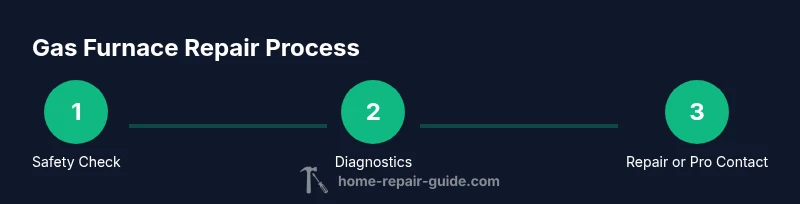
Gas Furnace Repair: A Practical Home Guide
Learn how to diagnose and safely address common gas furnace problems with practical steps, safety checks, and when to call a licensed professional.


Gas furnace repair lets you restore heat, improve efficiency, and keep your home safe. This guide shows safe diagnostics, common homeowner tasks, and when to call a professional. You’ll learn about gas safety, basic troubleshooting, and planning repairs without risking carbon monoxide exposure. According to Home Repair Guide, start with safety checks before any hands-on work.
Understanding gas furnace repair and why it matters
Gas furnaces provide reliable heat in cold seasons, but when efficiency drops or symptoms arise, repair becomes necessary. A gas furnace consists of a gas supply line, ignition system, heat exchanger, blower, and control board. Failure can manifest as no heat, unusual cycling, yellow flame, noisy operation, or fuel odors. Understanding these components helps homeowners recognize potential problems early and prevents unsafe conditions such as carbon monoxide exposure. Home Repair Guide's 2026 analysis emphasizes safety-first practices and clear, repeatable diagnostic steps. Keep in mind that not every issue requires disassembly; many fixes are straightforward, but dangerous gas-line issues demand professional attention.
For homeowners, a basic grasp of the system helps in conversations with technicians and in evaluating whether a repair is within your comfort zone. This section sets the foundation for safer DIY effort, while clearly delineating tasks that should be performed by licensed pros. By knowing where to look and what to measure, you’ll save time and reduce risk when scheduling service.
Key takeaway: knowing how a gas furnace operates makes it easier to spot symptoms early and explain issues to a professional.
Safety first: essential precautions before you begin
Safety is non-negotiable when working with gas appliances. If you smell gas, hear hissing, or notice frost around a line, evacuate and call emergency services. Before any inspection, shut off power to the furnace at the switch and close the gas valve if you can do so safely. Never bypass safety devices or attempt to work on gas piping. Ensure the area is ventilated, and wear eye protection and gloves. Avoid using open flames or sparks near the furnace. If you are uncertain at any point, pause and contact a licensed HVAC technician.
After addressing safety, verify that your home’s carbon monoxide detectors are functioning and replace batteries as needed. CO detectors should be present on every living floor and near sleeping areas to provide early warning of unsafe combustion byproducts. Finally, keep a clear workspace, free of clutter, so you can move quickly if a dangerous condition arises.
Warning: never operate a furnace with a known gas leak or compromised seals. If you suspect a leak, evacuate and call your gas provider immediately.
Diagnosing common gas furnace issues
Most failures fall into a few categories: ignition and flame-related problems, thermostat and control issues, airflow restrictions, and sensor faults. Ignition problems may manifest as a delayed light, failure to stay lit, or intermittent ignition. A dirty flame sensor or clogged burners can cause cycling or no heat. Thermostat issues often show as incorrect room temperature or failure to respond to programming. Airflow problems from a dirty filter or blocked ducts force the system to work harder, leading to overheating and shorter life.
When diagnosing, start with high-impact, observable symptoms: is there heat at all times, does cycling occur, is the flame color healthy (blue with a steady orange tip is typically normal), and are there unusual noises. Check error codes on the control board or display and consult the manufacturer’s guide for code definitions. If you detect a gas leak or suspect a backdraft, exit and contact authorities. Recording symptoms and timing helps a technician reproduce the issue.
Homeowner-safe tasks you can perform
There are several tasks safe for homeowners when approached carefully. Replace disposable air filters every 1–3 months, depending on usage and filter quality. Ensure supply and return vents are clear of obstructions. Check the thermostat settings and verify batteries are fresh. If accessible, clean the exterior of the furnace cabinet and gently wipe the flame sensor with a non-abrasive cloth. Reset the furnace after a lockout and note any error codes shown. Do not attempt to relight a pilot or adjust gas valves. If you’re unsure about any step, pause and call a professional; DIY errors can lead to CO exposure or gas leaks.
Keeping a simple log of dates, symptoms, and maintenance helps you track trends and plan service before problems escalate. For basic maintenance tasks, rely on the manufacturer’s instructions for the correct filter type and cleaning method.
Preparation: know your limits and plan
Before you begin, assemble a basic toolkit and review safety steps. Gather a flashlight, a soft cloth for sensor cleaning, a replacement air filter, a voltage tester, and personal protective equipment. Establish a plan for turning off the system and locating the service shut-off valve. Having the model number and original manual on hand speeds up any future parts searches and professional consultations. Also, verify that a CO detector is functioning and place detectors near sleeping areas for ongoing safety.
Interpreting error codes and professional thresholds
Many gas furnaces display error codes on the control board. Translate codes using the owner’s manual or the manufacturer’s website. Codes related to gas safety, pilot ignition, or flame failure warrant urgent attention; treat them as potential indicators of unsafe conditions. If an error code persists after basic checks, schedule a professional visit. Document the code and the circumstances (temperature, time of day, and any recent changes) to help the technician diagnose faster.
Maintenance and prevention for the future
Establish a seasonal maintenance routine to prolong furnace life and improve efficiency. Replace air filters regularly, schedule annual professional inspections, and have gaps or leaks addressed promptly. Keep area around the furnace clean and unobstructed, inspect venting for blockages, and ensure proper combustion air supply. Consider upgrading to a programmable thermostat to optimize energy use and monitor performance over time. Regular maintenance reduces costly emergencies and ensures safer operation.
Tools & Materials
- Gas detector or leak detector(Electrochemical detector is preferred for sensitive readings near the unit.)
- Manometer for gas pressure(Only use if you are trained; improper use can create a hazard.)
- Digital multimeter(Test electrical components and voltage where appropriate.)
- Flashlight(Bright, focused light to inspect burner and panels.)
- Screwdriver set (flathead & Phillips)(For panel screws and service access.)
- Adjustable wrench and pliers(To loosen fittings or connectors carefully.)
- Replacement air filter(Use the correct MERV rating recommended by the furnace manufacturer.)
- Soft cloth and brush(Clean flame sensor and burner surfaces gently.)
- Safety gear (gloves & eye protection)(Protect hands and eyes from sharp edges and debris.)
- Carbon monoxide detector(Place near sleeping areas and test regularly.)
Steps
Estimated time: 60-90 minutes
- 1
Power down and isolate safety
Turn off the furnace at the wall switch and, if accessible and safe, at the gas shut-off valve. Do not attempt to operate the unit if you smell gas or hear a hissing sound.
Tip: If gas odor is detected, evacuate immediately and call the gas company. - 2
Inspect air filtration and vents
Check and replace the air filter if dirty. Ensure return ducts and supply vents are free from obstructions to promote proper airflow.
Tip: A clogged filter is a common cause of overheating and reduced heat output. - 3
Check thermostat and power connections
Verify the thermostat is set to heat, the mode matches the season, and batteries are fresh. Inspect wiring for loose connections or corrosion.
Tip: A loose wire can cause intermittent heat or safety shutoffs. - 4
Assess ignition components safely
If accessible, inspect the igniter and flame sensor for cleanliness and proper alignment. Use a soft cloth to remove soot; avoid touching heating elements directly.
Tip: Clean gently; aggressive cleaning can damage sensor surfaces. - 5
Do not adjust gas pressure yourself
Gas pressure and piping are hazardous. Do not modify gas pressure or valve settings unless you’re a licensed technician.
Tip: Improper adjustments can create dangerous conditions or trigger CO production. - 6
Test run and observe
Power the furnace back on and let it run through 1-2 cycles. Listen for smooth ignition, steady flame, and normal cycling. Note any error codes.
Tip: If the flame color is yellow or flickers, shut down and consult a pro.
FAQ
Can I repair a gas furnace by myself?
Some basic homeowner tasks like filter replacement and cleaning accessible components can be safe if you follow manufacturer guidelines and turn off power. Complex repairs involving gas lines, ignition systems, or control boards should be left to licensed HVAC technicians.
Basic maintenance is sometimes okay for homeowners, but serious gas-system work should be done by a professional.
What are signs my gas furnace needs repair?
Common signs include no heat, frequent cycling, unusual noise, yellow flame, strong gas odor, or frequent error codes on the control board. If you notice any, document symptoms and seek evaluation.
No heat, odd noises, or unusual flame color are red flags that need attention.
Is it safe to operate a furnace if I suspect a gas leak?
No. If you suspect a leak, evacuate the area and contact the gas utility or emergency services immediately. Do not operate electrical switches or lighting near the area.
Leave the area and call for help right away.
How long do gas furnace repairs usually take?
Repair time varies with the issue, availability of parts, and whether a full diagnostic is needed. Simple filter or sensor cleanups can take under an hour, while complex gas-line or ignition work may take several hours or require multiple visits.
It depends on the issue; some fixes are quick, others require parts and scheduling.
What are typical costs for gas furnace repairs?
Costs vary widely based on the issue, parts, and labor. It’s common to budget for diagnostic fees plus potential parts and service, but exact numbers should be obtained from a licensed technician after an evaluation.
Prices differ a lot, so get a written estimate after the technician inspects the system.
Watch Video
Key Takeaways
- Safety always comes first with gas systems
- Identify tasks within your skill level and know when to call a professional
- Regular maintenance reduces unexpected breakdowns
- Document issues and codes to speed up professional service
- Keep CO detectors active and verify after any work