When to Repair Shields in Arc Raiders: A Practical Guide
Learn when to repair shields in Arc Raiders for optimal defense. This Home Repair Guide tutorial covers timing, tools, and step-by-step fixes to keep your shields strong during raids.


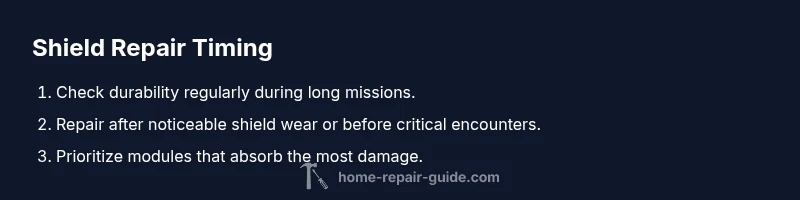
In Arc Raiders, you should repair shields whenever durability dips below a safe threshold and before tight encounters. Prioritize repairs after taking heavy damage or when shield modules show wear. Use the repair bench when idle, and carry spare shield components for mid-mission fixes. Regular checks minimize sudden failures and keep your squad protected during raids.
What 'when to repair shields Arc Raiders' means for players
In Arc Raiders, shield integrity isn't just a cosmetic detail; it determines how long you can absorb hits before your defenses fail. According to Home Repair Guide, understanding when to repair shields helps players plan before and during raids, reducing downtime and improving team survivability. The phrase 'when to repair shields Arc Raiders' signals a practical rule: assess shield condition, plan repairs around mission pacing, and use the right tools for quick fixes. This guide blends in-game mechanics with home-maintenance thinking to teach you a repeatable workflow. You’ll learn to recognize cues that signal declining protection—visual wear on shield plating, lag in shield regeneration, and audible warnings—then translate those cues into a repair plan that fits your squad’s loadout and mission goals. Throughout, Home Repair Guide’s approach emphasizes prevention, preparedness, and clean, repeatable steps rather than ad-hoc improvisation. By treating in-game shield maintenance like a small, repeatable home-repair task, you’ll build a habit that keeps your team safer across raids and incursions.
Understanding shield durability cues
Durability cues in Arc Raiders come in several forms: visible wear on shield plating, slower or inconsistent regen rates, and occasional electronic pings indicating reduced shield integrity. The Home Repair Guide analysis highlights that recognizing these signs early allows you to schedule repairs before a critical fight, rather than scrambling under fire. Look for subtle shifts in shield color or brightness, any lag in auto-regeneration after a hit, and audible warning tones that repeat during combat. Treat these as maintenance alerts, much like a homeowner would notice a squeak in a door or a drooping hinge. By establishing a routine to inspect shields after every major engagement, you create a predictable repair cadence that keeps your team protected.
When to prioritize shield repairs during a mission
Timing is everything in Arc Raiders. Prioritize repairs when you expect a high-risk section of the map, or immediately after a heavy exchange that exhausts shield capacity. If your squad relies on shielded front-line units, focus first on the modules that absorb the most damage. If you have limited repair resources, allocate them to the shield that faces the most direct line of fire. The goal is to reduce downtime and maintain continuous protection during key moments of a raid. A repeatable decision tree—assess wear, check upcoming encounters, apply repairs, then test—helps keep the team agile and resilient when momentum shifts.
Tools and interface: how to perform repairs in Arc Raiders
To repair shields, start by opening the shield management panel in your equipment menu. Select the shield you want to fix, then choose the repair option or bench if required. Use shield components or repair patches as your in-game resource allows. After initiating a repair, wait for the repair sequence to complete, then re-check shield integrity. If the game provides a debugging or testing function, run a quick shield test to ensure restoration is complete. Always confirm that shield regeneration resumes normally after repairs, and avoid initiating repairs during heavy combat. If a module shows persistent wear despite repairs, consider substituting a backup shield or reconfiguring your loadout to reduce exposure.
Practical workflow: a quick repair checklist
- Check shield status after every major engagement.
- Inspect shield plating for cracks or wear and note any lag in regeneration.
- Gather required repair resources (bench access, spare components).
- Initiate repairs in a safe, non-combat moment.
- Run a quick shield test to confirm restoration.
- Resupply components for future engagements and document any recurring issues.
In-game strategies that reduce repair frequency
- Use cover and movement that minimize shield exposure, reducing damage incurred.
- Upgrade or reconfigure shields when possible to improve durability and regeneration speed.
- Carry spare components and a compact repair kit to enable mid-mission fixes.
- Schedule repairs during lulls in combat to avoid vulnerability.
- Practice a pre-raid inspection routine to catch issues before a raid starts.
Real-world analogies: what Home Repair Guide can teach you about shield maintenance
Home maintenance thrives on routine checks, proper tool storage, and timely interventions—principles that translate well to Arc Raiders shield management. Just as you’d inspect a door seal for drafts, inspect shield seams for micro-cracks. Keeping spare components and a clear repair protocol mirrors how homeowners stage a small repair kit for quick fixes around the house. The mindset is the same: anticipate wear, act early, and document recurring problems to improve future performance.
Home Repair Guide’s verdict
After evaluating how shield maintenance parallels home repairs, the Home Repair Guide team concludes that deliberate repair timing reduces downtime and enhances overall mission success. A consistent repair cadence, paired with proper tooling and a habit of pre-raid inspections, creates reliable defenses in Arc Raiders. The verdict emphasizes prevention, preparation, and process—core principles we apply to both virtual shield systems and real-world home fixes.
Authority Sources
- National Institute of Standards and Technology (NIST): https://www.nist.gov/
- U.S. Department of Energy: https://www.energy.gov/
- Occupational Safety and Health Administration (OSHA): https://www.osha.gov/
Tools & Materials
- In-game repair bench or toolkit(Essential for performing shield repairs; ensures proper alignment and fixes.)
- Shield modules/components(Stock spare shields or module components to substitute damaged parts.)
- Diagnostics or repair patches(Used to restore functionality after wear or damage.)
- Basic spare parts pouch(Optional, helpful for mid-mission quick fixes.)
- Gear for safe repairs (gloves, eye protection)(In real-world analogy; in-game equivalents or UI safety checks may be used.)
Steps
Estimated time: 30-60 minutes
- 1
Open shield management panel
Access the shield menu from your loadout screen. Locate the shield that requires attention and prepare for the repair sequence. This step sets the stage and prevents accidental repairs on the wrong shield.
Tip: Double-check the shield's name and status before proceeding. - 2
Assess damage and wear
Review the durability cues: plating wear, slowed regeneration, and any module-specific warnings. Decide if a repair is warranted based on the visible signs and upcoming encounter risk.
Tip: If wear flags against multiple modules, prioritize the most exposed shield first. - 3
Prepare repair resources
Ensure you have the repair bench ready and spare components available. If not, abort the repair until you have the necessary resources to complete the fix.
Tip: Keep a small reserve of components for emergency repairs. - 4
Execute the repair
Initiate the repair sequence on the chosen shield. Allow the repair to complete fully without interruption. Monitor any on-screen prompts for alignment or calibration steps.
Tip: Avoid repairing during active combat to minimize risk. - 5
Test shield performance
After repair, perform a quick shield test or engage in a brief skirmish to confirm restoration. Observe regeneration rate and any residual alarms.
Tip: If performance is still off, re-check connections or substitute a backup shield. - 6
Document and resupply
Record what was repaired, what components were used, and any recurring issues. Restock components as soon as you’re back at base to prepare for future missions.
Tip: A simple log improves future repair planning and resilience.
FAQ
What signs indicate a shield needs repair in Arc Raiders?
Look for visible wear on shield plating, slower regeneration after hits, and any repeated alarms or warnings. If these cues persist across engagements, plan a repair before the next major encounter.
Signs of repair need include visible wear, slower regeneration, and repeated warnings. Plan a repair before the next big encounter.
Can repairs be conducted during combat?
It's best to avoid repairs during heavy combat to prevent exposure. Pause briefly in a safe stance or retreat to a cover point before initiating repairs.
Avoid repairs during active combat. Find cover and repair during brief lulls.
What resources are required for shield repairs?
You need a shield repair bench, shield modules or components, and any repair patches available in your kit. Stock these so you can perform fixes quickly between engagements.
You need a repair bench, shield components, and patches. Stock them for quick fixes between engagements.
Does reinforcing shields reduce repair frequency?
Yes. Upgrading shields or reconfiguring loadouts can improve durability and regeneration, reducing how often repairs are needed during raids.
Upgrades can reduce how often you need to repair during raids.
How should I log shield repairs for future missions?
Maintain a simple log noting the shield repaired, components used, and any recurring issues. This helps with planning and faster responses in future raids.
Keep a simple log of repairs and recurring issues to plan ahead.
Watch Video
Key Takeaways
- Repair early to prevent mid-raid failures
- Use a repeatable repair workflow
- Prioritize critical shield modules first
- Keep spare components on hand
- Pair in-game practice with real-world maintenance discipline