Do You Need to Repair Augments in Arc Raiders? A Practical Guide
Learn when Arc Raiders augments need repair, how to diagnose issues, and a practical step-by-step process for durable in-game gear and related hardware. Trusted guidance from Home Repair Guide helps players decide between repair, replacement, or waiting for patches.


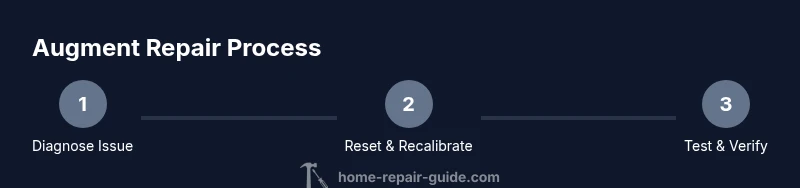
Do you need to repair augments arc raiders? In most cases, start with a firmware reset and recalibration before touching hardware. Assess symptoms like reduced response, glitches, or misalignment, then decide whether a simple repair, replacement, or patch wait is appropriate. This quick guide shows how to diagnose, choose a path, and perform safe, practical steps.
Do you need to repair augments arc raiders? Assessing wear and function
In Arc Raiders, augments are modular upgrades that can influence weapon handling, shield strength, and mobility. Do you need to repair augments arc raiders? The short answer is that not every issue requires repair, but many symptoms do point toward maintenance tasks. According to Home Repair Guide, practical repair decisions hinge on observed symptoms, patch notes, and whether the problem is systemic or isolated to a single module. When you start, describe what you notice in clear terms: is performance dipping across all stats, or is one stat underperforming while others remain stable? Are you seeing error codes, unusual vibrations, or misalignment during calibration? The Home Repair Guide team emphasizes that accurate diagnosis saves time and reduces the risk of introducing new faults. In the Arc Raiders context, treat augments like precision instruments: respond to symptoms with measured checks rather than impulse fixes. This section helps you decide if repair is appropriate, and whether you can address the issue with firmware resets, recalibration, or component replacement.
When to repair vs replace augments
Not every malfunction warrants a repair effort. If an augmentation shows minor glitches after a patch, a firmware reset or recalibration may restore functionality without component swap. If the issue is mechanical wear, corrosion on connector pins, or visible damage to the augmentation housing, replacement parts or professional service are more likely to yield reliable results. Home Repair Guide analysis, 2026, indicates that many failures in modular upgrades stem from poor mating between components, static damage, or firmware drift rather than the core hardware. Use a simple decision tree: if the fault persists after a full reset and reseating, and if bench testing reveals degraded output beyond the expected tolerance, consider replacement or professional repair. Conversely, if costs exceed a reasonable threshold or if the issue is tied to a patch that later revisions address, waiting for the next patch can be prudent. The goal is durability and consistent performance, not a quick, cosmetic fix.
Common failure modes and diagnostic approach
A augmentation failure can present in several ways. In Arc Raiders, you might notice reduced activation strength, inconsistent telemetry, or desynchronization between input and effect. More subtle signs include longer initialization times, random re-calibrations, or heat buildup during extended play. Start with a baseline: verify firmware version, confirm game settings, and ensure the augmentation is properly seated in its host module. If symptoms persist, document exact conditions when the fault occurs (game mode, map, loadouts) and compare with patch notes. This is where the Home Repair Guide analysis (2026) helps: distinguishing firmware drift from hardware wear can save you from unnecessary replacement. For many players, the issue may be a simple mismatch after a recent update rather than a true component failure.
In-game repair mechanics: steps to fix augments
In Arc Raiders, you typically fix augments through a combination of firmware actions and in-game reconfiguration. Start with a quick reset, then reinitialize the augmentation in the loadout screen. If the issue persists, rebind controls or recalibrate via the settings panel. If you can access safe-mode diagnostics, run the built-in tests to verify response times and accuracy. Some issues are resolved by re-seating the augmentation or uninstalling and re-installing the host module. By following these steps, you restore alignment between the augmentation and the game engine. Always document any changes and test across at least two different game scenarios to confirm stability.
Maintenance and care for augment gear outside the game
Beyond the digital domain, augmentation hardware may include physical modules, cables, and connectors. Practice regular care: keep connectors clean and dry, wipe with a microfiber cloth, and use isopropyl alcohol only on non-sensitive contact surfaces. Store augment components in anti-static bags, away from magnets and high humidity. When disconnecting parts, avoid yanking cables; instead, gently release latches. If you rely on external power or battery packs, use proper charging routines and avoid deep discharges. By maintaining hardware with these practices, you extend the life of your augments and reduce the frequency of functional faults.
Troubleshooting guide and next steps
If problems persist after following these steps, escalate to support channels. Capture a short video of the fault in action, along with system logs and patch version. Check for recent updates or hotfix notes released after your last session. Community forums, the official Arc Raiders support portal, and Home Repair Guide’s troubleshooting guides can provide additional context and tested workflows. When in doubt, revert to a known-good configuration and retest. As with any repair guide, patience and careful documentation pay off: they help you verify a fix and avoid repeating the same missteps.
Tools & Materials
- Precision screwdriver set (PH0/PH1)(Magnetic tip preferred; keep bits organized)
- Anti-static wrist strap(Ground before handling components)
- Microfiber cleaning cloth(Lint-free for connectors)
- Isopropyl alcohol 70% or higher(Only on non-sensitive surfaces)
- Low-resistance contact cleaner(For stubborn connector corrosion)
- Replacement augmentation components(Only if you have confirmed faulty parts)
- Small plastic tweezers(Gently handle tiny connectors)
- Anti-static mat or tray(Keeps parts organized)
Steps
Estimated time: 60-90 minutes
- 1
Inspect augmentation module for visible damage
Power down the system and inspect the augmentation housing, connectors, and pins for cracks, corrosion, or loose fittings. Document any signs of wear with photos to guide decisions later.
Tip: Label each connector and take a photo before removing anything. - 2
Isolate the fault with a safe reset
Disconnect from power, then perform a firmware reset or in-game reset of the augmentation. Re-seat the module afterward and power back on to test baseline behavior.
Tip: Always reset before swapping parts to confirm if the issue persists. - 3
Test with a controlled re-calibration
Enter the calibration or diagnostics menu and run a controlled re-calibration. Note any deviations in expected performance and compare to a known-good baseline.
Tip: Use two distinct test scenarios to verify stability. - 4
Replace damaged components if needed
If symptoms persist after resets and calibration, replace visibly damaged parts with clean, compatible spares. Re-test after each replacement to isolate the fault.
Tip: Do not mix incompatible parts; mismatches cause more faults. - 5
Perform a final in-game test
Load a standard loadout and run two different missions or modes to ensure consistent performance. Look for restored response time and expected in-game effects.
Tip: Record the test session for future reference. - 6
Document results and plan maintenance
Record the fault, fixes performed, parts replaced, and test outcomes. Schedule a follow-up check based on usage and patch cadence.
Tip: Keep a repair log to track reliability over time.
FAQ
Do augments degrade with use in Arc Raiders?
Yes, some augmentation components can show wear or firmware drift over time, leading to reduced performance or inconsistent results. Start with resets and calibration before assuming hardware failure.
Some augments can wear or drift over time. Begin with a reset and calibration before assuming hardware failure.
Should I repair or replace a failing augmentation?
Assess the fault’s severity, replacement part availability, and patch notes. If the fault persists after resets, replacement or professional repair may be warranted.
If resets don't fix it, replacement or professional repair might be needed.
Can firmware resets fix most issues?
Firmware resets often resolve glitches and minor miscalibration. If problems continue after a reset, investigate hardware wear or patch-related changes.
Reset first; if problems persist, look into hardware cause or patch changes.
Is it safe to perform augments maintenance at home?
Yes, with proper precautions: power down, use anti-static precautions, and avoid liquids near electronics. If you’re unsure, seek official guidance or professional support.
Yes, with care—power down, use anti-static gear, and avoid liquids.
Where can I find official support for Arc Raiders augments?
Check the Arc Raiders official support portal and community forums. You can also consult the Home Repair Guide troubleshooting guides for general maintenance workflows.
Visit the official Arc Raiders support site and reliable community guides.
What maintenance cadence helps prevent failures?
Establish a regular check-in, especially after patches. Document changes, test performance, and replace worn parts before failure signs appear.
Set a regular check-in after patches and test performance to catch wear early.
Watch Video
Key Takeaways
- Evaluate symptoms carefully before repairing augments arc raiders.
- Start with firmware resets and recalibration before hardware swaps.
- Document tests and results to guide next steps.
- Use anti-static practices to protect delicate components.
- Choose repair or replacement based on cost, patch notes, and durability.