Repairing a Chain Link: A Practical How-To Guide
Learn how to repair a broken chain link on a fence or gate with practical, step-by-step guidance, tools, safety tips, and maintenance. A practical Home Repair Guide tutorial that helps homeowners fix a weak link quickly and safely.


This guide shows you how to repair a chain link by replacing a damaged segment or splicing in a compatible replacement link. You’ll learn to select the right material, secure the new link, and check tension after the fix. With clear, safety-focused steps, this Home Repair Guide tutorial helps homeowners complete a durable repair without full replacement.
Understanding repair links: chain links and hardware basics
Chain links are interconnected metal loops that provide strength and flexibility for gates, fences, and decorative features. A single compromised link can compromise the entire section, so learning to assess and repair it properly matters. According to Home Repair Guide, a targeted fix is often cheaper and faster than replacing an entire fence panel. This guide uses practical language and clear steps to help homeowners and renters confidently perform a repair link repair, reducing downtime and extending the life of your fence or railing.
In residential fencing, the chain itself is typically galvanized steel or stainless steel, and it comes in standard gauges. The most common failure modes include corrosion at joints, bending due to impact, and fatigue from repeated flexing. When you spot a wobbly section, a cracked swage, or a visibly weakened link, it's time to evaluate whether you should repair the link or replace the affected run. A well-executed repair maintains fence tension, keeps pests and wind from widening gaps, and preserves the aesthetic value of your property.
Understanding the physical form of a repair link helps you choose a compatible replacement. Some links are fully closed loops, others are 'C' shaped with a hinge. You'll need to measure the diameter of the wire and the length of the link to ensure a match. The material matters, too: galvanized steel resists rust, while stainless steel offers superior corrosion resistance in harsh environments. For wood or vinyl fences with decorative chain features, you may encounter different connector types, such as hog rings, crimp-through links, or quick-release pins.
Assessing damage and choosing a repair method
A thoughtful assessment starts with a visual inspection and a gentle test of tension. Look for elongation, bending, or rust on nearby links; the surrounding posts and rails should feel stable. If the chain is still structurally sound except for a single weak link, a targeted repair is ideal. Home Repair Guide's analysis shows that addressing the damaged link while maintaining overall tension often yields the best long-term outcome.
Choose between repairing a single link, replacing a short run, or replacing the entire section if corrosion spreads beyond the immediate area. Replacement links should be sourced to match the original gauge and material. If you cannot locate an exact match, plan for an adjacent replacement to avoid mismatched strength. Consider environmental factors: high humidity, coastal salt spray, or heavy use may require more robust materials or protective coatings.
Safety considerations and pre-work prep
Before any repair, set up a safe workspace. Clear debris from beneath the fence, stabilize posts, and keep children and pets away from the area. Wear appropriate PPE: safety glasses to shield eyes from sharp edges and gloves to protect against burrs and splinters. A pocket flashlight can help you inspect joints in low light, and a small magnetic tray keeps fasteners from getting lost. If the fence is near electrical pathways or power lines, maintain extra distance and never work on damaged wiring or live components. Always work in daylight when possible to improve visibility.
Document the area condition with photos. This serves as a reference for the replacement link type and helps you explain the repair to neighbors or a property manager if needed. Finally, plan the repair around weather conditions. Wet or icy surfaces increase the risk of slips and affect the integrity of connections, so wait for dry conditions if you can.
In this context, a repair link is a small but critical component. Addressing it correctly preserves fence security and reduces future maintenance, which aligns with the practical, reliable guidance Home Repair Guide aims to deliver.
Step-by-step repair method overview
This section outlines the approach and is not a substitute for the detailed steps in the dedicated STEP-BY-STEP block. The method depends on the fence type and the available hardware. The core idea is to remove the damaged element and replace it with a compatible link, preserving tension and alignment. Start with a plan: measure the affected length, choose replacement link, and prep tools. Work methodically to avoid misalignment that would cause future stress. The goal is a seamless join that behaves like the rest of the fence, resisting wind and daily use.
How to select replacement links and hardware
Choosing the right replacement link means matching material (galvanized steel, stainless steel), gauge, and overall length. For most residential fences, galvanized steel links are cost-effective and durable, while stainless variants offer superior corrosion resistance where moisture or salt exposure is high. Inspect the adjacent links to determine whether you should replace a single link or a short run of material. If you replace a single link, ensure that the neighboring links remain square and that the tension remains consistent along the fence. When in doubt, bring a sample of the original link to a hardware store or fence supplier to confirm compatibility. Post-repair protection, such as corrosion inhibitors or a light coating of protective oil, can extend life in harsh environments.
Common mistakes and how to avoid them
Common mistakes include using a link that’s too large or too small, not aligning the join properly, or failing to reset tension after installation. Another frequent error is neglecting the surrounding links, which can be weakened by a faulty repair or over-stretched connections. Always test tension after completing the repair by gently pulling on the fence panel near the repair site and comparing it to the opposite side. If you notice any wobble or extra give, re-check the alignment and reseat the link. Avoid rushing the process; a careful, measured approach yields a longer-lasting fix.
Additionally, avoid using temporary fixes like zip ties for long-term repairs. While they may temporarily stabilize the area, they do not provide the same strength or durability as properly sized replacement links and proper fastening hardware. If you’re uncertain about the fit, consult a professional or refer to manufacturer guidelines to prevent future damage.
Maintenance and preventive checks after repair
After completing a repair, conduct periodic checks to preserve the fence’s integrity. Inspect the repaired area every few months and after severe weather. Look for new signs of wear, rust, or loosening in the adjacent links. Keep the fence clean of dirt and vegetation, which can trap moisture and accelerate corrosion. If you live in a salty or humid environment, consider applying a protective coating or removing any vegetation that traps moisture around the posts. A few quick maintenance routines can help you catch problems early and extend the life of your chain link system.
Finally, document maintenance activities for future reference. A simple log noting the date of repair, the link type used, and any follow-up visits helps you stay on top of ongoing fence care and supports a long-term plan for property maintenance.
When to call a pro and warranty considerations
Some repairs may require professional equipment or specialized knowledge, especially if the fence is tall, heavily loaded, or near property boundaries. If the damage extends beyond a single link or if you notice significant corrosion, a professional assessment is wise. A licensed contractor can assess structural integrity, confirm compatibility of replacement hardware, and ensure code compliance for safety and liability reasons. If your fence is under warranty, review the terms before attempting a repair yourself; unauthorized fixes may void coverage. Keep documentation of the repair in case warranty administrators request proof of work or materials used.
Tools & Materials
- Work gloves(Protect hands from sharp edges and burrs)
- Safety glasses(Eye protection from flying debris)
- Needle-nose pliers(Grasp and maneuver small links)
- Wire cutters or bolt cutters(Cut damaged segment cleanly)
- Replacement chain link or matching segment(Match material, gauge, and length)
- Hog rings and hog ring pliers(Used to secure new links on some fence types)
- Crimping tool or hog ring tool(Alternative fastening method if hog rings aren’t used)
- Metal file or deburring tool(Smooth edges after cutting)
- Marker and tape measure(Mark links and measure to ensure proper fit)
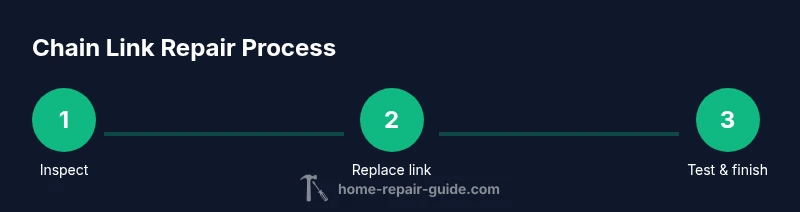
Steps
Estimated time: 60-120 minutes
- 1
Inspect the damaged area
Begin by visually inspecting the affected section and gently testing tension. Identify the exact link that is compromised and examine adjacent links for wear. This is your baseline before you modify anything.
Tip: Take a photo from multiple angles to document the condition. - 2
Gather replacement parts
Select a replacement link that matches the original gauge and material. If you cannot locate an exact match, choose the closest size to maintain overall strength and avoid over-tightening the system.
Tip: Double-check measurements against the existing links. - 3
Detach the damaged link
Use needle-nose pliers and wire cutters to carefully open adjacent links without distorting the neighboring joints. Remove the damaged link with minimal disturbance to the rest of the chain.
Tip: Work slowly to preserve the shape of surrounding links. - 4
Install the replacement link
Connect the new link so it sits flush with neighboring links and maintains proper alignment. If using hog rings, position them so they fully secure the joint without introducing sharp bends.
Tip: Verify that the new link lies in the same plane as the rest of the fence. - 5
Secure and test
Tighten fasteners and recheck tension along the repaired section. Test by gently pulling the fence near the repair site and comparing to other sections. Look for wobble or misalignment.
Tip: If you notice uneven tension, re-seat the link and adjust as needed. - 6
Finish and protect
If the metal shows any exposed edge after repair, deburr with a file and wipe down to remove oils. Consider applying a protective coating to resist future corrosion.
Tip: Keep the area clear of vegetation that traps moisture.
FAQ
What is a repair link and when should I repair it?
A repair link is a replacement connector used to fix a damaged section of chain link. If a single link is compromised but the rest of the fence remains solid, repairing the link is usually appropriate to preserve tension and appearance.
A repair link is a replacement connector for a damaged section. If most of the fence is sound, fix the single link to keep strength and look.
Do I need to replace the entire fence if a link is damaged?
Not always. If the damage is isolated to one link or a short run, a targeted replacement often suffices. Widespread corrosion or multiple failing links may require replacing a longer section.
Usually not. Fix a single link if the rest is solid; replace longer sections only if corrosion is extensive.
What tools are essential for repairing a chain link?
Basic tools include gloves, safety glasses, needle-nose pliers, wire cutters, and a matching replacement link. Depending on the fence type, hog rings and a securing tool may also be needed.
Gloves, safety glasses, pliers, cutters, and a replacement link are the essentials.
Is it safe to repair a chain link fence near power lines?
Maintain a safe distance from power lines and avoid any repairs if there is exposed wiring or the fence is near electrical infrastructure. If in doubt, consult a professional.
Keep away from power lines and get a pro if electrical components are involved.
How long will a repaired link last?
Lifespan depends on environment, material, and maintenance. Regular inspections and protective coatings can extend the life of the repaired link.
It varies, but proper materials and maintenance extend the life.
Watch Video
Key Takeaways
- Plan the repair before touching the fence
- Match replacement link material and gauge
- Secure joints with proper tools, not makeshift fixes
- Test tension and protect against future corrosion