Maintenance Repair and Overhaul: A Practical Home Guide
Practical, step-by-step guidance for maintenance repair and overhaul (MRO) of home systems. Plan, inspect, repair, and document safely with checklists, tools, and best practices for long-term reliability.


You will learn how to plan, execute, and document a maintenance repair and overhaul (MRO) cycle for common home systems. This guide covers inspection routines, tool lists, safety steps, and a repeatable workflow you can adapt to kitchens, bathrooms, HVAC, and more. Use the included checklists to standardize tasks and reduce breakdowns.
What is Maintenance Repair and Overhaul (MRO) and Why It Matters
Maintenance repair and overhaul (MRO) is a disciplined, repeatable process for keeping home systems — from plumbing to HVAC to electrical — reliable and safe. Rather than reacting to failures, MRO emphasizes proactive checks, planned interventions, and documentation that makes future work faster and more accurate. According to Home Repair Guide, a well-structured MRO mindset helps homeowners plan ahead, protect value, and reduce emergency costs. When you treat maintenance as an ongoing process, you’ll experience fewer outages, longer equipment life, and clearer budgets for improvements.
In practice, MRO blends routine inspection, diagnostics, and a documented action history. The goal isn’t perfection but reliability: identifying potential failures early, scheduling repairs before they become disruptive, and maintaining a living log of what was done, when, and why. This approach applies to every major system in the home, from the furnace that keeps you warm to the faucet that keeps dripping thermal water into the sink.
The Home Repair Guide team emphasizes that starting small — with a single room or one system — helps you build a repeatable routine that scales as you gain confidence and skills. Start with an up-to-date inventory, then align tasks with seasonal or usage-based triggers. The payoff is a simpler, safer, and more predictable home environment.
Core Principles of a Durable MRO Program
A durable MRO program rests on a handful of core principles that work together to reduce downtime and extend asset life. First, plan every task with a clear objective and success criteria. Second, schedule regular inspections to catch wear and degradation before it causes failure. Third, document everything in a central log so you can track trends, prove compliance if needed, and pass knowledge to others in your household or future owners. Fourth, use standardized checklists and consistent tools to ensure repeatable results. Finally, measure outcomes and adjust frequencies based on actual performance rather than assumptions. The result is a living system of checks and records that grows more effective over time.
Safety, Compliance, and Risk Management in MRO
Safety is non-negotiable in any maintenance workflow. Before you touch any system, shut off power or water as appropriate and use PPE such as gloves and eye protection. Lockout/tagout procedures should be followed for electrical work, and ventilation should be considered when working with solvents, cleaners, or gaseous appliances. For homes with natural gas or fuel burning equipment, monitor for leaks and follow local codes for venting and combustion safety. Documentation should include compliance notes, dates, and any permits or approvals required by your jurisdiction, which helps with future renovations or inspections.
In addition to personal safety, consider property safety: avoid creating electrical overloads, ensure ladders are stable, and never work on pressurized lines without a proper shutdown. The goal is to minimize risk while preserving the integrity of your home. The Home Repair Guide recommends maintaining an emergency plan so family members know what to do if something goes wrong during maintenance activities.
Documentation and Data-Driven Maintenance
A robust MRO program relies on good records. Start with an inventory of equipment, models, serials, and installation dates. Pair this with a maintenance calendar that specifies inspection intervals and upcoming service windows. Use simple checklists to document symptoms, measurements, part replacements, and test results. A well-kept log makes it easier to schedule replacements before critical failure, identify recurring issues, and share knowledge with future occupants. If you rely on digital records, back up your data and sync across devices to prevent data loss.
Analytics can guide decisions—note patterns like seasonal wear on heat exchangers or recurring leaks in a bathroom. Even without complex software, a consistent format for entries helps you spot trends quickly. The key is to make documentation a habit, not a one-off task that gets forgotten after a single repair.
Common Challenges and How to Overcome Them
Many homeowners struggle with inconsistent scheduling, budget constraints, or a lack of time and expertise. Start by prioritizing high-impact tasks that protect safety and avoid major disruptions. Break larger projects into small, manageable steps and assign realistic timeframes. If a system lacks clear maintenance guidance, consult manufacturer manuals and reputable sources to establish safe frequencies. Finally, build a network of trusted professionals for situations that require specialized skills and ensure you have a plan for when to call for help.
Another common hurdle is information overload. To combat this, create a single reference document that links to manufacturer specs, warranty terms, and local codes. Keep it accessible and organized so anyone in the household can act confidently. Remember, consistency beats intensity; a steady, repeatable routine yields better results over time.
Tailoring MRO to Different Home Systems
Different systems require different frequencies and checks. For HVAC, schedule seasonal filter changes and refrigerant checks where permitted. For plumbing, inspect for leaks around joints, valves, and fixtures; test pressure and drainage and track water usage. For electrical, verify outlets, GFCIs, and a quick insulation check. Appliances deserve monthly quick checks on cords and plugs, with annual service for critical parts. A smart approach is to develop system-specific checklists and to align them with your overall maintenance calendar. A well-tailored plan minimizes unnecessary tasks and focuses energy where it matters most.
Building a Repeatable MRO Workflow You Can Use
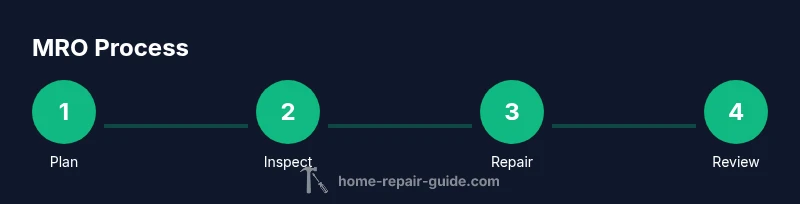
The simplest way to start is to define a small, repeatable loop: plan, inspect, repair or replace, and log. Create a master checklist that applies to the most important systems (plumbing, electrical, HVAC, appliances) and customize it as you gain experience. Schedule your tasks around seasons and household usage, and ensure every session ends with an entry in the maintenance log. As you refine your process, you’ll find that the workflow becomes faster and more accurate, turning MRO from a chore into a reliable habit. The Home Repair Guide team recommends starting with one or two core systems and expanding gradually to keep motivation high.
Tools & Materials
- Adjustable wrench(6-12 inch range for bolts and nuts in various sizes)
- Screwdrivers (Phillips and flat-head)(Magnetic tips, set of at least 6 bits)
- Voltage tester(Non-contact preferred for safety)
- Multimeter(Useful for electrical diagnostics and continuity tests)
- Pliers (needle-nose)(For gripping small components and wires)
- Tape measure(Minimum 25 ft for longer runs)
- Utility knife(Sharp blades and spare blades)
- Caulk gun and sealant(For weatherproofing and sealing joints)
- Leak-detection dye kit(Helpful for plumbing leaks)
- Pen and waterproof notebook(Logs and quick sketches)
- Safety gear (gloves, goggles)(Personal protection)
- Penetrating oil (WD-40 or equivalents)(Loosening rusted parts)
Steps
Estimated time: 2-4 hours
- 1
Assess scope and define objectives
Identify which home systems are in scope for this MRO cycle and set clear, measurable objectives (e.g., reduce leaks by X%, extend system life, or cut emergency calls). Document the baseline condition and desired outcomes in your maintenance log.
Tip: Write down success criteria before starting; it keeps the team focused. - 2
Inventory systems and set a maintenance calendar
Create an asset list with model numbers, age, and last service dates. Build a calendar that schedules inspections and preventive tasks by system and season.
Tip: Use color-coded prompts (green for on-track, yellow for upcoming, red for overdue). - 3
Prepare tools and safety measures
Gather all essential tools and PPE. Verify power is off where needed and confirm that ventilation or containment is adequate for the task.
Tip: Pre-check tools for wear; a missing screwdriver can derail a job. - 4
Inspect, diagnose, and document findings
Systematically inspect each in-scope area, note symptoms, take measurements, and record findings with photos if possible.
Tip: Document anomalies with date-stamped notes to track progression. - 5
Plan and perform repairs or replacements
Prioritize fixes by impact and feasibility. Gather parts, follow manufacturer guidance, and execute repairs with proper torque and sealants.
Tip: If a repair seems risky, mark it as deferred and consult a professional. - 6
Review results and update logs
After completing tasks, re-check critical functions, compare to baseline, and update all records. Schedule the next cycle based on results.
Tip: Close the loop by communicating outcomes to all household members.
FAQ
What does MRO stand for?
MRO stands for maintenance, repair, and overhaul. It’s a proactive approach to keeping home systems reliable through planned inspections, timely repairs, and thorough documentation.
MRO stands for maintenance, repair, and overhaul. It’s about planning, checking, and documenting to keep your home systems reliable.
Is MRO only for professionals or can homeowners do it too?
Homeowners can implement a basic MRO program with simple checklists, safety practices, and regular inspections. Complex tasks may require professional help, but a well-organized plan reduces risk and saves time.
Homeowners can start with a basic MRO plan, using checklists and safety routines. For complex tasks, consult a pro.
How often should I perform MRO checks?
Frequency depends on system type and usage. Seasonal inspections for HVAC and plumbing checks twice a year, with monthly quick reviews for appliances, offer a practical starting point.
Seasonal checks for major systems work well, with monthly quick reviews for appliances.
What tools are essential for basic MRO?
A basic toolkit with a wrench, screwdrivers, pliers, a voltage tester, a tape measure, a utility knife, and safety gear covers most common MRO tasks.
A basic wrench set, screwdrivers, pliers, a tester, and safe gear will handle many tasks.
How do I keep track of maintenance results?
Use a dedicated maintenance log (digital or paper) that records date, system, task performed, parts used, and next due date. Regularly review and update it.
Keep a simple log with dates, tasks, parts, and next due dates, then review it regularly.
When should I hire a professional for MRO?
If a task involves gas, complex electrical work, structural changes, or unknown safety risks, hire a licensed professional. Use your MRO log to track why and when you chose professional help.
Hire a pro for gas work, complex electrical tasks, or uncertain safety risks. Keep notes in your log.
Watch Video
Key Takeaways
- Plan first, then act with a documented workflow
- Keep a centralized maintenance log for every system
- Prioritize safety and compliance in every task
- Scale MRO gradually across home systems