Dent for Car Repair: DIY vs Pro Methods
Learn how to approach dent for car repair, choose between paintless dent repair and traditional methods, and follow a safe, practical step-by-step guide for minor dents. Includes tools, techniques, costs, and when to seek professional help.


You can repair many minor car dents at home using paintless dent repair (PDR) or traditional methods. Start by assessing the dent type and paint condition, choose a method, gather the right tools, and follow a step-by-step process. Reserve professional repair for sharp creases, edge work, or depth issues.
What 'dent for car repair' means and when DIY makes sense
Dents on a vehicle range from tiny, shallow marks to deep creases that distort the metal or poke through the paint. When we talk about the term dent for car repair in this guide, we’re focusing on minor, non-creed-like impact damage where the paint remains intact. For these cases, DIY approaches can be effective, safer, and more affordable than a full body shop visit. The Home Repair Guide team believes in practical, non-destructive techniques first, reserving professional services for dents with complex shapes, creases, or structural concerns. Before you start, assess your dent’s size, location, and whether there is any paint transfer or cracking. If the paint is damaged, your risk of further harm increases and professional repainting may be required. The key is to balance skill, tool quality, and the dent’s characteristics to decide if DIY is appropriate.
Assessing the dent type and paint condition
To determine whether a dent is DIY-friendly, first inspect the surface for paint cracks, chips, or color mismatch. If the paint is intact, and the dent is shallow with a smooth surface, DIY methods are reasonable to try. Deep creases, sharp edges, or damage near door seams often indicate higher risk that DIY could worsen the problem. If you’re unsure, start with safer tests (like PDR from the interior) and stop if you see flexing, cracking, or new distortions. Always document the original condition with photos in case you need to involve an insurance claim or a pro later.
Paintless dent repair (PDR) vs traditional repair: pros and cons
Paintless dent repair (PDR) uses specialized tools to massage the metal back toward its original shape from behind the panel, preserving factory paint when possible. It’s ideal for small to medium dents with no paint damage and accessible backside. Traditional repair involves pulling, filling, and repainting, which is necessary for dents with paint damage, creases, or edge distortions. PDR is often faster and cheaper, but it requires skill and proper access; traditional repair may be more forgiving for tricky shapes or damaged paint. The choice depends on dent type, panel accessibility, and your goals for finish quality and durability.
Tools, workspace, and safety essentials
Prepare a clean, well-lit workspace with a sturdy surface and ample room to maneuver. A basic DIY dent kit typically includes a suction cup, glue pulling system, pulling tabs, dent rods, microfiber cloths, rubbing alcohol, and a clean cloth. For safety, wear eye protection and gloves when using hot glue or metal tools, and keep children and pets away from the work area. Organize tools by category (PDR tools, glue kit, clamping/pullers) so you can access them quickly during the repair. Working on a car is best done with the vehicle cooled and parked in shaded, dry conditions to prevent accidents and paint issues.
Step-by-step overview (workflow) and decision tree
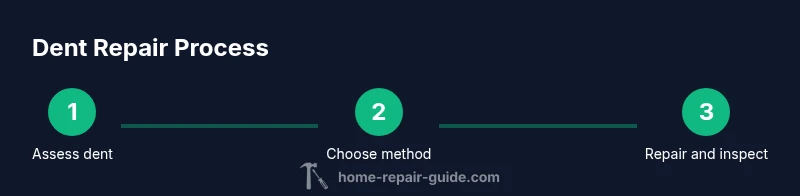
Armed with the right tools, approach the repair in a logical sequence: inspect and document the dent, select a method based on paint condition, prepare the surface, execute the repair with controlled force or pulling, and finally evaluate the result. If paint damage or stubborn dents persist after initial attempts, stop and reassess rather than continuing aggressive pressure. Small successes can be refined with a second pass, while larger dents often require a professional solution to avoid compromising the finish.
Aftercare and prevention: keeping dents at bay
After you finish a repair, clean the area again and apply a light wax or sealant to protect the paint. Regular washing and careful parking away from doors in tight spaces can reduce future dents. If you frequently park in high-traffic areas, consider installing protective door guards or parking aids. Remember, any DIY dent repair should be followed by a visual check for paint micro-damage, rust spots, or new indentations that could indicate an underlying issue.
Safety and maintenance reminders
DIY dent repair carries risks, including potential paint cracking, unseen structural movement, or misaligned panels if excessive force is used. Always work slowly, test on a small area first, and stop if you notice new changes in panel lines, color, or texture. For the best long-term results, combine careful technique with proper tools and protective equipment. If you’re in doubt, consult a professional before causing additional damage.
When to consider professional help or insurance
If a dent is creased, located near a seam, or involves multiple panels, the safest and most reliable outcome often requires a professional repair. Insurance considerations vary by policy; some minor dents may be out-of-pocket, while substantial damage could be claim-eligible. The decision hinges on your comfort with risk, the car’s value, and how much repainting or panel work is needed. The Home Repair Guide team recommends seeking a quote if paint damage is present or if you’re unsure about the repair’s impact on resale value.
Tools & Materials
- Clean microfiber cloths(For cleaning and buffing without scratching the surface)
- Rubbing alcohol or panel cleaner(Degreases the area before applying adhesive or glue pulls)
- Microfiber towels or soft cloths(Lint-free to prevent residue)
- Suction cup dent puller(Best for shallow, smooth dents with solid access)
- Glue pulling kit with tabs(Use hot glue sticks rated for automotive use)
- Plastic dent rods set(Helpful for guiding metal from behind, less aggressive than metal tools)
- Hair dryer or heat gun (low heat)(Light warming can soften paint for minor corrections (caution: avoid overheating))
- Painter’s tape and masking film(Protect nearby paint from glue or tools)
- Safety gear (gloves, eye protection)(Protects from hot glue and metal edges)
Steps
Estimated time: 60-120 minutes
- 1
Assess dent type and paint condition
Carefully inspect the dent to determine its depth, whether there is any creasing, and if the paint shows cracks or chips. This determines whether PDR or traditional repair is appropriate. Document the dent with photos to guide decisions and track progress.
Tip: Start with a dry run: place your hand flat over the dent to feel for sharp edges. - 2
Gather tools and set up workspace
Organize your dent kit, glue pulllers, suction cup, and rods. Ensure you have good lighting and a clean, stable surface. Protect nearby areas with tape to avoid accidental glue transfer and scratches.
Tip: Lay out tools in the order you'll use them to avoid searching during the repair. - 3
Clean the dent area
Wash the panel around the dent with mild soap, dry completely, and wipe with rubbing alcohol. A clean surface improves adhesion for glue pulls and reduces the risk of trapping grit under the tool.
Tip: Avoid solvents that can affect the paint or finish; stick to automotive-safe cleaners. - 4
Try paintless dent repair (PDR) techniques
If the backside is accessible, use a flexible tool to gently massage the metal back toward level. For shallow dents, PDR can be accomplished by working from the edge inward and using precise, light pressure. Pause if you see paint damage appear or if the metal yields unexpectedly.
Tip: Do not apply force on plastic bumper areas; keep the work limited to the metal panel. - 5
Use glue pulling for stubborn dents
Applying a small amount of automotive adhesive to a tab and attaching it to the dent can pull the metal outward. Once set, use a controlled pull with the tab and check progress often to avoid overpulling. Repeat as needed with each small adjustment.
Tip: Work gradually; a series of small pulls is safer than a single heavy pull. - 6
Optionally use suction or pulling tabs
If glue pulling isn’t effective, apply a suction cup or different tab sizes to achieve a better grip. Ensure the area around the dent is clean to maximize suction. Avoid yanking; apply steady, measured force.
Tip: Change tabs or positions if the dent doesn’t move with the initial setup. - 7
Inspect progress and adjust
Step back and examine the panel under good lighting. If you still see a high spot or a slight ripple, adjust with a gentle push from behind or a new pull with a different angle. Patience is essential for a smooth finish.
Tip: Take breaks to prevent tool fatigue and reduce the risk of mistakes. - 8
Finish with polish and sealant
Wipe away residues, then apply a light wax or sealant to protect the area. A final polish can help restore the surface texture and blend any minor imperfections. If paint hue looks off, professional repainting may be needed.
Tip: Use a soft polishing pad to avoid micro-scratches during finishing touches.
FAQ
Can I fix a car dent at home?
Yes, for small, non-creased dents with intact paint. Use paintless dent repair or glue pulling and follow safety guidelines. If the dent is deep, creased, or near a seam, seek professional help.
Yes, you can fix small dents at home, but avoid creases or edge damage. For anything complex, get a pro.
What is paintless dent repair (PDR)?
PDR is a method that restores the metal surface by massaging it back to shape from behind the panel, preserving the factory paint when possible. It works best on shallow dents with accessible back surfaces.
Paintless dent repair uses special tools to push the dent out without repainting.
When should I avoid DIY dent repair?
Avoid DIY if the dent is creased, the paint is cracked, the edge is distorted, or the panel sits near a seam. In these cases, professional repair minimizes risk and ensures proper alignment.
If the dent is creased or near a seam, it’s better to call a pro.
What tools do I need for DIY dent repair?
A basic dent repair kit with a suction cup, a glue pulling kit, tabs, dent rods, and soft cloths is typically enough for simple dents. Follow each tool’s instructions carefully to avoid damage.
Start with a suction cup and glue pulls; add tabs and rods if needed.
How long does the repair take?
DIY repairs can take from about 30 minutes to several hours, depending on dent size and method. Larger dents or challenging shapes may take longer or require multiple attempts.
Expect thirty minutes to a few hours, depending on the dent.
Is insurance ever involved in dent repair?
Insurance coverage varies by policy. Minor dents are often not claimed, while significant damage may be eligible if it meets your deductible and policy terms. Always check with your provider before filing.
Sometimes insurance covers it, but check your policy and deductible first.
Should I repaint after a DIY repair?
If the paint remains intact and the surface is smooth, repainting may not be necessary. If there is any paint transfer, cracking, or uneven color, a professional repaint could be required to restore the finish.
Repainting depends on paint integrity after repair; seek a pro if color is off.
Can I use household tools for dent repair?
Household tools should generally be avoided for dent repair due to risk of further damage. Use purpose-built dent repair tools designed for automotive panels and adhesives.
Stick to automotive dent tools; household tools can cause more harm.
Watch Video
Key Takeaways
- Identify dent type before choosing a repair method.
- DIY is feasible for minor, non-creased dents with intact paint.
- Paintless dent repair preserves paint when conditions are right.
- Use correct tools to minimize paint damage and maximize success.
- If unsure, consult a professional to avoid costly mistakes.