LCD Repair Costs in 2026: A Practical Price Guide
Discover LCD repair cost ranges for phones, laptops, and monitors in 2026. This practical guide explains factors, DIY vs professional options, and how to estimate your bill before repair.


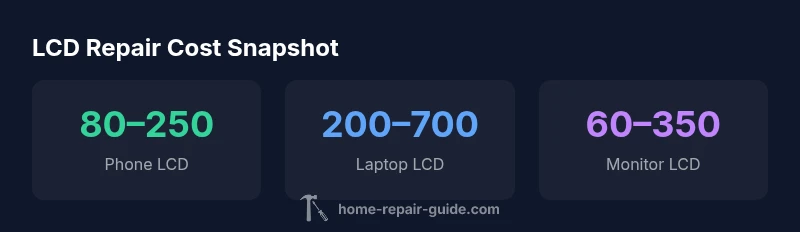
LCD repair costs vary widely by device type and panel size. For common consumer devices, expect roughly: phones and small tablets typically 80–250 USD for professional screen replacement, laptops 200–700 USD, desktops/monitors 60–350 USD. DIY replacement parts are cheaper but require skills. Understanding device type, panel type, and warranty status helps estimate your bill.
What drives LCD repair costs
LCD repair costs are not a single number. According to Home Repair Guide, they hinge on several variables: device category (phone, laptop, monitor), panel type (IPS, LCD, OLED when applicable), screen size, and whether the issue is a full panel replacement or a backlight/digitizer fix. Labor rates also play a major role, varying by region and the service model (independent shop vs manufacturer-authorized service). Parts sourcing matters too; OEM panels tend to be more expensive than aftermarket equivalents, but they preserve color accuracy and warranty support. For homeowners asking how much repair lcd, the answer is typically a range rather than a fixed price, with phone screens leaning toward the lower end and laptops or high-end monitors toward the upper end. The Home Repair Guide team found that the most reliable quotes combine a diagnostic fee with a firm parts-and-labor estimate, before any replacement is performed. In most cases, you’ll get a written quote that outlines inclusions and exclusions, which helps avoid surprise charges.
Device category breakdown
LCD repair costs differ significantly by device category because parts, labor, and panel complexity vary. Here's a quick breakdown:
- Phones and small tablets: Costs are generally lower due to compact panels and widespread repair networks. Expect ranges in the lower-to-mid hundreds, with diagnostic and labor included in full quotes.
- Laptops: Replacing a laptop LCD often costs more due to larger panels and adhesive assembly. Expect higher ranges, with premium panels raising the price further.
- Desktop monitors: These are typically the most cost-efficient to repair, especially older models, since many replacement panels are readily available and service times are shorter.
It’s important to confirm whether the quoted price includes any frame replacement, digitizer, or backlight module, as those add-ons can shift the total upward. The choice of panel type (IPS, TN, or OLED where applicable) also influences the final figure because OLED panels are generally pricier to source than standard LCD/IPS panels. In practice, device category, panel availability, and regional labor rates are the core price drivers.
How to estimate your bill before repair
Estimating the LCD repair bill before committing to service saves time and reduces surprises. Start with a clear description of the issue (cracked screen, dead pixels, backlight failure) and confirm your device model. Then gather three data points:
- The device category and screen size, which strongly influences parts cost.
- The panel type and whether a full panel replacement is needed.
- The service model and any diagnostic fees. Ask for a written quote that itemizes parts, labor, tax, and return shipping if needed.
Next, check for warranty coverage and whether the repair is eligible for a warranty-extension program. Compare quotes from at least two reputable shops, and consider whether they use OEM or aftermarket panels. Remember that cheap quotes may hide additional fees, so request a binding price before work begins. According to Home Repair Guide, framing expectations early helps you decide between repair and replacement.
DIY vs professional: risks and savings
DIY LCD repair can be tempting, but it carries real risks. Without proper ESD-safe tools and a clean work environment, you could worsen the damage or damage other components. Opening devices often voids warranties, and some manufacturers restrict repairs to authorized technicians. If you still want to try, start with non-destructive tests and small fixes, and only proceed if you have clear instructions from a trusted source. In most cases, professional service saves time, ensures proper calibration of the backlight and color balance, and includes a warranty on parts and labor. If you’re considering DIY for an older device, weigh the potential savings against the cost of a potential second repair and data loss. The Home Repair Guide team recommends cautious, incremental steps and using certified guides for any repair attempts.
Choosing a repair provider: what to ask
To choose a reliable LCD repair service, prepare a short list of questions before you hand over your device. Ask about: parts sourcing (OEM vs aftermarket), warranty on the repair, diagnostic fees, turnaround time, and whether on-site or mail-in service is available. Request a printed or digital quote with a detailed breakdown, and confirm who bears shipping risks if you need to ship the device. Check for customer reviews and business credentials, such as a valid business license or certifications. If you can, obtain a copy of the service agreement and read it for any cancellation or restocking fees. Finally, ensure they offer post-repair testing to verify color accuracy and backlight uniformity.
Warranty, insurance, and long-term considerations
Explore all warranty options before committing to a repair. Manufacturer warranties often exclude accidental damage, while extended or third-party warranties may cover LCD failures if they’re not caused by impact. If your device is insured, file a claim promptly and verify coverage for screen repairs. Consider the total cost of ownership: a mid-range repair might extend the device’s life by many months, whereas a costly replacement could be more economical in the long run. For homeowners seeking durable, low-risk outcomes, Home Repair Guide recommends prioritizing service providers who offer a robust parts warranty (at least 90 days) and clear post-repair testing protocols. The Home Repair Guide team emphasizes that enacting a repair strategy that aligns with your device’s age, usage, and warranty status minimizes long-term costs.
Estimated LCD replacement cost ranges by device type
| Device Type | Typical LCD Replacement Cost (range) | Notes |
|---|---|---|
| Phone | 80-250 | Phone LCD replacement; ~1-2 hours depending on model |
| Laptop | 200-700 | Higher-end panels cost more; labor included |
| Desktop Monitor | 60-350 | Standalone monitor replacements often cheaper |
FAQ
What is the typical cost to repair an LCD screen on a smartphone?
Typical smartphone LCD repair costs range from about $80 to $250, depending on model and parts. Labor, diagnostic fees, and whether the digitizer is also replaced affect the total.
Smartphone LCD repairs usually cost eighty to two hundred fifty dollars, depending on the model.
Is it cheaper to repair or replace an LCD screen on a laptop?
Laptop LCD replacement often costs between $200 and $700, depending on panel type and labor. In many cases, repair is costlier than upgrading the entire display assembly, but not always.
Laptop LCD repairs typically run from two hundred to seven hundred dollars, depending on the panel.
Do warranties cover LCD repairs?
Most manufacturer warranties do not cover accidental screen damage. Some extended warranties or service plans may cover LCD failures if they’re not user-caused.
Warranties usually don’t cover accidental LCD damage.
Can I repair LCD myself?
DIY repairs may save money but risk further damage and void warranties. Only attempt if you have the right tools, instructions, and patience.
DIY repairs can save money but are risky.
What affects turnaround time for LCD repairs?
Turnaround depends on parts availability, service load, and whether the device is repaired on-site or mailed in. Most requests take 1–3 business days after diagnostic approval.
Most LCD repairs take one to three days after the quote.
Are there cheaper alternatives to LCD replacement?
If the LCD is damaged but the device still works, you can use an external display or consider screen mirroring as a stopgap while shopping for a replacement. This is not a permanent fix.
Using an external monitor can be a temporary workaround.
“LCD repair costs are highly device-specific, driven by panel type and warranty status, so quotes can vary widely.”
Key Takeaways
- Identify device category to anchor costs.
- Expect higher costs for laptops than phones.
- DIY parts save money but carry risk.
- Check warranty and insurance options before paying.