Electricity Repair Near Me: A Practical Homeowner’s Guide
Learn how to find licensed electricians near you, verify credentials, compare estimates, and safely manage electricity repair projects. A practical Home Repair Guide tutorial for homeowners and renters seeking reliable electrical repair guidance.


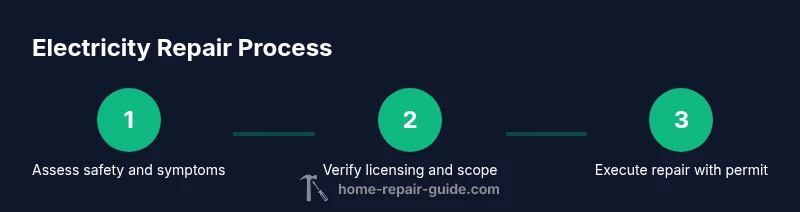
By the end of this guide, you will locate a licensed electrician for electricity repair near me, verify credentials, compare estimates, and safely coordinate repairs. Essential steps include checking licensing, reading reviews, asking about project scope and warranties, and preparing the work area. Be mindful of safety: shut off power at the main breaker, avoid DIY fixes for live circuits, and document any symptoms before calling.
Why Reliability Matters for Electricity Repair Near Me
According to Home Repair Guide, reliability matters because electrical problems can escalate quickly into fire, shock, or expensive damage to appliances. When you search for electricity repair near me, you’re not just looking for a quick fix—you’re seeking a safe, code-compliant solution that protects your family and property. A licensed electrician brings training in electrical theory, wiring methods, and local code requirements, reducing the risk of improper repairs and hidden flaws. In practice, a thorough assessment includes checking the service panel, grounding, circuit integrity, and safety devices such as GFCIs and AFCIs. It also means a professional can determine whether a repair is an isolated fault or a systemic issue that requires upgrades. Proactive maintenance and timely repairs save energy, reduce outage frequency, and lower the chance of future fire hazards. As you plan, remember that a reliable pro will communicate clearly about scope, cost, timeline, and warranty.
How to Search for a Qualified Electrician Near You
Finding a trustworthy electrician starts with a targeted local search and ends with a signed agreement and a clear scope. Begin by looking for licensed professionals who advertise experience with your home’s system (panel type, wiring age, whether aluminum wiring is present, etc.). Verify licensing status with the state board and confirm that the electrician carries general liability insurance and workers’ compensation. Read reviews from multiple sources, and ask for references you can contact. Request written, itemized estimates that detail labor, materials, permits, and warranties. Confirm whether a permit is required for the job and who will obtain it. Ask about after-work testing and the timeline for completion. A good pro will explain remedies, safety measures, and any code considerations specific to your area.
What an Electrical Repair Job Typically Involves
A typical electrical repair begins with a safety-minded inspection of the service panel, outlets, switches, wiring, and grounding. The electrician will diagnose the issue, determine whether the fix is a simple replacement or a broader upgrade, and present a scope of work. Depending on the findings, they may recommend upgrading AFCI/GFCI protection, replacing aging wiring, or upgrading the service panel to handle higher loads. If permits are required, the contractor will handle the paperwork and arrange inspections. After completing the repairs, the pro will conduct functional tests, verify that circuits are correctly wired, and ensure all safety devices function. A final walkthrough clarifies what was done and any recommended maintenance.
Safety Precautions Homeowners Can Take Before the Pros Arrive
Before any electrician arrives, make safety your priority. If you suspect a dangerous situation (burning smell, sparks, or smoke), evacuate and call emergency services. If the area is safe, switch off the main power or the affected circuit at the breaker panel to reduce risk while you prepare. Keep children and pets away from the work area. Clear access to the panel and outlets, and document symptoms and patterns (when the issue occurs, which outlets are affected). Do not attempt to disassemble panels or touch exposed conductors. Have a clear list of symptoms ready for the technician to speed up diagnosis.
What to Expect During and After the Repair
On arrival, the electrician will re-confirm the problem, set up safety barriers, and begin testing with professional tools. Expect a clear, itemized quote and a timeline for the work. After repairs, the technician will re-test circuits, confirm proper grounding, and verify fault-free operation of outlets and switches. You should receive documentation of the work performed and any warranty coverage. Depending on the job, a city inspection may be required to finalize permits. Proper testing and paperwork help prevent recurring issues and provide long-term peace of mind.
When to Consider Upgrading or Replacing Components
Older homes often require panel upgrades or wiring replacements to meet current safety codes. A common scenario is upgrading a 60–100 amp service to 100–200 amps to support modern appliances and electric vehicles. Knob-and-tube or outdated aluminum wiring frequently triggers code violations and hazard flags, prompting replacement rather than repair. Discuss long-term reliability with your electrician: upgrading can improve safety, reduce nuisance trips, and enhance energy efficiency. While upgrades cost more upfront, they may prevent expensive fixes later and improve home value.
Tools & Materials
- Non-contact voltage tester(To quickly verify live circuits without contact)
- Multimeter(Digital/auto-ranging for voltage, continuity, resistance)
- Insulated screwdriver set(Flathead and Phillips, insulated up to 1000V)
- Wire nuts and electrical tape(Assorted sizes; label wires during testing)
- Safety glasses(Eye protection during troubleshooting)
- Flashlight or headlamp(For dim or dark work areas)
- Insulated gloves (optional)(Extra protection when handling live parts)
Steps
Estimated time: 2-6 hours
- 1
Prepare your space
Power down the affected area by turning off the main breaker if you suspect a hazard. Clear the area, remove nearby flammables, and unplug devices from affected outlets when safe. This minimizes risk and helps the electrician diagnose without competing loads.
Tip: If you’re unsure about which circuit to shut off, ask the electrician to guide you during the initial call. - 2
Identify the problem safely
Use a non-contact tester to check for live wires and test outlets for proper grounding. Document any buzzing, warm outlets, flickering lights, or tripped breakers. Do not touch exposed conductors or attempt repairs on live circuits.
Tip: Take photos of the panel, outlets, and any labels to help the pro assess quickly. - 3
Contact a licensed electrician
Select a local, licensed professional with electrical experience similar to your issue. Share symptoms, photo evidence, and any existing permits. Request an itemized written estimate and ask about warranties.
Tip: Ask for license number and verify it with the state board before any work begins. - 4
Prepare the site for repair
Provide easy access to the panel and affected outlets. Label circuits if possible and remove fragile items from the area. Ensure pets and kids are at a safe distance.
Tip: Have a clear point of contact for scheduling changes or additional questions. - 5
Review estimates and authorize work
Compare labor, materials, permit costs, and warranty terms. Confirm the expected timeline and whether post-work inspections are included. Do not approve unitemized charges.
Tip: Ask for a written scope of work and a breakdown of any potential extra costs. - 6
Post-work checks and documentation
Test every repaired circuit, verify grounding, and confirm that safety devices function properly. Obtain warranty documents and keep records for future maintenance.
Tip: Keep receipts and note any maintenance recommendations for the next year.
FAQ
What should I do first if I notice a circuit breaker trips frequently?
Turn off the affected circuit, unplug devices, and check for overload. If it trips again, avoid DIY fixes and contact a licensed electrician.
Turn off the circuit, unplug devices, and contact a licensed electrician if it trips again.
Can I perform electrical repairs myself to save money?
For most electrical repairs, professional licensing is required and unsafe for untrained homeowners. Simple troubleshooting may be possible, but don't work on live parts.
Electrical work should be done by licensed pros; DIY is risky.
What licenses should I look for and how can I verify them?
Ask for license number and verify with the state licensing board; ensure the contractor has general liability insurance and workers’ compensation.
Check their license number with the state board and confirm insurance.
What should I expect in an electrical inspection before repair?
The electrician will inspect the panel, outlets, wiring, and grounding; they may test circuits and identify code violations; a plan will be provided.
Expect a comprehensive inspection of the panel, outlets, and grounding.
How long do electrical repairs typically take?
It varies by job and access, but most small repairs take a few hours; bigger upgrades may take longer.
It depends, but many jobs take a few hours to a day.
Should I upgrade older wiring or panels?
Older wiring or panels may need upgrades to meet current codes; discuss with your electrician; upgrades may reduce future hazards.
Older wiring might need upgrading to meet code.
Watch Video
Key Takeaways
- Verify licensure before repairs.
- Document observed symptoms for accurate diagnosis.
- Obtain itemized quotes and warranties.
- Prioritize safety by shutting off power before inspection.