Repair Drywall Near Me: A Practical Step-by-Step Guide
Learn how to repair drywall near me with a practical, safety-first approach. This comprehensive guide covers prep, patching, sanding, priming, and finishing to restore smooth, durable walls.


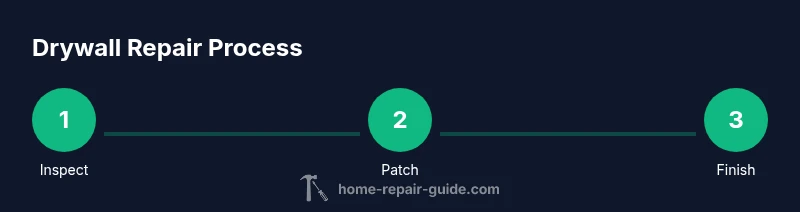
You can repair drywall near me by following this practical, steps-based approach: inspect the damage, gather a patch, joint compound, and tools, prepare the surface, apply a patch, tape and fill, sand smooth, prime, and paint. Plan for ventilation and cleanup. Safety first.
Understanding drywall damage and when to repair
Drywall damage happens from everyday bumps, humidity, and structural movement. Small holes from nails or doorknobs are typically cosmetic and repairable with a patch and joint compound, while larger dents may signal moisture intrusion or framing movement. The objective is a flat, paint-ready surface that endures. This guide provides a repeatable workflow you can follow for tiny dings or moderate patches. According to Home Repair Guide, approaching repairs methodically reduces rework and yields durable results. If you’re searching for local help, a simple search for repair drywall near me can connect you with qualified professionals for more complex issues. By understanding causes and limits, you’ll know when DIY is enough and when to call a pro.
Safety first: PPE, ventilation, and workspace setup
Before touching the wall, protect yourself and the area. Wear a dust mask, safety glasses, and gloves to guard against drywall dust and sharp edges. Lay down drop cloths, seal off adjacent rooms if possible, and ensure good ventilation. Turn off nearby outlets if you’ll be working near electrical fixtures. A clean, well-lit workspace helps you spot flaws and feather edges more accurately. Following a safety-first approach minimizes mess and speeds up your repair journey. The Home Repair Guide team emphasizes PPE and preparation as core steps in any drywall project.
Assessing the damage and selecting a repair strategy
Not all damage requires the same fix. For tiny holes or nail pops, a patch and thin coats of joint compound can suffice. Larger holes or damaged sections may need a backing board or drywall patch along with paper or mesh tape. If moisture is present, address the source first and consider replacing the affected drywall if swelling or mold is evident. Start with a test patch to gauge texture and paint match. If you notice wide cracks along a seam, you may need to remove and re-skim the joint compound to restore flatness. When in doubt, choose a patch-and-fill method first and monitor the area over a few days to confirm durability.
Patch repair for small dents and nail holes
For small holes, a self-adhesive mesh patch is convenient and fast. Press the patch firmly over the hole, then apply a thin coat of joint compound with a putty knife, feathering the edges outward. Allow it to dry fully before adding a second, slightly wider coat. Finish with a light sanding and a primer coat to seal the repaired area. This approach minimizes prep time while delivering a durable, nearly invisible repair when done with care.
Repairing larger holes and damaged sections
Larger holes require a patch that covers the hole with backing. Cut a patch to fit, insert a backing board or solid support behind the hole, then screw the patch in place. Cover the seams with paper or fiberglass mesh tape and apply multiple coats of joint compound, letting each coat dry and sanding between coats until the surface is smooth and flush with the surrounding wall. Check for flatness with a straightedge and fill any remaining low spots. After the final coat dries, sand to a pristine finish and prime before painting.
Sanding, priming, and finishing
Sanding is critical for a professional look. Use a sanding sponge or block with 120-150 grit to feather edges without gouging. Wipe away dust, then apply a stain-blocking primer to even out color and seal the patch. Choose a paint sheen that matches the room (eggshell for walls, satin for trims). Apply two thin coats rather than one thick coat to reduce drips and ensure uniform color. After the paint dries, inspect under different lighting to catch any remaining flaws and touch up as needed.
Common mistakes and how to avoid them
Rushing coats or skipping sanding leaves ridges or pinholes. Skipping primer can cause uneven color absorption, especially on patched areas. Not properly sealing exposed edges in moisture-prone rooms invites future issues. Take your time with each coat, allow complete drying, and always sand between layers for a smooth, durable finish. If you’re unsure, practice on a scrap piece of drywall to hone technique before patching your wall.
Maintenance and prevention tips
Keep drywall looking fresh by addressing leaks promptly and improving ventilation in kitchens and bathrooms. Use caulk to seal gaps around baseboards and fixtures to minimize cracking and dust entry. Regularly inspect high-traffic areas for nail pops, hairline cracks, or moisture signs, and address problems early. A quick annual check can prevent larger repairs later and preserve interior aesthetics.
When to call a professional
If you encounter water intrusion, mold, large-scale damage, or multiple patches across a room, consult a drywall contractor. Structural concerns or complex repairs are best left to pros who can assess load-bearing considerations and ensure code-compliant work. Early professional input can save time and protect your home’s value.
Authority sources and further reading
For safety guidelines and best practices, consult official resources such as OSHA, state extension services, and indoor air quality resources. See the sources section for links to reliable information about surface prep, dust control, and durable finishes.
Tools & Materials
- Drywall patch (self-adhesive or metal patch)(Choose patch size to cover hole; self-adhesive options exist)
- Joint compound (premixed)(For filling seams and patches)
- Drywall tape (paper or fiberglass mesh)(Used over seams or patches)
- Drywall saw or utility knife(To cut patches and remove damaged drywall)
- Putty knife (4-6 inch)(For applying and feathering compound)
- Sanding sponge or sanding block (120-150 grit)( Feather edges and blend repair)
- Mud pan(For holding joint compound)
- Primer (stain-blocking if needed)(Seal patched areas before painting)
- Paint (matching wall color)(Finish coat after priming)
- Drop cloths or plastic sheeting(Protect floors and furniture)
- Dust mask and eye protection(Guard against dust during sanding)
- Measuring tape and straight edge(For patch sizing and alignment)
- Backing material (thin plywood or furring strip)(Needed for large holes if backing is not available)
- Screwdriver or drill(To secure backing or patch screws)
- Water and cleaning supplies(For cleanup and dust control)
Steps
Estimated time: 1-2 hours
- 1
Inspect damage and plan repair
Assess hole size, moisture, and surrounding texture. Decide patch type and backing needs. Record measurements to guide patch size and coat thickness.
Tip: Document size and any moisture signs to guide repair strategy. - 2
Protect area and gather materials
Lay drop cloths, remove furniture, and organize tools within reach. Set up lighting to clearly see texture and edges.
Tip: Work with dry hands and keep tools clean to prevent mud from drying on them. - 3
Cut clean edges around the hole
Use a sharp utility knife or drywall saw to square the hole for patching. A clean opening makes patch alignment easier.
Tip: Keep a straightedge pressed against the wall while cutting. - 4
Attach backing for large holes
If needed, insert a backing board behind the hole and secure with screws. This provides a stable surface for patching.
Tip: Use a scrap piece of plywood or a furring strip as backing. - 5
Position patch and seal edges
Place the patch over the hole and align with studs or backing. Apply first coat of joint compound around the edges to seal the patch.
Tip: Center the patch to avoid gaps at the edges. - 6
Apply tissue tape or mesh for seams
Embed a layer of tape over the patch seam and press to remove air pockets. Apply a thin coat of joint compound over the tape.
Tip: Work gradually and avoid building up too thick at once. - 7
Build up with multiple coats of compound
Let each coat dry fully, then sand lightly before applying the next. Aim for a flush surface with surrounding drywall.
Tip: Feather the edges 6-8 inches beyond the patch. - 8
Sand to a smooth finish
Use a fine-grit sanding sponge to smooth patched area. Wipe away dust before priming.
Tip: Avoid sand-through by applying thin coats. - 9
Prime and paint
Apply stain-blocking primer to seal patched area, then paint to match the wall. Check color under different lighting and adjust if needed.
Tip: Consider using a paint with the same sheen as surrounding walls. - 10
Cleanup and final inspection
Remove cloths, vacuum dust, and inspect under natural light. Touch up any spots that appear scuffed or shade-mismatch.
Tip: Store tools properly to prevent rust on metal patches.
FAQ
What is the best patch for a small hole in drywall?
A self-adhesive mesh patch is convenient for small holes. Apply patch, then cover with joint compound, smooth edges, and sand once dry.
For small holes, use a mesh patch and joint compound, then sand and prime for a seamless finish.
Can I repair drywall near me myself or should I hire a pro?
For small holes, DIY is usually fine with a patch kit; larger damage, moisture, or structural concerns warrant a professional assessment.
DIY works for small patches; for bigger issues or moisture, hire a pro.
How long does drywall patching take to dry?
Joint compound generally dries between coats based on thickness and humidity; plan for at least several hours between coats and up to a day for final cure before painting.
Drying often takes several hours between coats, and up to a day before painting.
Should I prime before painting after patching?
Yes. Priming seals the patch, prevents paint absorption differences, and helps achieve an even finish.
Yes, prime the patched area before painting for an even look.
When should drywall be replaced rather than patched?
If the panel is swollen, heavily water-damaged, or shows mold growth, replacement is recommended rather than patching.
If moisture is extensive, consider replacing the drywall rather than patching.
Watch Video
Key Takeaways
- Assess damage before patching to choose the right method
- Use proper backing for larger holes to ensure durability
- Feather edges and sand between coats for a seamless finish
- Prime before painting to achieve even color and finish