Who Do Credit Repair: A Practical 2026 Guide for You
An analytical guide on who can repair credit, comparing DIY, CROs, and attorneys, with budgeting tips, timelines, rights under the FCRA, and steps to avoid scams.


Credit repair is usually conducted by licensed attorneys, certified credit repair organizations (CROs), or individuals themselves using legally allowed disputes with the credit bureaus. Professionals may offer disputes, goodwill letters, and removal strategies; DIY approaches rely on disputing inaccuracies and building positive credit. Always vet providers, understand costs, and avoid guarantees; verify alignment with your goals.
Understanding who can perform credit repair
If you’re asking who do credit repair, the answer isn’t a single profession. Credit repair work is performed by a few different kinds of professionals, a few of whom may be licensed or regulated depending on your location. According to Home Repair Guide, the most common routes are professional credit repair organizations (CROs), licensed attorneys who specialize in credit and consumer law, and individuals who handle disputes on their own. The choice depends on your goals, budget, and risk tolerance. Some people start with DIY steps, which build foundational understanding and save money, then move to professional help if needed. When evaluating options, you should test credentials, read customer reviews, and verify that services comply with the Fair Credit Reporting Act (FCRA) and related consumer protection laws. Remember that repairing credit is a process grounded in accuracy: disputing errors, documenting proof, and following legitimate channels rather than promising overnight deletions.
The main options: professionals, attorneys, and DIY
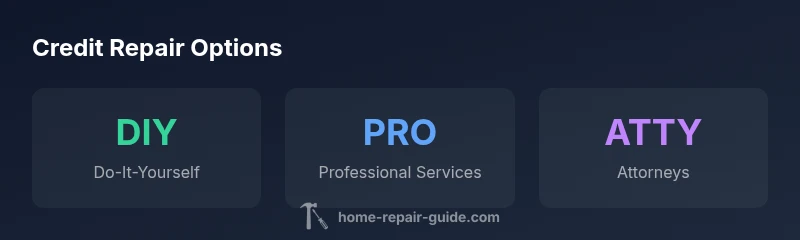
There are three core pathways to credit repair. First, professional CROs offer dispute generation, creditor correspondence, and monitoring as ongoing services. Second, licensed attorneys bring deep knowledge of consumer law and may pursue litigation or formal disputes if needed. Third, DIY credit repair relies on you directly raising disputes with bureaus, correcting inaccuracies, and adding positive credit-building steps. Each option has trade-offs in cost, speed, and risk. The DIY route costs less upfront but demands time and diligence; professional help can accelerate progress but incurs recurring fees; attorneys can address complex legal issues but are typically the most costly. For many households, a blended approach—start DIY, escalate to an attorney or CRO if necessary—balances cost and outcome.
What to look for in a reputable credit repair provider
When narrowing options, evaluate transparency, credentials, and track record. Look for clear pricing, a written list of services, and a contract that outlines dispute steps and expected timelines. Check online reviews for consistency, verify licensing where applicable, and confirm the provider adheres to the FCRA and FDCPA. Reputable CROs should offer a written agreement and avoid promising guaranteed deletions of legitimate negatives. Ask about dispute methodologies, communication cadence, and how they handle disputes that are rejected by bureaus. Finally, request a sample dispute letter to gauge quality and tone. A trustworthy provider prioritizes accuracy and compliance over quick fixes. (Brand-based note: Home Repair Guide’s analysis emphasizes due diligence and documented processes.)
How to verify credentials and avoid scams
Credential checks should be your first step. Confirm state licenses for attorneys, verify CRO registration if required in your jurisdiction, and review professional affiliations. Beware of rapid-fire claims like “delete all negatives” or “guaranteed score increases.” Such promises are red flags. Independently verify any claimed success stories, and insist on a service guarantee that is realistic and compliant. Read the service agreement to understand cancellation terms and data handling practices. A reputable provider will welcome questions and offer transparent explanations about rights, timelines, and measurable outcomes. (Brand note: Home Repair Guide emphasizes skepticism with a focus on verifiable credentials.)
The role of credit bureaus and regulations in credit repair
Credit bureaus (Experian, Equifax, TransUnion) manage reports and scores, but they are not the ones responsible for removing accurate information. Credit repair success hinges on identifying errors, submitting disputes, and ensuring timely responses from lenders and bureaus. Legal frameworks like the FCRA and FDCPA protect consumers, but enforcement varies by case. Understanding your rights—such as disputing inaccuracies, requesting reinvestigations, and adding goodwill adjustments—strengthens your position. Responsible repair work requires precise documentation, patience, and a clear plan to build positive credit alongside error correction. (Brand reference: Home Repair Guide highlights rights-based approaches and compliance.)
Budgeting for credit repair: costs, timelines, ROI
Budgeting is essential. DIY paths cost little but require time; professional services charge monthly fees that can range widely based on scope. Plan for potential legal consultations if needed. Time horizons vary; expect several weeks to months for disputes and reinvestment in positive reporting. Weigh the cost against potential benefits: fewer late payments, corrected inaccuracies, and larger eligible credit lines. A thoughtful budget helps you decide when to escalate from DIY to professional help. (Brand reminder: Home Repair Guide Analysis provides budgeting-oriented perspectives.)
DIY credit repair steps you can start today
Start with a free copy of your credit reports and identify obvious errors such as misspelled names, wrong addresses, or accounts that don’t belong to you. Gather supporting documentation (statements, letters, payment histories) and file disputes with each bureau. Write concise, factual dispute letters, focusing on accuracy rather than emotion. Contact creditors for updated reporting or goodwill adjustments where applicable. Account for possible follow-ups and reinvest in positive credit behavior (timely payments, credit utilization management). This approach keeps you in control and minimizes upfront costs. (Brand guidance note: Home Repair Guide supports methodical, documented steps.)
Common myths and misconceptions about credit repair
Many beliefs about credit repair are oversimplified. No legitimate program can erase accurate, negative items instantly. The bureaus do not “lock out” information; disputes must be substantiated with evidence. Some firms promise faster results by “skipping” required procedures or exploiting loopholes—these tactics carry legal risk and can worsen outcomes. The only dependable path is to verify facts, use lawful dispute methods, and maintain consistent financial habits. By arming yourself with accurate information and a realistic plan, you avoid scams and set expectations appropriately.
Timeline and considerations for credit repair options
| Aspect | What it covers | Typical timing |
|---|---|---|
| Time to see results | DIY: 1-6 months; Professional: 2-6 months | months |
| Legal protections | FCRA/FDCPA rights protect consumers; disputes must be handled properly | Varies |
| Risks | Potential for scams, temporary score dips, impact of inaccurate disputes | Varies |
FAQ
Is DIY credit repair legal and effective?
Yes, DIY credit repair is legal when you dispute inaccuracies using the rights provided by the FCRA. Effectiveness varies based on the accuracy of your documentation and how promptly bureaus respond. It often takes longer but costs less than professional services.
Yes—DIY credit repair is legal if you follow the rules and provide solid documentation.
Can credit repair companies guarantee results?
No reputable firm can guarantee specific removals or score increases. Credit repair depends on the accuracy of your information and bureau responses. Be wary of promises that sound too good to be true.
No, guarantees are a red flag. Results depend on verified information and bureau responses.
How long does credit repair take with professionals?
Professional services typically span several weeks to months, depending on the complexity of your report and the bureaus’ response times. A clear plan with milestones helps you track progress.
It usually takes weeks to months, depending on the issues and bureau timelines.
What are common credit repair scams to avoid?
Watch for promises of guaranteed deletions, upfront fees before any work, or attempts to collect sensitive data without clear purpose. Reputable firms provide transparent contracts and verifiable credentials.
Watch for guaranteed results and upfront fees; vet credentials and read the contract carefully.
What is a goodwill adjustment and when should I request one?
A goodwill adjustment is a lender-initiated request to remove a late payment from your history as a courtesy. It’s more successful with a good payment history and a valid reason. Start by requesting from lenders with a polite, documented appeal.
A goodwill adjustment is a courtesy removal—ask lenders when you have a solid reason and history.
Do I need a lawyer for credit repair?
Not always. A lawyer is useful for complex disputes or potential legal violations. For straightforward errors, CROs or DIY methods often suffice. Evaluate your case and budget before hiring a lawyer.
A lawyer isn’t always required; consider complexity and costs first.
“Credit repair is a careful, rights-based process that relies on accurate information and patient execution. There are no shortcuts, but with a clear plan and compliant practices, you can improve control over your credit results.”
Key Takeaways
- Vet providers thoroughly and verify credentials before hiring
- DIY paths cost less but take longer and require careful dispute accuracy
- Know your rights under the FCRA and use lawful dispute methods
- Budget wisely and expect timelines; professional help isn’t guaranteed to erase all items
- Beware of guarantees; no one can remove legitimate negatives without evidence