Online Car Repair Estimate: A Practical Guide for Homeowners
Learn how to use an online car repair estimate to forecast labor, parts, and total costs. This guide explains calculation basics, typical ranges, and tips to compare quotes for smarter decisions.


What is an online car repair estimate and when to use it
According to Home Repair Guide, an online car repair estimate provides a ballpark cost preview for repairs you suspect your vehicle needs. It combines typical labor needs, common parts costs, and standard shop rates to give you a rough total before you set foot in a shop. This tool is especially useful when you’re planning budget-friendly auto care, shopping around for quotes, or trying to decide whether a repair is urgent. For everyday car maintenance — oil changes, brake pad wear, or tire rotation — an online estimate can help you decide if you should proceed now or wait for a written quote. Remember that estimates are starting points; actual invoices can differ due to vehicle condition, aftermarket parts choices, or regional pricing. You’ll often see estimates advertised by independent auto shops, dealership service centers, or car repair networks. Using them responsibly means knowing what’s included, what isn’t, and how to read the line items so you don’t overlook hidden fees. In short, this approach helps homeowners and drivers plan ahead and avoid sticker shock.
How the calculation behind online estimates works
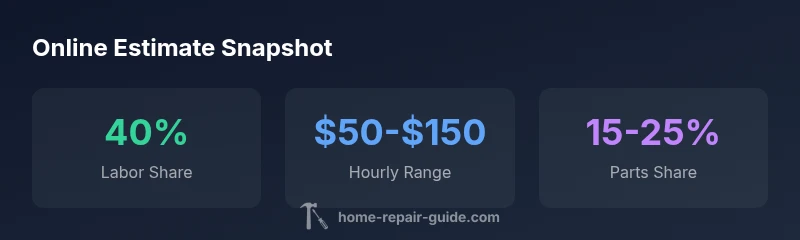
Online estimates rest on a simple formula built from three inputs: labor hours, labor rate, and parts cost. The basic equation is laborHours * laborRate + partsCost. When you adjust hours or the hourly rate, the total shifts accordingly; parts costs add a separate, often variable component. In practice, shops may also apply a small diagnostic fee or environmental fees, but many online tools keep to the core inputs to remain transparent. The laborHours estimate is guided by typical times for common jobs and may come from historical data, manufacturer guidelines, or technician experience. LaborRate reflects market rates by region and shop type, so urban settings or specialized shops tend to be higher than rural ones. PartsCost aggregates the price of new components, consumables, and any core charges. You can often refine each input to better fit your situation—the car’s make, model, and the specifics of the failure influence hours and parts lists. This transparency helps you compare apples to apples across providers and understand where your money is going. Based on Home Repair Guide analysis, the accuracy of online estimates improves when you provide clear symptoms and a VIN or service description.
Factors that influence estimate accuracy
Online estimates can be affected by several factors, including vehicle specifics, shop type and location, parts quality, the scope of diagnostics, and any added fees. A higher-end dealership may price parts and labor differently from a local independent shop. Parts quality, such as OEM versus aftermarket components, can also swing costs. If the issue is unclear, estimates may reflect a broader diagnostic approach, which increases the labor time. Hidden fees like disposal charges or environmental fees can surprise you if not disclosed. Beyond these, timing and demand can push labor rates in busy seasons. Home Repair Guide analysis shows that estimates improve when you provide precise symptom descriptions and vehicle details, which reduce guesswork and align expectations across providers.
Practical steps to using online estimates effectively
To make the most of online estimates, start by gathering a clear symptom description and, if possible, your vehicle identification number (VIN). Compare at least three quotes to identify outliers and ensure each quote is itemized, showing labor hours, labor rate, parts, and any diagnostic fees. Look for included warranties or service plans and verify whether tax is included. Use the calculator as a planning tool: input your own numbers to see how changes in hours or parts affect total. Always confirm the final price with a trusted shop after an in-person diagnostic because real-world conditions can shift the bill. Take notes on what is included in each line item, and ask about core charges, disposal fees, and return policies. The goal is to build confidence in your spending plan and avoid surprise costs during checkout. The Home Repair Guide team emphasizes verifying quotes with a local shop to finalize the estimate and ensure accuracy before committing.
Real-world scenarios and sample ranges
Consider three common car care tasks to understand how online estimates translate to real-world planning. Oil changes typically require less than an hour of labor and modest parts costs; brake pad replacements involve more labor and higher parts expenses; a basic transmission service is more involved and costly. Use the examples below as rough references, not guarantees, and adjust for your vehicle and region. The math behind these scenarios follows the standard formula: labor hours times labor rate plus parts cost, with the eventual total reflecting your chosen shop and location. Always cross-check with multiple providers to capture the best balance of price and quality. The goal is to arrive at a price range that matches your expectations and financial plan.
Next steps: turning estimates into action
Once you’ve collected online estimates, schedule in-person quotes to verify the numbers. Bring a concise list of symptoms, any diagnostic codes, and your VIN if available. Ask shops to provide an itemized breakdown and confirm whether the quoted parts include core charges, disposal fees, or warranty terms. If your vehicle is under warranty or has recent service records, share them to avoid duplicate diagnostics. Use the calculator to simulate different scenarios, such as choosing OEM parts versus aftermarket options, or opting for a broader diagnostic scope. Track the quotes you receive and weigh factors like repair quality, turnaround time, and shop reputation. Finally, decide on a plan that balances cost with reliability, safety, and the vehicle’s value. The Home Repair Guide team recommends treating estimates as starting points, then validate with a local shop.