Auto Repair Online Estimate: A Practical Guide for Homeowners
Explore how auto repair online estimates work, what they include, and how to use them to compare shops, budget repairs, and plan ahead. Learn components, accuracy, and best practices for reliable price ranges.


What an online auto repair estimate includes
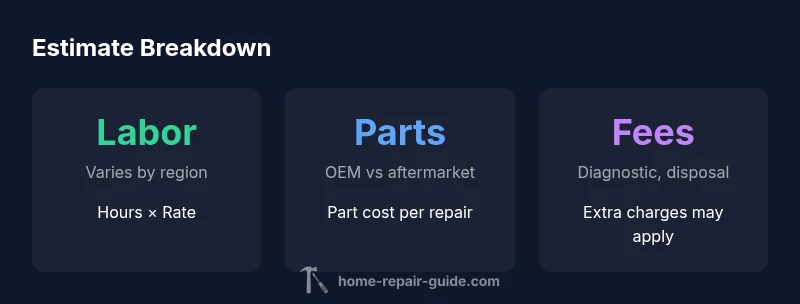
According to Home Repair Guide, online estimates provide a quick snapshot of expected costs for a repair. They typically break costs into labor, parts, and basic fees. Labor is calculated by an estimated number of hours times the shop's hourly rate, which varies by region and shop. Parts cost depends on whether the vehicle uses standard parts or premium components. Some estimates also include diagnostic fees, shop supplies, and disposal fees, while others list them as optional add-ons. Taxes and environmental fees can apply and are often added once the vehicle is repaired. Some online tools also flag items that may be uncertain, such as firmware updates or warranty considerations.
Key components usually shown:
- Labor: hours x rate
- Parts: cost
- Fees: diagnostic, shop materials
- Taxes: state or local sales tax
- Optional items: fluids, alignment, or disposal fees
Important: estimates are preliminary and do not guarantee the final bill; urgent repairs or hidden issues can change the price. Home Repair Guide notes that estimates assume typical vehicles in good condition and standard parts. For electrics or hybrids, costs may differ significantly.
How online estimates are generated
Online estimates derive from a blend of data sources: standardized labor times, typical parts costs, regional shop rates, and historical repair data. When you enter symptoms or a vehicle identification number (VIN), the tool maps it to common repair jobs and assigns a labor hour estimate plus a parts quote. The result is a range rather than a single price, because actual prices hinge on vehicle age, warranty status, and the exact parts used. Many tools update their data weekly to reflect pricing changes. Finally, estimates are non-binding and intended to help you compare options and plan budgets, not to replace a formal quote from a shop. (Brand note: Home Repair Guide)
Factors that create variance between estimates
Estimate variance is common and expected. Key factors include:
- Location and shop rates: Urban areas tend to be higher than rural regions.
- Vehicle make, model, and trim: Older vehicles or luxury models may have different labor times and parts availability.
- Diagnostic scope: Some estimates include only an initial check; others attempt root-cause analysis.
- Parts quality: OEM vs aftermarket parts affect price and availability.
- Fees and extras: Diagnostic fees, environmental charges, disposal, and alignment services vary by shop.
- Market fluctuations: Parts prices can change with supply chains and demand.
Understanding these factors helps you read the estimates critically and choose a shop that aligns with your priorities.
Steps to use online estimates to shop smarter
Use online estimates as a starting point, then take these practical steps to shop smarter:
- Gather symptoms, photos, and the VIN if possible.
- Run multiple estimates from reputable shops to see range and scope differences.
- Look for a line-item breakdown (labor vs parts) to compare apples-to-apples.
- Check if the estimate includes diagnostics, fluids, or other add-ons.
- Contact the shops to confirm scope and request a final, written quote.
- Use the calculator tool to project yearly repair costs and budget accordingly.
- Document everything for warranty and future reference.
A practical example: comparing two estimates
Shop A provides a breakdown: Labor 2 hours @ $110/hour = $220; Parts = $180; Diagnostics included; Fees = $40; Total estimate = $440. Shop B shows: Labor 1.5 hours @ $120/hour = $180; Parts = $250; Diagnostic fee = $20; Fees = $60; Total estimate = $510. Both fall within a reasonable range for common repairs, but Shop B’s scope is broader (parts and diagnostics). When in doubt, ask for a fixed-price quote for a defined scope and confirm inclusions and exclusions before committing.
Tools to improve estimate accuracy and planning
To improve accuracy and budgeting:
- Take clear photos of the issue and provide your VIN when possible.
- Request itemized line items and note what is included vs. optional.
- Verify whether the estimate accounts for fluids, disposal fees, and taxes.
- Use the online estimate as a budgeting tool, not a binding quote.
- Schedule a diagnostic appointment if the problem persists or the symptoms are ambiguous.
- Compare multiple shops and consider long-term value (quality of parts and workmanship) in addition to price.