How Much Does RepairPal Cost? An In-Depth Car Cost Guide
Learn how RepairPal pricing works, what’s included, and how to budget for repairs. Our Home Repair Guide analysis explains estimates, quotes, and regional differences to help you plan.


RepairPal cost estimates depend on the service type, your vehicle, and where you live. Diagnostic fees, parts, and labor balance to create a range rather than a single price. Online estimates from RepairPal help you compare quotes, but final prices vary by shop and region. Expect a few hundred dollars for common repairs, with wider swings for complex jobs.
How much does RepairPal cost? An overview
If you're asking how much does RepairPal cost, the short answer is, it depends. The price you pay is influenced by the service type, your vehicle, and where you live. RepairPal presents estimates derived from data across participating repair shops and local pricing trends, producing a range rather than a single number. This approach helps homeowners and car owners budget with more confidence while still leaving room for shop-to-shop variation. In practice, most users start with RepairPal’s online estimate to gauge whether a quoted price is fair before agreeing to service. Also, remember that estimates are not binding quotes; actual costs can rise if the service scope expands or new issues are found.
What the RepairPal estimates cover
RepairPal estimates typically encompass the core cost drivers for a repair project. This includes a diagnostic assessment, labor time estimates, and parts costs, plus any shop fees that are commonly added to the bill. Taxes, disposal fees, and environmental charges may apply depending on your location. The estimate should spell out whether the diagnostic fee is included or charged separately. When you see an estimate, compare the scope of work described to the actual bill to ensure you’re comparing apples to apples.
How variables affect your price
Several factors drive the final price you pay for repairs. Vehicle make, model, and age influence parts availability and labor time. Local labor rates vary by region and even by neighborhood; urban areas typically have higher rates. Parts quality and source (OEM vs aftermarket) affect cost, as does the overall complexity of the job. Weather and season can indirectly influence costs through supply chain pressures and technician demand. Finally, warranties or promotional pricing from shops can alter the bottom line.
Typical cost ranges for common repairs
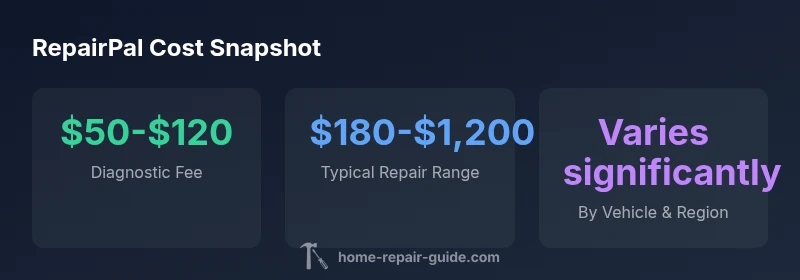
Costs can swing widely by the repair type and vehicle. Here are rough, illustrative ranges to give you a sense of the landscape: diagnostic fees often run in the $50–$120 range; basic maintenance like an oil change might be $40–$120; brake pad replacement commonly falls in the $150–$400 range; and more involved repairs such as alternator replacement or suspension work can range from $300 to $900 or more per component. For major repairs (e.g., transmission work), costs can extend well beyond the lower end into four figures depending on parts and labor. These ranges are intended to be guidance, not guarantees, and will vary by shop and region.
Using estimates for budgeting and planning
Treat RepairPal estimates as a budgeting baseline rather than a final quote. Start by noting the service type, vehicle details, and geographic location used to generate the estimate. Get multiple quotes from reputable shops and ask for itemized breakdowns that list labor hours, parts, and any ancillary charges. If a shop’s quote seems high, use the estimate as leverage to negotiate scope or seek alternatives. Remember to factor in potential additional diagnostics if the initial issue isn’t fully resolved.
Reading and comparing itemized quotes
When you receive quotes, prioritize itemized quotes that clearly separate diagnostic fees, labor hours, parts, and shop fees. A quote may appear lower because it excludes certain tasks or uses different parts. Ask for the expected labor rate per hour and the estimated time to complete the job. If a line item lacks detail, request clarification before authorizing work. This is essential to ensure you’re making informed decisions rather than chasing price alone.
Regional variation and shop differences
Even with a standard pricing framework, costs vary by region and by individual shop practices. Some shops offer bundled services or price incentives for returning customers, while others may apply environmental or disposal fees that aren’t immediately visible in an initial estimate. In high-demand metros, you may see higher hourly rates but shorter wait times, whereas rural areas may offer lower rates with longer turnaround. Use RepairPal estimates as a baseline while examining local market conditions.
Money-saving tips to get accurate quotes
To maximize accuracy and minimize surprises, obtain several quotes and ask for itemized line items. Verify the vehicle-specific scope, the exact parts being used, and any warranties on labor or parts. Consider scheduling preventive maintenance to avoid expensive, urgent repairs. If a price seems too good to be true, scrutinize the quote for hidden charges and ensure a clear understanding of the work scope before authorizing repairs.
Data credibility and what the numbers mean
The figures behind RepairPal estimates come from aggregated shop data and regional pricing trends. They are intended to help you budget and compare quotes, not replace professional diagnostics or a formal written estimate from a shop. The Home Repair Guide analysis, 2026, notes that regional variation and service scope are the primary drivers of price differences. Use these estimates as a starting point, then verify with local shops for a final price.
RepairPal pricing estimates: typical ranges and drivers
| Service Type | Estimated Range | Notes |
|---|---|---|
| Diagnostic Fee | $50-$120 | Varies by shop and location |
| Oil Change (basic maintenance) | $40-$120 | Labor + parts; vehicle-dependent |
| Brake Pad Replacement | $150-$400 | Parts and labor; model-dependent |
| Major Repair (e.g., transmission work) | $1,000-$3,500 | Highly variable by parts and complexity |
FAQ
Is RepairPal pricing the same as what I’ll pay at the shop?
Not always. RepairPal provides estimates based on averages and typical job scopes. Final prices depend on actual diagnostics, parts chosen, and labor time at the shop. Use the estimate as a baseline for negotiation and comparison.
RepairPal provides helpful estimates, but final prices vary by shop based on the exact work and parts used.
Does RepairPal charge for using their estimates?
RepairPal’s online estimates are intended to help shoppers compare quotes and budget for repairs. There is no universal fee charged by RepairPal for viewing estimates; some shops may have diagnostic fees when you bring your car in.
The estimates are typically free to view, but actual repair work could incur diagnostic fees at the shop.
How accurate are RepairPal estimates?
Estimates are designed to be reasonably accurate baselines reflecting typical ranges by region and service type. They’re not guarantees. Always cross-check with multiple shops for a final quote.
They’re useful baselines, not guarantees—get multiple quotes for a final number.
Can I rely on RepairPal for a pre-purchase inspection cost?
RepairPal estimates can inform budgeting for pre-purchase inspections, but the cost will depend on the inspection depth and the shop. Use estimates to anticipate the range and discuss scope with the inspector.
Yes, as a budgeting guide, but expect variation based on scope.
How can I get RepairPal estimates for a specific part or service?
Enter your vehicle details and the service type into RepairPal’s estimator to generate a range. Then compare with local shop quotes to confirm pricing.
Enter your car info and service to get a range, then compare shops.
“Transparent, itemized estimates are the best defense against sticker shock; always confirm scope before agreeing to work.”
Key Takeaways
- Compare multiple quotes to find the best price.
- Ask whether diagnostic fees are included in the estimate.
- Budget for regional price differences when planning repairs.
- Request itemized quotes to identify hidden costs.
- Use RepairPal estimates as a baseline, not a final price.