How Much Does It Cost to Repair a Phone Screen?
Discover how much it costs to repair a phone screen in 2026, including price drivers, typical ranges, and tips to save, from Home Repair Guide.


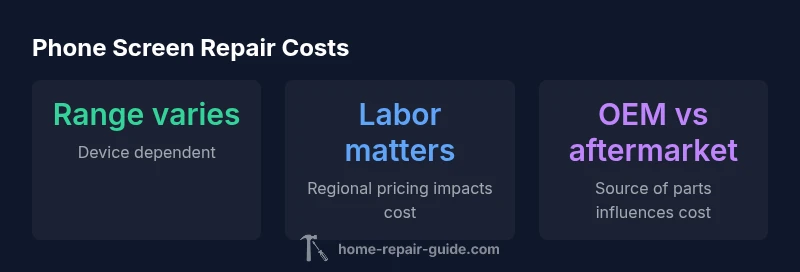
The cost to repair a phone screen varies widely by model, display type, and repair path. In practice, most people encounter a broad price range rather than a fixed price. Third-party shops tend to be cheaper, while manufacturer repairs or premium OLED screens cost more. Labor, replacement parts, and whether you replace the entire assembly all shape the final out-of-pocket amount.
Understanding the cost drivers
The cost to repair a phone screen is not a single price; it's a function of several interacting factors. Device model and screen technology top the list. Newer phones often use OLED panels, which can be more expensive to replace than LCD screens. The type of glass and digitizer, the presence of curved edges, and the assembly method—whether the screen is fused to the frame or mounted as a separate module—also affect labor time and material cost. Another major driver is the scope of the repair: is the digitizer damaged but the LCD intact, or is the entire display assembly compromised? In practice, technicians must disassemble the phone, remove adhesives, and sometimes replace the frame, all of which add labor hours and more parts. Warranty coverage can shift who pays; if a repair is covered by a warranty, the out-of-pocket cost may be dramatically reduced, while out-of-warranty work requires you to absorb the full price. Finally, the repair path you choose—manufacturer service, independent shop, or do-it-yourself—sets the baseline price ceiling and introduces risk, especially with precision components and epoxy adhesives.
Device impact on price
Different devices drive cost differently. A budget Android with a standard LCD panel typically costs less to fix than a high-end
Screen type and complexity
We keep encountering a key distinction: LCD vs OLED. LCD panels tend to be less expensive to replace than OLEDs, as OLEDs involve more delicate materials and a higher risk of burn-in or color drift if not installed correctly. Screen complexity also matters: phones with curved glass or integrated front cameras require more careful disassembly and precise alignment, increasing labor hours. Some models have a single modular display; others assemble sensors, cameras, and fingerprint components into the display assembly, which means replacing the whole unit is the only option. In addition, the frame or bezel may be damaged during a drop, necessitating a separate frame repair that adds to costs. A higher quality glass, improved touch responsiveness, and factory-calibrated color matching all contribute to a higher price tag, even if the underlying panel is similar.
OEM vs aftermarket parts
Choosing between original equipment manufacturer parts and aftermarket screens has a big price effect. OEM parts typically come with tighter quality controls and better color stability and touch accuracy, but they cost more. Aftermarket or third-party screens can save money, but the risk is variability in color, brightness, durability, and compatibility with other internal components like sensors. Some shops price labor the same regardless of the part source, while others charge more for OEM parts due to warranty terms or the perceived reliability. If your device is still under warranty, using OEM parts at an authorized repair center may be required to preserve warranty coverage, whereas DIY enthusiasts often opt for aftermarket replacements to stay within budget. Always request clarity on the source of parts before authorizing the repair to avoid surprises.
Labor and regional price variation
Labor is a substantial part of the total cost and is highly dependent on location and technician experience. In dense urban areas, labor rates per hour are higher, and the time to complete a screen replacement may be shorter due to efficiency, while some shops advertise same-day service or remote diagnosis that adds value. In more rural areas, labor might be lower, but the availability of parts can cause longer lead times or higher shipping costs. The skill level of the technician also matters; a factory-trained technician with specialized tools can complete the job quickly and with precise alignment, but at a premium. For customers, a few hours of labor can be the bulk of the cost, especially when the phone requires careful reassembly, calibration, and testing.
Warranty, insurance, and service plans
Warranty terms affect how much you pay upfront. If a repair is covered by manufacturer warranty or extended protection plans, you may pay a small diagnostic fee or a reduced service charge. Without coverage, you’ll see the full price. Some insurers offer screen repair as part of a broader device protection policy with deductibles; others require you to file a claim and may raise premiums as part of coverage adjustments. When evaluating quotes, ask whether the price includes a diagnostic check, the cost of sealants and adhesives, and post-repair testing to verify touch sensitivity and color accuracy. If a repair is performed by an unauthorized shop or with questionable parts, you risk voiding existing warranties or future service terms, which can be a long-term cost beyond the initial repair.
DIY considerations and safety
For handy homeowners, DIY screen replacement is possible but not without risk. You’ll need precision tools and static-safe work practices, plus a clean environment to avoid dust contamination and micro-scratches. The most common issues after a DIY repair are misaligned touch sensors, unresponsive areas on the screen, or adhesive failure that causes water ingress. If you decide to attempt it, factor in the cost of tools, replacement parts, and potential warranty voiding. Many DIYers underestimate the time commitment; a first-time attempt can take several hours and may require multiple re-dos. If you value reliability and safety, professional service is often the better long-term choice, especially for newer devices with complex screens.
Practical steps to reduce your bill
Before you authorize a repair, shop around and compare multiple quotes from reputable shops. Ask about part sourcing, warranty on the replacement screen, and what happens if the repair fails within a few weeks. Some stores price-match or offer discounts for bundled repairs, such as battery replacement with screen service. If your device is still under warranty, request an authorized repair to preserve coverage; if not, consider third-party shops with strong ratings and a proven track record. Buying a used or refurbished screen may lower the cost further, but ensure the seller offers a return policy. Finally, consider whether a screen replacement is the best option or if an external screen protector and careful handling could extend the device’s life until you upgrade.
Estimated replacement cost ranges by device type
| Device Type | Typical Range (USD) | Key Cost Drivers |
|---|---|---|
| Budget Android (LCD) | 50-150 | Panel type, labor, parts |
| Midrange Smartphone (OLED) | 100-250 | Display type, digitizer, frame |
| Premium Smartphone (OLED/edge) | 200-350 | Materials, adhesives, small components |
| iPhone OLED (latest models) | 250-450 | Panel, assembly, tools |
FAQ
What factors influence the price of a phone screen repair?
The price is driven by device model, screen technology (LCD vs OLED), availability of parts, labor time, and whether the replacement includes sensors or cameras. The repair path (OEM vs aftermarket) also shifts cost. Always ask for a full quote that breaks down parts and labor.
Price depends on your device, screen type, and whether a complete assembly is needed. Ask for a clear quote that lists parts and labor.
Is it cheaper to repair a screen myself?
DIY repairs can save money but carry risks like damaging the device further or voiding warranty. Consider your skill level, tool access, and the potential need for professional calibration after reassembly.
DIY may save money, but it can backfire if you’re not careful or if warranty coverage is at stake.
Are OLED screens more expensive to repair than LCD?
In general, OLED repairs tend to be more expensive due to their complexity and materials. Model specifics matter, however, so compare quotes for your exact device.
OLED repairs usually cost more because they’re more complex, but always check quotes for your model.
Will my warranty cover a screen repair?
If the device is under warranty or an eligible protection plan, the repair could be covered or discounted. Verify with the provider and avoid voiding coverage by using authorized services when required.
Warranty can cover or reduce the cost if your policy applies; confirm terms before proceeding.
What should I ask a repair shop before agreeing to service?
Ask about part sources, whether the replacement is OEM or aftermarket, the diagnostic fee, and the total estimated cost. Request a written warranty on the repair and a clear turnaround time.
Ask about parts, warranty, and total cost before you authorize the repair.
“Phone screen repair costs reflect both the complexity of modern displays and the quality of parts; planning ahead helps homeowners avoid surprises.”
Key Takeaways
- Know the main cost drivers before getting quotes
- Shop around and compare parts sources for value
- OLED displays generally cost more to repair than LCD
- Warranty coverage can dramatically reduce out-of-pocket costs
- Consider risks and time if opting for DIY