Do Repair Shops Charge for Diagnostics? A Practical Guide
Find out if repair shops charge for diagnostics, typical fee ranges, when they’re waived, and how to compare quotes to save money on your next repair.


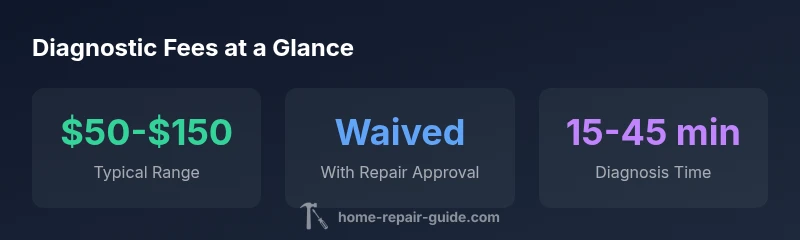
Do repair shops charge for diagnostics? The short answer is yes, most shops charge a diagnostic fee, typically ranging from $50 to $150, though waivers occur if you approve repairs or if the diagnosis takes longer. According to Home Repair Guide, many shops balance labor costs with transparent pricing to avoid surprises. Understanding local policies and shop policies helps you negotiate confidently.
What a diagnostic entails
A professional diagnostic typically begins with a structured intake: you describe symptoms, share recent changes, and show any relevant repairs or maintenance history. The technician then uses specialized tools to test electrical circuits, sensors, motors, software firmware, or mechanical systems. They reference diagnostic trouble codes (DTCs) or system logs and may run software scans on components like engines, HVAC control boards, or household appliances.
The goal is to identify the root cause rather than guess. Transparent shops will clearly outline what tests will be performed, expected time, and whether the diagnostic fee covers the first pass of testing or a deeper investigation. Home Repair Guide notes that many shops view diagnostics as a critical investment to prevent misdiagnosis and costly wrong repairs. This helps homeowners budget and reduces back-and-forth with service writers. The diagnostic process also serves as a quality control step that protects both the shop and the customer.
Typical steps include an initial inspection, targeted testing, data gathering from on-board diagnostics or smart devices, isolating the fault, and a final diagnostic report with recommended repairs. Fees often reflect technician time, equipment use, and the value of the diagnostic data. In practice you may see a flat fee, an hourly rate, or a blended approach. Some shops waive the fee if you proceed with the suggested repair; others apply it to the final invoice only if you decline repairs. The key is to understand exactly what you’re paying for: time, tools, and actionable information.
Diagnostic fee structures by shop type
Fees vary by shop type and region. Dealer networks and independent repair shops sometimes price diagnostics differently based on the service tier and the complexity of the system being tested. Independent technicians may charge lower diagnostic fees to attract homeowners who will later return for repairs, while dealership service centers might charge higher fees but offer factory-level diagnostics and access to proprietary software.
To illustrate, consider how a home appliance repair center compares with an automotive shop. In both cases, diagnostic work includes the technician’s time, use of specialized equipment, and the data gathered. Home Repair Guide analysis shows that independent shops often advertise 'free diagnostics' for certain service lines or promotions, while larger shops may rely on a transparent, itemized quote. Regardless of the setting, it’s essential to ask what the diagnostic fee covers: the initial inspection, testing, software scans, and the final report. You should also confirm if the fee will be credited toward repair costs if you approve the recommended fix. This practice is not universal, so clarifying policy beforehand prevents sticker shock when you receive the bill.
Seasonality can affect pricing too. Some shops implement lower diagnostic fees during slower months to attract customers, while others maintain steady pricing year-round. Local competition also drives variation; in dense markets you may see a broader spread of fees than in rural areas. When evaluating options, compare not only the price but also the diagnostic process, estimated repair costs, and the shop’s transparency about what the test results mean for your repair decision.
Home Repair Guide’s team emphasizes that a clear diagnostic policy builds trust. If a shop is vague about what tests will be done or how long it will take, you should ask for a written diagnostic plan and a time estimate. A well-documented process helps you compare apples to apples when you receive quotes from multiple shops.
How to read an estimate and compare costs
When you receive a diagnostic estimate, read it carefully and look for these elements:
- What tests are included and what tests are optional if initial results aren’t conclusive.
- The hourly rate or flat fee and how test time is calculated.
- Whether the diagnostic fee is waived if you proceed with repairs, and under what conditions.
- A clear explanation of the root cause, proposed fixes, and a no-surprises final cost projection.
- Any potential additional charges for follow-up tests if the issue is not resolved after the initial diagnosis.
A good practice is to request a written estimate before any work begins. This helps you avoid surprise charges and gives you a baseline to compare with other shops. If a shop refuses to provide a written estimate for diagnostic work, consider obtaining quotes from another provider. As Home Repair Guide recommends, written documentation is your best defense against price creep and scope creep. You should also ask about the warranty on diagnostics work and whether the diagnostic results come with a recommended plan for repair.
In many cases, gathering a few different estimates will reveal who provides the most value: lower diagnostic fees, faster turnaround, and clarity in the reported findings. Look for shops that present test results in an actionable format—clear fault codes, test data, and a recommended repair plan—so you can make an informed decision about next steps.
When diagnostics are waived and how to negotiate
Some shops offer to waive the diagnostic fee if you hire them for the repair, which often makes sense if the posted repair costs plus diagnostic charges still beat other bids. If you don’t plan to repair there, the waiver may not apply, and you should compare the total cost of diagnosis plus repairs across providers. Here are negotiation strategies:
- Ask whether the diagnostic fee can be waived if you commit to a defined repair scope or if you bring in your own parts.
- Request a fixed diagnostic fee rather than an hourly rate for certain jobs to avoid variability.
- Seek out promotions or bundled pricing that include diagnostic work with a repair package.
- If you’re unsure about the diagnosis, ask for a second opinion, ideally from a shop with a different service philosophy.
Our guidance at Home Repair Guide is to use these conversations to gain transparency, not to pit shops against each other. A respectful, well-informed negotiation often yields better terms and helps you understand the value of the diagnostic service you’re paying for.
In all cases, insist on a written estimate that includes the diagnostic approach, time estimates, and the expected impact on final costs. This keeps the conversation focused on measurable outcomes rather than vague assurances.
Practical steps for homeowners and renters
To minimize risk and maximize value when diagnostics are involved:
- Gather relevant information before the visit: symptoms, recent changes, noise or odor cues, and any troubleshooting steps you have already taken.
- Clarify what the diagnostic fee covers, including the number of tests and the expected time frame.
- Compare at least 2-3 quotes, focusing on the diagnostic policy, transparency, and the reputation of the shop.
- Ask for a written diagnostic report that explains the root cause, supporting data, and recommended fixes.
- If you’re on a tight budget, ask about lower-cost diagnostic options or staged testing to isolate the fault without overtesting.
Ultimately, the goal is to balance cost with confidence. A transparent diagnostic process helps you decide whether to repair, replace, or postpone, and it reduces the risk of paying for unnecessary work. The Home Repair Guide team believes that informed homeowners who understand diagnostic fees are better prepared to make prudent maintenance decisions.
The value of a transparent diagnostic process
A transparent diagnostic process isn’t just a price tag—it’s about trust. When a shop provides a clear plan, a realistic time frame, and a detailed report that links symptoms to root cause and recommended fixes, you gain actionable knowledge. This transparency helps you evaluate whether the proposed repair is appropriate, whether a different approach could be more cost-effective, and what to expect in the final bill. The Home Repair Guide team emphasizes that price should be balanced with clarity and reliability. A shop that communicates openly about costs, tests, and outcomes builds long-term trust and reduces post-service disagreements. For homeowners, this level of openness is a valuable predictor of satisfaction and a sign of professional service.
Overview of diagnostic fee scenarios and waiver conditions
| Scenario | Typical Diagnostic Fee | Waiver Condition |
|---|---|---|
| Walk-in diagnosis only | $50-$150 | Waived if you repair with the same shop |
| Diagnosis during repair | Often included in repair quote | Waived if you proceed with the repair |
| Specialty or on-site diagnosis | $100-$200 | Waived when repair is authorized |
FAQ
Do all repair shops charge for diagnostics?
Most shops charge a diagnostic fee, but there are exceptions and promotions. Always confirm the fee and what it covers before any work begins.
Most shops charge, but check policies first to avoid surprises.
Can you negotiate the diagnostic fee?
Yes. Ask for a discount, or request that the fee be credited toward the final repair bill if you proceed with the repair.
You can negotiate the diagnostic fee or have it applied to the repair.
How long does a diagnostic typically take?
Most diagnostics take about 15 to 45 minutes, depending on the complexity of the system and tests involved.
Diagnosis usually takes 15 to 45 minutes.
Are diagnostic fees refundable if no repair is done?
Refund policies vary. Some shops keep the fee regardless, while others waive it if no repair is performed after diagnosis.
Policies vary; ask about refunds before service.
What should I ask before agreeing to a diagnostic?
Ask what tests will be done, how long it will take, whether the fee is waived with repair, and what the exact final estimate will look like.
Ask about tests, time, waiver, and final estimates.
Do manufacturers offer free diagnostics?
Some manufacturers offer basic diagnostics, but third-party shops typically charge for a full diagnostic workup.
Manufacturer options exist, but most third-party shops charge.
“A transparent diagnostic policy helps homeowners budget and makes repairs predictable. Clear test results paired with a recommended plan reduce the risk of unnecessary work.”
Key Takeaways
- Understand what the diagnostic fee covers before agreeing.
- Ask if the diagnostic charge can be waived with repair approval.
- Compare multiple shops to get the best value and transparency.
- Request a written diagnostic report with recommended fixes.
- Choose shops with clear policies to avoid surprise charges.