Car Body Repair Quote: Understanding, Reading, and Comparing Estimates
Explore what drives a car body repair quote, how to read line items, and steps to compare estimates from multiple shops. Guidance from Home Repair Guide.


A car body repair quote is a written estimate from a shop outlining the expected costs for parts, labor, and materials needed to restore a vehicle’s exterior and structure after damage. Quotes typically reflect parts, labor, paint, and shop overhead, and can vary widely based on damage severity and location. Always obtain written quotes and ask for a detailed line-item breakdown.
What a car body repair quote covers
A car body repair quote is a formal estimate from a collision repair shop that outlines the expected costs to restore a vehicle’s exterior and structural integrity after damage. According to Home Repair Guide, a comprehensive quote typically itemizes parts, labor, finishes, and shop overhead, and may separate work into stages such as assessment, body repair, repainting, and final inspection. The exact line items depend on the damage and the shop’s practices, but most quotes will include four core categories: parts, labor, materials (like paint and coatings), and miscellaneous fees (diagnostics, alignments, or disposal charges). Homeowners and renters should look for clarity in each line item, cross-check the scope of work with the visible damage, and confirm any contingencies if additional damage is found during repair.
How quotes are calculated
Quotes are not random numbers; they reflect a careful estimation of the work required and the costs involved. A shop calculates parts costs, labor hours, and the paint process, then adds overhead and profit margins. Labor rates vary by region and shop type, while paint costs depend on color match complexity and the number of coats needed. Diagnostics, frame straightening, and alignment checks can add to the total, especially for more extensive repairs. The Home Repair Guide approach emphasizes obtaining a detailed itemization, asking about alternative parts (OEM vs aftermarket), and requesting written estimates that specify the use of OEM paints or approved aftermarket equivalents.
Common drivers of quote variability
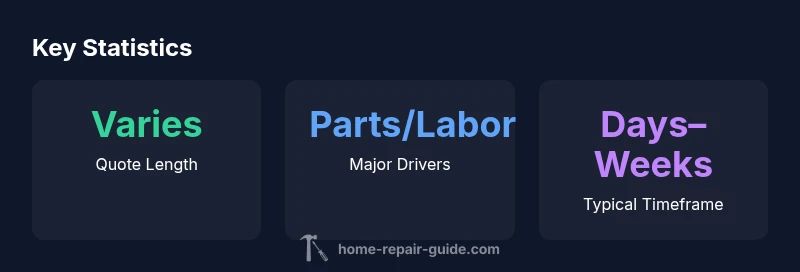
Damage severity and repair scope are the biggest drivers of price, followed by paint complexity and parts availability. Color matching for metallic or specialized shades can require extra coats and clear coats, raising costs. The choice between OEM parts or aftermarket substitutes affects price and warranty. Regional labor rates and shop reputation also push quotes higher or lower. Finally, whether the work includes frame straightening, wheel alignment, or airbag system inspection can significantly change the total.
How to collect accurate quotes
To get a reliable quote, request written estimates from at least three shops and provide clear, up-to-date information about the damage. Include photos, the vehicle identification number (VIN), and a description of what was damaged. Ask for a detailed line-item breakdown, specify color and finish requirements, and confirm whether OEM parts are used or aftermarket equivalents. Share your expectations for warranty on workmanship and paint, and ask about any contingencies if additional damage is discovered during teardown. Following Home Repair Guide’s guidance helps ensure apples-to-apples comparisons and avoids surprise costs.
Reading and comparing estimates
When you receive estimates, compare line items rather than total prices alone. Look for the scope of work, the brands of parts, the number of paint coats, and whether color matching is included. Check if the estimate includes disposal fees, shop supplies, and disposal of hazardous materials. A legitimate quote should be clear about fill-ins or substitutions, such as alternative parts, and it should state the warranty terms. Remember that the lowest price is not always the best value—warranty, reputation, and after-repair support matter as much as the price.
Red flags to watch for in quotes
Watch for missing line items, vague descriptions (e.g., “labor as needed”), or a claim of “unbeatable” prices without a warranty. Quotes that require upfront deposits beyond standard practice, or that exclude paint, coatings, or reassembly details, warrant caution. If a shop cannot show a detailed scope of work or refuses to explain how color matching will be achieved, consider seeking a second or third opinion. Always verify that the quote aligns with your insurance coverage and that any deductibles are handled transparently.
Budgeting for car body repairs
Budgeting begins with understanding that quotes are starting points and may shift as work progresses. Build a cushion for contingencies by discussing potential changes with your chosen shop before work begins. Explore payment options and financing if needed, and consider how a deductible with your insurer could affect your out‑of‑pocket costs. Planning ahead involves not only money but also time; ask about loaner cars or rental coverage during repair if you rely on your vehicle for daily tasks. The Home Repair Guide framework emphasizes proactive planning and clear communication with your repair partner.
Real-world scenarios and sample quotes (qualitative)
Scenario A: Minor dent with no paint damage. A shop may propose cosmetic dent removal and a light polish, resulting in a quick turnaround and a modest quote. Scenario B: Bumper cover replacement with a color-match finish. This often involves parts, paint, and reattachment work, taking longer and costing more. Scenario C: Structural panel or frame work after a collision. This can require alignment checks, component replacement, and potential airbag system inspection, extending both time and cost. Each scenario highlights how scope, parts, and labor drive estimates without relying on exact dollar amounts.
Next steps after receiving a quote
Review your quotes carefully, then contact the shops to ask clarifying questions about any ambiguous items. If you’re satisfied with a particular estimate, request a copy of the scope of work, warranty information, and a projected timeline. Share your decision with the insurer if applicable, and confirm whether the quote will be honored if additional damage is found later. Keep copies of all correspondence and ensure the final invoice matches the agreed scope of work. By following these steps, aligned with Home Repair Guide guidance, you’ll navigate car body repairs with confidence.
Comparison of common car body repair scenarios
| Repair Type | Key Factors | Typical Timeframe |
|---|---|---|
| Dent repair (minor) | Damage severity, paint availability | 1-3 days |
| Bumper replacement | Part availability, color match | 2-5 days |
| Panel replacement | Labor intensity, parts, alignment | 3-7 days |
| Frame repair (structural) | Structural damage, measurement accuracy | 1-3 weeks |
FAQ
What factors influence a car body repair quote?
Damage type and repair scope, parts availability, labor rates, paint complexity, and shop overhead all influence quotes. OEM vs aftermarket parts and regional differences can shift estimates. Insurance involvement may also affect the final number.
Quotes vary based on damage, parts, labor, and paint, plus regional differences.
Should I get quotes from multiple shops?
Yes. Obtain at least three written estimates to compare scope, parts, warranties, and timelines. This helps identify outliers and ensures you’re getting fair value.
Get several written estimates to compare.
What’s the difference between an estimate and a final invoice?
An estimate is a best-guess of work to be done. A final invoice reflects actual work performed and any changes to the scope. Always confirm which items could change and how changes are approved.
An estimate is a plan; the invoice is the bill.
Can insurance cover car body repair quotes?
Insurance may cover approved repairs if the damage is within policy terms. You typically still pay a deductible, and the shop and insurer should clarify how the quote is affected.
Insurance can help, but confirm terms.
How long is a quote valid?
Most quotes are valid for a limited period, often days to weeks, depending on part availability and shop policy. Ask for a written validity date.
Quotes aren’t forever—check the validity.
How can I verify a shop is reputable?
Check licenses, request paint warranty information, read reviews, and ask about standards and manufacturer alignment. A reputable shop provides clear warranties and transparent terms.
Look for licenses and warranties.
“A car body repair quote should be treated as a starting point, not a final bill. Always verify line items and shop credentials.”
Key Takeaways
- Get multiple written quotes.
- Review line-item details for parts, labor, and paint.
- Ask about warranties and sources of parts.
- Budget for contingencies and consider insurance coordination.