LG Refrigerator Repair Near Me: Step-by-Step Guide
Learn how to diagnose and fix common LG refrigerator issues at home, with safety tips, tool lists, and when to call a pro. This guide covers parts sourcing, DIY fixes, and finding reliable service near you in 2026.


If you’re searching for lg refrigerator repair near me, this guide helps you decide what you can fix at home and when to hire a pro. Start with safety, unplug the unit, and check the door gasket, condenser coils, and evaporator fan. For common failures like warm temperatures or frost buildup, affordable parts and basic tools let you DIY most fixes; persistent or dangerous issues warrant professional service.
Understanding LG Refrigerator Repair Near Me
If you’re facing cooling issues or unusual noises from an LG refrigerator, know that many problems can be diagnosed and addressed by a confident homeowner. According to Home Repair Guide, early attention to symptoms can prevent bigger malfunctions and save money over time. Home Repair Guide Analysis, 2026, indicates that worn door seals and clogged condenser coils account for a large share of consumer-reported failures. In this guide, you’ll learn a practical, step-by-step approach to evaluate common symptoms, source parts responsibly, and decide when professional service is the safer choice. This information is designed for homeowners and renters who want reliable, practical repair guidance. We’ll cover safety, tools, part sourcing, and a repeatable diagnostic process so you can act with confidence when you search for lg refrigerator repair near me.
Common LG Refrigerator Issues and Causes
LG refrigerators share a handful of recurring issues that homeowners encounter. The most frequent include inconsistent cooling, frost buildup in the freezer compartment, frequent cycling of the compressor, and excessive condensation around the door gasket. Based on Home Repair Guide analysis, 2026, the leading culprits for these symptoms are poor door seals, dirty condenser coils that block airflow, thermostat or defrost timer faults, and a malfunctioning evaporator fan. In many cases, replacing a worn gasket or cleaning coils can restore performance at a fraction of the cost of a full replacement. Understanding the symptom is the first step toward identifying the likely root cause and planning the repair.
Safety First: Electrical and Mechanical Hazards
Working with household appliances involves electricity, moving parts, and refrigerant systems. Before you touch anything, unplug the refrigerator and keep metal tools away from live terminals. According to Home Repair Guide, following a safety-first approach reduces the risk of shocks and injuries. Home Repair Guide Team emphasizes wearing safety gloves and goggles, and never attempting repairs that require puncturing refrigerant lines or releasing gas. If you notice oil, refrigerant lingering smells, or hissing sounds, stop work and seek professional help. This section outlines practical safety steps you can take before any hands-on repair.
The Right Tools and Replacement Parts for LG Repairs
A well-equipped toolbox makes at-home LG repairs more predictable and safer. You’ll commonly need a basic tool set, including screwdrivers (Phillips and flathead), a nut driver, Torx bits, pliers, and a non-contact voltage tester. A sturdy work surface and electrical contact cleaner help keep components clean and safe. For parts, keep a list of likely replacements (door gasket, defrost thermostat, evaporator fan, and temperature sensor) and source manufacturers or reputable third-party suppliers. Remember: order the exact LG part when possible to ensure fit and performance.
Sourcing Genuine LG Parts vs Aftermarket
When a component fails, you face a choice between genuine LG parts and aftermarket equivalents. Genuine parts tend to fit more precisely and last longer, but may cost more. This section explains how to verify compatibility and how to compare warranties and return policies. Based on industry guidance and Home Repair Guide analysis, 2026, you can usually find a suitable aftermarket option for standard components like door gaskets and fans, but for critical safety devices, consider sourcing LG-branded parts to avoid compromise.
Diagnostic Approach: Systematically Narrowing Down Problems
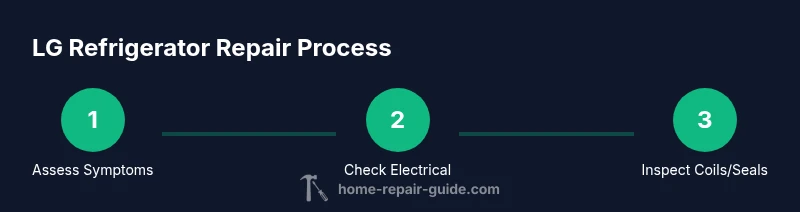
Start with symptoms and work backward through the system. Check for obvious signs (ice buildup, warm air around vents, water leakage) and verify electrical supply, door seals, and airflow. Create a checklist and test one variable at a time to isolate the fault. This methodical approach reduces guesswork and helps you document what you’ve found, which is useful if you later call a pro.
DIY Fixes You Can Safely Try (With Warnings)
Some fixes are straightforward and low-risk, such as cleaning condenser coils, replacing a worn door gasket, or reseating a loose wire connector. Always power down first and follow your manual’s guidance for reassembly. If you’re unsure about a repair, consult a professional or schedule an in-home diagnostic to avoid causing further damage. This section highlights safe DIY options and clearly marks repairs that should be left to pros.
When to Hire a Pro and How to Find One Near You
Not every refrigerator issue is a do-it-yourself job. If the problem involves refrigerant, sealed-system components, or refrigerant leaks, a licensed technician is required. The Home Repair Guide Team recommends verifying credentials, asking for a written estimate, and checking customer reviews before choosing a service near you. To find a qualified LG repair technician near you, search for local appliance repair pros with LG-authorized service status and good warranty terms.
Tools & Materials
- Non-contact voltage tester(Essential for confirming power is off before touching electrical components)
- Multimeter(Used to test sensors, thermistors, and control boards)
- Screwdriver set (Phillips and flathead)(For removing access panels and fasteners)
- Torx bit set(Common on many LG panel screws)
- Nut driver(Useful for securing automotive-style nuts on panels)
- Pliers (needle-nose)(Grip wires, connectors, and small parts)
- Safety gloves and goggles(Protect hands and eyes from sharp edges and refrigerants)
- Soft brush and coil-cleaning brush(Clean condenser coils without damage)
- Replacement parts (as needed)(Door gasket, evaporator fan, defrost thermostat, temperature sensor)
- Manual or LG service literature(Reference model-specific procedures)
Steps
Estimated time: Total time: 45-90 minutes
- 1
Power down and access the back panel
Unplug the refrigerator from the wall outlet and move the unit if needed to access the rear or bottom panels. Remove the access cover to inspect the compressor area and fan housing. This first step reduces risk and helps you identify obvious faults such as disconnected wires or visible damage.
Tip: Take a photo before removing connectors to aid reassembly. - 2
Check door gasket and seals
Inspect the door gasket for cracks, tears, and a tight seal. A worn seal can cause moisture issues and temperature fluctuations. If the door doesn’t seal evenly, replace the gasket or clean any debris preventing a proper seal.
Tip: Perform a simple paper test: close the door on a sheet of paper; if you can pull it out easily, the seal may be compromised. - 3
Clean condenser coils and verify airflow
Unplug and access the condenser coils (usually underneath or at the back). Remove dust with a soft brush or coil-cleaning brush to restore airflow. Clean coils improve cooling efficiency and reduce compressor strain.
Tip: Do not use high-pressure air on delicate aluminum fins; use gentle strokes. - 4
Test evaporator fan and thermostat
Access the evaporator fan and thermistor/defrost thermostat. With the unit unplugged, gently wiggle connectors to ensure secure contact. Reconnect and power on to observe fan operation and verify that the thermostat cycles properly.
Tip: If the evaporator fan doesn’t run or makes grinding noises, the fan may need replacement. - 5
Check defrost system and ice buildup
Look for frost buildup along the evaporator coil; a stuck defrost timer or defective heater can cause ice. Defrost the freezer area if needed and test the heater circuit with a multimeter to confirm operation.
Tip: Defrost cycles can take up to 30-60 minutes; plan for downtime. - 6
Reassemble, power up, and test
Carefully reassemble all panels, reconnect power, and monitor for proper operation. Check for cold air distribution, uniform temperatures, and absence of unusual noises. If cooling remains inconsistent, document symptoms before seeking professional help.
Tip: Run a full test cycle and compare to the manufacturer’s temperature targets.
FAQ
What are the most common LG fridge issues that require repair?
Common LG fridge issues include inconsistent cooling, frost buildup, water leakage, and unusual noises. These symptoms often point to worn door seals, dirty condenser coils, failed defrost components, or a faulty evaporator fan. Start with a simple check of seals and coils before moving to more complex parts.
Common LG fridge issues usually involve seals or coils first; you should check those before considering more complex repairs.
Is it safe to repair LG refrigerators at home?
Yes, for many basic maintenance and straightforward fixes, you can work safely at home if you follow safety guidelines, unplug the unit, and avoid sealed-system components. For refrigerant-related issues or electrical work inside sealed zones, hire a licensed technician.
You can do basic checks at home, but refrigerant or sealed-system work should be left to a pro.
How long does LG refrigerator repair usually take?
Repair duration varies by issue and parts availability. Simple fixes like gasket replacements and coil cleaning can be completed in under a few hours, while diagnosing a complex issue may take longer or require a service appointment.
Most straightforward fixes can be done in a few hours; more complex problems may need a visit.
Can I replace LG refrigerator parts myself?
You can replace straightforward parts such as gaskets or fans if you have basic mechanical skills and the correct replacement parts. For electronics or sealed systems, it’s safer to use professional service. Always consult the model’s manual before purchasing parts.
DIY is possible for simple parts, but electronics and sealed systems should be handled by a pro.
What is the typical cost range for LG refrigerator repairs?
Repair costs vary by part and labor, ranging from inexpensive gasket or coil cleaning to several hundred dollars for fan or control-board replacements. For safety-critical components or sealed-system work, expect higher service charges.
Costs depend on parts and labor, from cheap fixes to several hundred dollars for major components.
When should I replace rather than repair my LG refrigerator?
Consider replacement if the unit is old, repairs are frequent, or the cost approaches or exceeds a significant portion of a new model’s price. Also weigh energy efficiency gains a new unit offers. A professional can help you compare options.
If the fridge is aging and repairs pile up, replacing it could be the wiser choice.
Watch Video
Key Takeaways
- Identify the symptom first and verify with checks
- Always power down before handling electrical components
- Source the correct LG parts or trusted aftermarket options
- Escalate to a professional for sealed-system work