Window Repair Close to Me: A Practical Guide for Homeowners
Find reliable window repair near you with practical guidance on costs, timing, and choosing a pro. Learn how to assess needs, compare quotes, and prevent common issues.


If you’re searching for window repair close to me, you want fast, reliable service that preserves energy efficiency and safety. This guide outlines typical repair scenarios, expected timelines, and how to evaluate nearby pros. By focusing on proximity, credentials, and transparent pricing, homeowners can reduce downtime and avoid common scams. We also cover when replacement is better than repair and how to verify licenses.
Why window repair close to me matters
When a window fails, time matters. Proximity affects scheduling flexibility, emergency response, and the ability to inspect the site quickly. A nearby window repair professional can respond within hours or a day, reducing heat loss and preventing further damage from moisture. Local technicians often have familiarity with region-specific conditions, such as seasonal weather patterns, building codes, and common frame materials in your area. For homeowners and renters, choosing a nearby service means fewer trips, faster communication, and the option for same-day assessments when weather or energy bills demand urgent attention. In this context, window repair close to me isn't just about distance; it's about a network of availability, legitimacy, and accountability that helps you get the right fix the first time. This section will discuss how proximity translates into practical advantages and what to look for in a neighborhood pro.
Understanding common window problems
Windows can fail for a variety of reasons, and recognizing the common symptoms helps you decide when to repair and when to replace. Condensation between panes often signals a failed seal in double- or triple-glazed units, which can reduce energy efficiency and visibility. Drafts around sashes or weatherstripping indicate worn seals or gaps that invite energy loss and moisture intrusion. Hardware failures—sticky locks, loose hinges, or broken cranks—affect security and usability. Cracked glass or chipped panes pose safety hazards and may require immediate attention, especially in homes with children or pets. Frame deterioration from rot or corrosion also deserves scrutiny, as it can compromise structural integrity. By understanding these issues, you can ask targeted questions and receive accurate assessments from nearby pros.
When to repair vs replace windows
Deciding whether to repair or replace depends on several factors. If the damage is localized to seals, hardware, or a single pane, a repair is typically cost-efficient and quick. However, if frames are rotting, multiple panes are failing, or energy loss persists after repairs, replacement might offer better long-term value. Age is a key predictor: windows that are 20–30 years old or older are more likely to need replacement than modern, well-maintained units. Consider energy performance ratings, glazing quality, and the overall condition of the frame. In many cases, a staged approach—repairing now and planning replacement for later—can balance comfort with budget constraints. Always compare the repair costs to replacement estimates to determine the most economical path over a 5–10 year horizon.
How to vet a nearby window repair technician
Finding a trustworthy pro nearby starts with practical checks. Verify state- or local-licensing where required, and confirm that the technician carries proper general liability and worker’s compensation insurance. Ask for recent references or customer reviews, and request manufacturer certifications if applicable (for example, glazing or sash systems). Insist on a written inspection report and a detailed, itemized estimate covering parts, labor, and any required permits. Check warranty terms for both parts and labor, and ensure there’s a clear process for handling follow-up service. Finally, favor pros who provide transparent communication, arrive on time, and respect your home during the visit.
Cost considerations and budgeting
Budgeting for window repair involves anticipating both predictable and variable costs. Common fixes like weatherstripping or hardware repairs tend to sit in the lower end of the cost spectrum, while seal failures or glass replacements can push the price higher. Labor typically accounts for a significant portion of the total, and costs can vary by window type, frame material, and accessibility. It’s prudent to obtain at least two written estimates and to request a breakdown of costs (parts vs. labor), so there are no surprises when the work begins. Don’t forget to factor in potential disposal or cleanup charges, especially for larger jobs or full-frame replacements. A well-planned budget helps you compare quotes more effectively and prevents price-driven decisions from compromising quality.
The repair process: what to expect
A typical window repair follows a clear sequence. First, the technician performs a thorough inspection of seals, hardware, glass, and the frame. Next, a written estimate is provided, outlining required parts and an estimated timeline. If seals or hardware are the issue, technicians may repair or replace components such as weatherstripping, sash balances, locks, and hinges. Glass repair or replacement requires careful handling, measurement, and safe removal and installation. Finally, the team seals the work area, tests operation, and provides care instructions to prevent recurrence. Expect a cleanup and appropriate disposal of removed parts. A professional will also explain maintenance steps to extend the life of the repair.
DIY tips for minor fixes
Not all window issues require a pro. For minor, safe fixes, consider the following:
- Clean and lubricate hinges, tracks, and crank mechanisms with manufacturer-approved products.
- Inspect and replace weatherstripping where gaps are visible, ensuring a snug seal.
- Re-caulk around the frame after cleaning old residue and dried caulk.
- Check for proper drainage and clear any obstructions in the tracks.
- Document issues and schedule a professional evaluation for anything beyond minor fixes.
Maintenance to extend window life
Preventive care reduces the likelihood of costly repairs. Regularly inspect seals, hardware, and frames for signs of wear. Clean tracks and weatherstripping to prevent dirt buildup that can hamper operation. Re-seal any cracks or gaps and replace worn weatherstripping before drafts become noticeable. Scheduling a biannual check with a local window repair professional—especially before winter and spring weather—helps catch issues early and preserve energy efficiency. Keeping trees trimmed near windows can also reduce branch-related damage and obstruction to ventilation.
Making the final decision: repair vs replacement
When evaluating repair versus replacement, compare the immediate repair cost to a potential replacement investment over the next 5–10 years. If a repair addresses the symptoms but not the underlying frame or if multiple issues recur after a single renovation, replacement may offer better value and energy savings. Also consider aesthetics, curb appeal, and compatibility with modern glazing standards. In many cases, a phased plan—repair now, replace later—lets you spread costs while maintaining comfort and efficiency. Finally, verify that your chosen approach aligns with local building codes and any homeowner association rules that may apply to replacement projects.
How to compare quotes responsibly
To compare quotes effectively, request a side-by-side breakdown that includes parts, labor, warranty, and any disposal or permit fees. Ask whether the quote assumes standard glass thickness and frame type; if your windows have atypical dimensions or custom features, get a revised estimate. Check the warranty length, what it covers (parts and labor), and whether exclusions apply. Ensure the timeline for completion is realistic and whether weather conditions influence scheduling. Finally, request a written contract before any work begins and confirm the contractor’s contact details and emergency support options.
Sample cost and time ranges for common window repair services
| Service Type | Typical Cost Range | Typical Time to Complete | Pros | Cons |
|---|---|---|---|---|
| Glass repair (single pane) | "150-400" | "2-4 hours" | "Preserves existing frame, quick fix" | "Limited if frame is damaged; glazing may require replacement later" |
| Seal/Weatherstripping | "80-200" | "1-3 hours" | "Energy savings, reduces drafts" | "Depends on frame condition" |
| Hardware repair (locks, hinges) | "100-250" | "1-2 hours" | "Improves security and usability" | "Parts availability can affect timeline" |
| Full frame replacement | "500-1500+" | "1-2 days" | "Long-term energy efficiency, durability" | "Most expensive, potential mess and removal of old frame" |
FAQ
What should I look for in a window repair technician near me?
Look for licensed and insured professionals with recent certifications, transparent pricing, and a track record of reliable service. Request written estimates and check references or online reviews before booking.
Look for licensed, insured pros with clear quotes and good reviews.
How long does a typical window repair take?
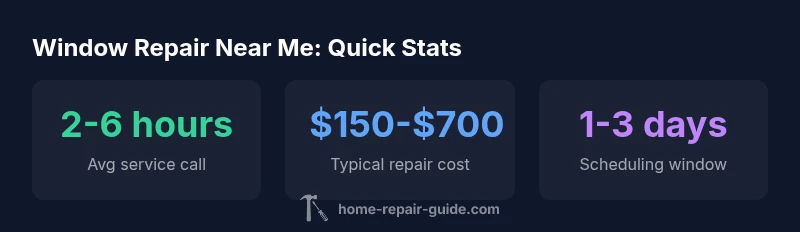
Most repairs take several hours and can be completed in a single visit, while more complex jobs may require an additional day. Scheduling depends on part availability and site access.
Most repairs take a few hours, sometimes a full day if parts are needed.
Are there risks with DIY window repairs?
Yes. DIY fixes can cause injury, glass breakage, or further damage to frames and seals. Complex issues like structural rot or high-performance glazing should be handled by professionals.
Yes—DIY can be risky; stick to simple tasks and leave structural or glazing work to pros.
What are common costs I should expect?
Costs vary by issue and window type. Expect estimates to cover parts, labor, and potential permit or disposal fees. Always request a written breakdown.
Costs vary; get written estimates with a clear breakdown.
When should I replace rather than repair?
If frames are rotten, multiple panes fail, or energy loss persists after repair, replacement often yields better long-term value and performance.
If frames are damaged or energy loss continues after repair, replacement may be better.
How can I verify warranties and guarantees?
Ask for warranty terms in writing, including what is covered, duration, and whether parts and labor are both included. Read the fine print for exclusions.
Get warranty details in writing and understand what's covered.
“Professional window repair near me, when performed by licensed technicians, not only fixes the current issue but also preserves energy efficiency and safety.”
Key Takeaways
- Prioritize licensed pros near you.
- Ask for written warranties and a clear estimate.
- Request a full assessment before work begins.
- Consider replacement if frames are deteriorated.
- Schedule preventive maintenance to extend window life