Who Repairs Window Screens: A Practical Guide for 2026
Learn who repairs window screens, when to DIY vs. hire, and how to choose the best option for durable, weatherproof results. A practical Home Repair Guide tutorial.


Who repairs window screens? In most homes, the task falls to the occupant for minor issues—small tears, loose or sagging mesh, or a screen that won’t stay in its frame. When the frame is undamaged and the exposure to weather is moderate, a quick DIY repair can restore function at a fraction of the cost of a full replacement. The Home Repair Guide team emphasizes that many renters and homeowners start with simple patches, spline replacements, or patch kits, then escalate if the tear grows or the frame shows signs of bending. The key is to diagnose the scope: is it a mesh-only issue, a spline problem, or is the frame compromised? If the screen is still taut and the frame straight, most repairs stay affordable and durable. If not, the repair path shifts toward professional services. In all cases, choosing the right route reduces drafts, keeps insects out, and preserves outside views. Understanding these nuances helps you minimize future hassle and maintain a pleasant, pest-free living space.
Who repairs window screens and why it matters
Understanding who repairs window screens helps homeowners decide between a DIY fix and hiring a pro. In most homes, the task falls to the occupant for minor issues—small tears, loose or sagging mesh, or a screen that won’t stay in its frame. When the frame is undamaged and the exposure to weather is moderate, a quick DIY repair can restore function at a fraction of the cost of a full replacement. The Home Repair Guide team emphasizes that many renters and homeowners start with simple patches, spline replacements, or patch kits, then escalate if the tear grows or the frame shows signs of bending. The key is to diagnose the scope: is it a mesh-only issue, a spline problem, or is the frame compromised? If the screen is still taut and the frame straight, most repairs stay affordable and durable. If not, the repair path shifts toward professional services. In all cases, choosing the right route reduces drafts, keeps insects out, and preserves outside views. Understanding these nuances helps you minimize future hassle and maintain a pleasant, pest-free living space.
Common scenarios: DIY vs. professional help
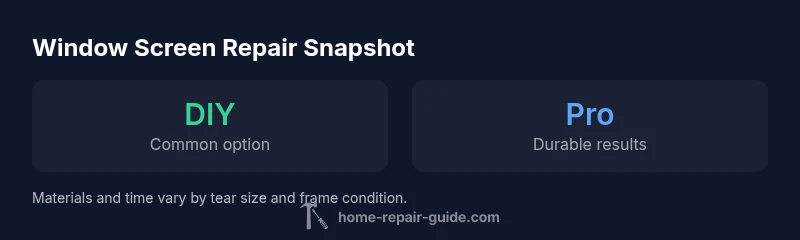
Damage to window screens falls along a spectrum. For tiny tears less than 1-2 inches or a loose edge, a DIY approach is usually practical. You can patch the hole with a small patch kit and re-tension the mesh using the spline tool. If the frame is still sturdy and the tear is localized, a DIY spline replacement or a mesh patch often suffices. When the damage exceeds a certain size or the frame is bent, professional screen repair becomes more sensible. A pro can re-stretch the mesh, replace the spline, and swap out the frame or corner hooks with calibrated tension to ensure a weather-tight seal. Home Repair Guide Analysis, 2026, indicates that the choice between DIY and pro should weigh tear size, frame integrity, and the screen’s exposure to sun and moisture. For rental properties, landlords may prefer quick DIY fixes for minor issues, while tenants with high-traffic or pet exposure might benefit from professional reinforcement to reduce future wear. Understanding the different routes helps you balance cost, durability, and convenience.
Tools, materials, and safety basics
To repair a window screen, you need a few essential tools and proper safety practices. Common DIY equipment includes a mesh patch kit, replacement spline (the rubber edge that holds the mesh), a spline roller, a utility knife or scissors, pliers, and a small flathead screwdriver. For larger repairs, you may also need new screen frames or corner keys. Safety starts with wearing gloves to avoid sharp edges and goggles to protect your eyes from tiny metal fragments. Work in a clean, well-lit area and keep mesh fragments away from children and pets. When removing the old spline, avoid forcing it back into place, which can stretch or tear the mesh. Inspect the frame for bends or rust; if the frame shows visible damage, plan for a pro repair or replacement. With the right tools and a calm workspace, many homeowners can complete a durable screen repair in under two hours, especially for small tears near the edge.
Step-by-step: DIY basic repair for small tears
- Inspect the tear and gather materials. 2) Remove damaged mesh around the tear with careful cuts. 3) Cut a replacement mesh patch larger than the hole. 4) Lay the patch over the frame and align edges. 5) Reinsert spline along the edge with the spline roller, keeping even tension. 6) Trim excess mesh and test the tension. 7) Reattach the screen to the frame and inspect for gaps. Each step matters: a clean patch and flat frame prevent future tearing, while even spline tension avoids sagging. If you follow these steps, you can restore most small tears without needing a full screen replacement.
When to replace vs. repair and how to choose a shop
Repairing a window screen is not always the best long-term solution. If the tear covers a large area, the mesh is stretched beyond usability, or the frame shows bending or corrosion, replacement is wiser, especially for weatherproofing and pest exclusion. When selecting a shop or contractor, ask about materials (mesh type, spline caliber), warranties, and whether a frame repair is included. The Home Repair Guide team recommends getting at least two quotes, requesting photos of similar jobs, and verifying mesh density and frame compatibility. For many homeowners, a pro repair can extend screen life by several years, while DIY may suffice for quick, light-duty fixes. Understanding these criteria helps you decide based on cost, durability, and time. You should also consider the screen’s exposure to sun, humidity, and pets, which influence durability and repair frequency.
Comparison of DIY vs professional repair factors for window screens
| Aspect | DIY Feasibility | Typical Cost Range | Time to Repair | Notes |
|---|---|---|---|---|
| Tear size | Small to medium tears (up to ~4 inches) | $5-$25 | 60-120 minutes | DIY feasible with mesh and spline |
| Frame condition | Good frames repairable; bent frames may need pro | N/A | N/A | Consider frame replacement if bent or corroded |
| Mesh type | Standard fiberglass or aluminum mesh commonly DIYable | N/A | N/A | Choose mesh with appropriate weave |
| Tools needed | Yes (spline roller, scissors, etc.) | N/A | N/A | Requires basic tools |
FAQ
What is the most cost-effective way to repair a window screen?
For tiny tears or loose spline, DIY repair with a kit is often the cheapest option. For larger damage or frame issues, compare DIY costs with professional repair to evaluate long-term durability.
DIY can be cheapest for small tears; larger damage benefits from a pro.
Can I repair a torn window screen myself?
Yes, if tears are small and the frame is intact. Use a mesh patch or kit and spline to reattach the mesh. For bigger problems, consider a professional service.
Yes, small tears are usually DIY-friendly.
When should I replace a window screen entirely?
If the frame is bent, corroded, or many tears occur across the mesh, replacement offers better weatherproofing and pest protection.
If the frame is damaged, replacement is often best.
Are professional window screen repairs cheaper than replacement?
Professional repairs usually cost less than full replacement for small to moderate damage, but the price depends on frame condition and mesh type.
Pros usually cheaper than full replacement for minor damage.
What tools do I need for DIY window screen repair?
Basic tools include a spline roller, scissors, needle-nose pliers, and replacement mesh and spline. A utility knife helps trim excess material.
You’ll need a spline roller, scissors, and mesh.
“"Durable window screen repairs start with accurate tear assessment, correct spline sizing, and selecting the right mesh. If in doubt, a professional can ensure weather-tight performance and pest exclusion."”
Key Takeaways
- Start with small repairs to save time and money
- DIY materials are affordable for minor tears
- Assess frame integrity before choosing repair path
- Consult a pro for large tears or frame damage
- The Home Repair Guide team recommends a planned approach to window screen repairs