How to Repair Ingrown Toenail: A Step-by-Step Guide
Learn practical, safe methods to treat a mild ingrown toenail at home with step-by-step guidance, when to seek medical help, and prevention tips from Home Repair Guide.


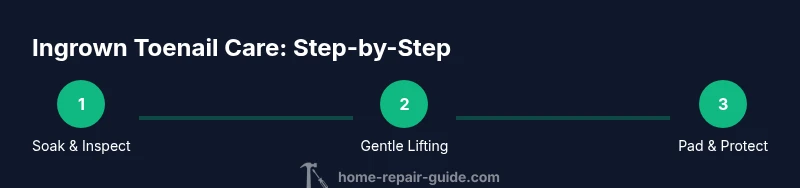
In this guide, you will learn how to safely manage a minor ingrown toenail at home and when to seek professional care. You'll soak the toe, gently lift and trim correctly, use antiseptic, and protect the area with breathable padding. If symptoms worsen, see a clinician to prevent infection or nail damage.
What is an ingrown toenail and why it happens
Ingrown toenails happen when part of the nail edge grows into the surrounding toe skin. They are common on the big toe and can occur with poorly trimmed nails, tight shoes, or toe injuries. The sensation is typically sharp or throbbing and may be accompanied by redness and swelling. In mild cases, home care can relieve discomfort and prevent progression. The nail and surrounding tissue are actively healing, so gentle handling matters. According to Home Repair Guide, understanding how the nail grows helps you choose the safest care approach. At the core, you want to reduce pressure on the corner, keep the area clean, and avoid introducing infection. If you notice pus, fever, spreading redness, or if you have diabetes or poor circulation, seek medical attention promptly. Proper technique centers on keeping the edge of the nail from digging into skin while allowing normal nail growth. By combining soaking, careful trimming, antiseptic care, and padding, you can often prevent worsening and speed recovery.
Signs you can safely treat at home vs when to see a professional
When to treat at home: mild redness at the nail edge, tenderness, and no pus or fever. Begin with a warm soak, gently lift the nail edge with dental floss or a thin cotton thread, and apply antiseptic with a clean pad. Wear roomy, breathable footwear and avoid tight socks to reduce pressure. Monitor for 24-48 hours; if symptoms improve, continue care and re-evaluate. When to seek professional care: increasing redness or swelling, pus discharge, fever, significant pain, or if you have diabetes, vascular disease, or immune problems. A clinician may perform a minor procedure to remove part of the nail or prescribe antibiotics if infection is present. According to Home Repair Guide analysis, most mild cases improve with proper at-home care, but persistent symptoms require medical evaluation, especially in high-risk individuals (Home Repair Guide Analysis, 2026).
What you'll need before you start (tools and materials)
Ahead of any at-home procedure, assemble the following items in a clean, well-lit space. Keeping everything ready minimizes interruptions and reduces the chance of contamination. Keeping hands and workspace clean is essential. The list identifies essential items; optional tools are noted in parentheses.
- Foot basin or shallow tub (required) for soaking the toe; fill with warm water to mid-calf level.
- Nail clippers (required) sharp and clean; use sterile tools only.
- Nail file or emery board (required) to smooth edges after trimming.
- Sterile cotton balls or gauze (required) to cushion and lift the nail edge.
- Dental floss or a straightened cotton swab (required) for gently lifting the nail edge.
- Antiseptic solution (required) such as povidone-iodine or alcohol.
- Clean towels or disposable wipes (required).
- Tweezers (sterile) (optional but helpful for handling small objects).
- Small adhesive bandage or medical tape (optional) for post-care protection.
- Epsom salt (optional) for soaking if you prefer.
Safe at-home care steps baseline (overview)
The following sequence provides a safe approach to mild ingrown toenails. Each step should be performed slowly and with clean hands. Do not force painful procedures. If any step causes sharp pain, stop and reassess or seek help. This overview is meant for educational purposes only and does not replace medical advice. Always keep the area dry between steps and monitor for signs of infection.
At this stage, you are prioritizing gentle lifting, keeping the edge away from skin, and maintaining clean conditions to minimize infection risk. Regular monitoring and proper padding help reduce pressure while the nail grows out. Remember to avoid cutting corners or digging into the tissue, which can worsen the problem.
When at-home care isn't enough: professional options
If home care fails to improve symptoms within 48-72 hours, or if you notice increasing redness, warmth, pus, fever, or severe pain, seek professional medical care. A clinician may perform a minor procedure to remove part of the nail, relieve pressure, or treat infection with prescribed antibiotics. In some cases, a podiatrist may recommend a short-term use of a local anesthetic and careful nail edge management. People with diabetes or peripheral vascular disease should seek timely medical advice even for mild symptoms because infections can progress rapidly. A professional approach reduces the risk of complications and recurrences by ensuring proper nail growth direction and skin healing.
AUTHORITY SOURCES
For evidence-based guidance, consult reputable sources:
- NHS: https://www.nhs.uk/conditions/ingrown-toe-nail/
- Mayo Clinic: https://www.mayoclinic.org/diseases-conditions/ingrown-toenail/symptoms-causes/syc-20377963
- AAOS OrthoInfo: https://www.orthoinfo.org/topic.cfm?topic=A00156 These sources provide expert-reviewed information about symptoms, conservative care, and when surgery may be indicated. (Home Repair Guide)
Prevention tips to avoid recurrence
Preventing future ingrown toenails centers on consistent nail care and footwear choices. Trim nails straight across, avoid rounding the corners, and don't cut nails too short. Wear shoes that fit properly with a roomy toe box, and keep feet dry to minimize moisture that can soften skin. Regularly inspect your toes, especially if you are active or have conditions like diabetes. If you notice recurring pain or thickened nail growth, consider seeing a podiatrist for professional guidance. By maintaining discipline with these habits, you can reduce the likelihood of future ingrown toenails and keep feet healthier in the long run.
Tools & Materials
- Foot basin or tub(Large enough to submerge the toe; fill with warm water)
- Nail clippers(Sharp, clean blades; sterilize before use)
- Nail file or emery board(Smooths edges after trimming)
- Sterile cotton balls or gauze(Cushions and lifts the nail edge)
- Dental floss or straightened cotton swab(Gently lifts the nail edge)
- Antiseptic solution(Povidone-iodine or alcohol)
- Clean towels or disposable wipes(Dry hands and workspace)
- Tweezers (sterile)(Handle small objects safely)
- Adhesive bandage or medical tape(Post-care protection)
- Epsom salt (optional)(Soaking additive if desired)
Steps
Estimated time: 45-60 minutes
- 1
Prepare your workspace and gather materials
Set up in a clean, well-lit area. Wash your hands, wipe your tools with antiseptic, and lay out all items within reach. Confirm you have everything so you won’t need to interrupt the process.
Tip: Sterilize tools with boiling water or alcohol before starting. - 2
Soak the affected foot
Soak the foot in warm water for 10-15 minutes to soften the nail and surrounding skin. If you have a toe that bleeds or is very painful, skip soaking and proceed with gentle care only.
Tip: Add a pinch of Epsom salt if available to reduce swelling. - 3
Gently lift the nail edge
Using dental floss or a straightened cotton swab, carefully lift the edge of the ingrown nail away from the skin—do not pry or tear. Stop if you feel sharp resistance or pain.
Tip: Keep a steady hand and work slowly to avoid skin injury. - 4
Trim the nail straight across
Trim the nail edge straight across, not curved or rounded in the corners. Leave a slight margin beyond the nail bed to prevent snagging. File any rough edges smooth.
Tip: Avoid digging into the skin or cutting too short. - 5
Insert a protective filler under the edge
Place a small piece of cotton or dental floss under the lifted edge to gently separate the nail from the skin and reduce pressure as it grows out.
Tip: Change the padding daily and inspect for signs of improvement. - 6
Apply antiseptic and padding
Apply antiseptic to the surrounding skin and place a clean pad over the nail. Secure with a bandage so the toe remains protected and dry.
Tip: Reapply antiseptic with each dressing change. - 7
Cover and protect the toe
Keep the toe bandaged for 24 hours, then switch to open-toed or breathable footwear to prevent moisture buildup. Dry the area after any contact with water.
Tip: Avoid soaking again until symptoms improve. - 8
Monitor healing and decide on next steps
Observe changes over the next several days. If pain diminishes and redness subsides, continue care. If symptoms worsen or persist beyond a few days, seek professional evaluation.
Tip: Take photos to track progress and share with a clinician if needed.
FAQ
Can I repair an ingrown toenail at home if I have no underlying conditions?
Yes, mild cases without diabetes or circulation problems can often be managed at home with careful soaking, gentle lifting of the nail edge, straight-across trimming, and antiseptic care. If symptoms persist or worsen, seek medical advice.
Mild cases can often be managed at home with soaking and careful nail care, but if symptoms persist, consult a clinician.
What are signs that require urgent medical care?
Persistent or increasing redness, warmth, swelling, pus, or fever, especially with diabetes or poor circulation, require medical evaluation to prevent complication.
Urgent signs include pus, fever, and spreading redness. Seek care promptly.
Will DIY treatment prevent surgery?
Many mild cases heal without surgery with proper home care. Recurrent or severe cases may require partial nail removal or other procedures by a clinician.
Mild cases often heal with home care; surgery is for persistent or complicated cases.
How long does recovery take with at-home care?
Initial pain relief appears within days, but full nail growth can take several weeks. Healing times vary with age, health, and nail growth rate.
Most people notice improvement within a few days, with full healing over several weeks.
Can ingrown toenails come back after treatment?
Yes, the condition can recur if nail trimming and footwear are not maintained. Ongoing care reduces the chance of future ingrowth.
Recurrence is possible if nail care isn’t maintained.
Who should avoid at-home care entirely?
People with diabetes, neuropathy, poor circulation, or immune compromise should avoid self-treatment and seek professional evaluation early.
If you have diabetes or circulation issues, get a clinician's input before trying home care.
Watch Video
Key Takeaways
- Soak, lift, and trim with care to reduce pain.
- Trim nails straight across to prevent future ingrowth.
- Protect the toe with antiseptic and padding to prevent infection.
- Seek medical help if signs of infection persist or worsen.