Sewer Line Repair Near Me: A Practical 2026 Guide
Find reliable sewer line repair near me with a data-driven, homeowner-friendly guide. Learn to evaluate quotes, compare trenchless vs open-cut methods, and protect your home.


To find sewer line repair near me, start with licensed, insured plumbers in your area and compare three quotes. Prioritize services that offer camera inspections, trenchless repair options, and written warranties. Check for local rebates or materials like epoxy lining. Schedule a site visit to confirm scope and timelines before approving any work.
What sewer line issues look like and why you should act
Sewer line problems are not just plumbing nuisances; they threaten your home's sanitation, structure, and resale value. A damaged line can lead to sewage backups, foul odors, and costly water damage. Common causes include tree roots intruding through joints, shifting soils, aging pipes, and accidental damage during renovations. When you search for sewer line repair near me, you want a reliable, local professional who can diagnose quickly and explain options. According to Home Repair Guide's analysis, early detection and a clear repair plan save homeowners money and stress. In this section, we outline typical symptoms, inspection steps, and decision points to help you decide when to act.
Typical warning signs include multiple clogged drains, gurgling sounds in the plumbing, damp patches in the yard, or a noticeable sewage odor. If you notice any of these, avoid delaying a professional assessment. A local expert can determine whether the issue is a single root-caused obstruction or a full pipe failure requiring replacement. The goal is to map the problem precisely, choose the most durable fix, and minimize disruption to your daily routine.
Choosing between trenchless and open-cut repair
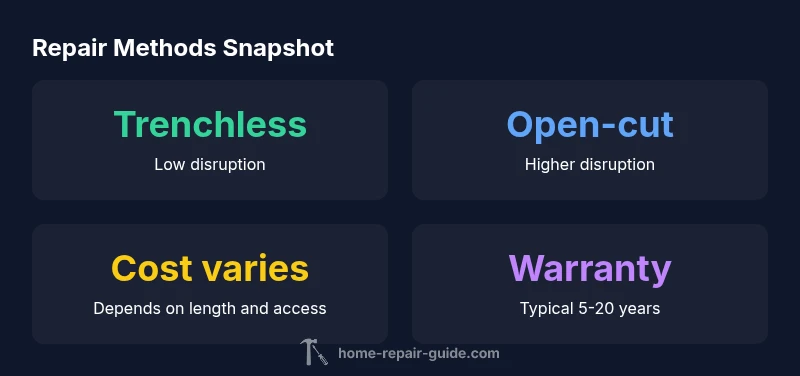
When you search for a repair option, you’ll frequently hear about trenchless methods versus traditional open-cut approaches. Trenchless pipe lining (CIPP) involves inserting a new liner inside the existing pipe, often with little surface digging. This method typically means less yard disruption, shorter restoration times, and reduced landscaping costs. Open-cut repair requires excavating the affected area to access the pipe directly, which offers robust access for severe damage but can involve longer downtime and more work on driveways, lawns, and sidewalks. Costs vary by pipe length, soil conditions, and local labor, but trenchless options generally provide a faster return to normal life with less surface damage. For some scenarios—such as severely corroded joints or large breaks—open-cut may be the only viable solution. The right choice hinges on pipe condition, access, and budget, so request a qualified plumber to perform a precise camera inspection before deciding.
To align expectations, note that trenchless systems often carry warranties for decades when installed by certified teams. In contrast, open-cut repairs can be straightforward but may require subsequent fixes if neighboring joints deteriorate. Understanding the trade-offs helps homeowners weigh disruption against long-term reliability.
How to evaluate quotes and contractors
Receiving multiple quotes is essential, but quality matters more than the lowest price. Start with practical checks: verify licensing and insurance, confirm your city requires permits, and ask for written, itemized estimates. A reliable contractor should provide a clear scope of work, the repair method proposed (trenchless vs open-cut), expected timeline, and a breakdown of labor plus materials. Insist on a camera inspection as part of the diagnostic phase and request photos or video from the camera run. Inquire about warranties on workmanship and materials, and ensure the contract specifies who handles cleanup and any required permits. Finally, look for references or homeowner testimonials, and compare response times and communication quality. Home Repair Guide’s method for selecting a contractor emphasizes transparency, written commitments, and post-repair follow-up to address potential issues promptly.
Camera inspections: the hidden truth of sewer problems
Camera inspections are the best way to see inside a clogged or damaged sewer line without invasive digging. A high-quality camera reveals cracks, root intrusion, offset joints, and blockages. This diagnostic step informs whether a liner can be installed or if a full pipe replacement is necessary. When you request quotes, confirm that the inspection is included and ask how the footage will be shared (still images or a short video). Early camera data helps you avoid unwelcome surprises after work begins and strengthens your leverage in price negotiations. A thorough camera run also provides a baseline for warranty coverage and future maintenance plans.
Typical repair process: diagnosis to completion
After you pick a contractor, the average project follows a predictable sequence: 1) a final site assessment and permit review, 2) a camera inspection to document the exact condition, 3) selection of repair method, 4) preparation and trenching or liner installation, 5) pressure testing and leak checks, 6) backfilling, cleanup, and 7) a post-repair inspection with customer acknowledgment. Throughout the process, expect some surface disruption during access work, especially for open-cut repairs. A good contractor will provide you with a daily update, a revised timeline if delays arise, and a final warranty detailing coverage levels and service terms.
Cost considerations and financing options
Costs for sewer line repair near me vary widely based on pipe material, length, and the chosen method. Typical ranges reflect both trenchless and open-cut techniques, with additional expenses for root removal, trench restoration, and permit fees where applicable. Some homeowners finance repairs through optional municipal programs or contractor financing, which can help manage upfront costs. While it’s natural to seek the lowest price, prioritize long-term value: a robust inspection, proven repair method, and a thorough warranty. In many cases, investing in trenchless repair reduces yard restoration costs and speeds return to normal use, making it a favorable option when conditions permit.
Preventive maintenance to extend sewer life
Prevention is cheaper than repair. Schedule periodic inspections, especially after seasonal changes or nearby construction. Plant trees with aggressive root systems at a safe distance from sewer lines, and monitor the landscape for new damp spots or sinking soil. Planting and root management can reduce intrusion risk, while regular snipe cleanouts and minor fixes prevent small issues from turning into major failures. Keep an eye on your drainage patterns, avoid flushing inappropriate items, and consider a yearly camera check to catch developing problems early. A proactive maintenance plan, emphasized by Home Repair Guide, saves homeowners both time and money over the life of the system.
Local factors that affect sewer repairs
Geography and soil type influence both repair feasibility and cost. Clay soils, high clay content, or saturated ground near your foundation can complicate digging and backfill. Wet seasons can extend project timelines due to rainfall and groundwater management. Urban areas may require additional permits or street closures, impacting scheduling and costs. In contrast, rural settings may present longer transport times for materials. Discuss local conditions with your contractor so you can adjust expectations and budget accordingly. Understanding these environmental factors helps homeowners avoid surprises when the crew arrives on the scheduled date.
Comparison of sewer line repair methods
| Method | Disruption | Cost Range | Durability |
|---|---|---|---|
| Trenchless pipe lining (CIPP) | Low disruption | "$3,000-$8,000" | Long-lasting |
| Open-cut repair | High disruption | "$2,500-$12,000" | Good durability with proper joints |
| Localized repair/spot fix | Moderate disruption | "$1,500-$5,000" | Variable durability depending on scope |
FAQ
What is the typical cost range for sewer line repair near me?
Costs vary widely by method and location. Expect a broad range from a few thousand up to double digits, depending on pipe length, soil, and accessibility. Always get a written estimate after a camera inspection.
Costs vary by method and location. Get a written estimate after a camera inspection to know what you’ll pay.
How long does sewer line repair typically take?
Most jobs take one to three days, with longer durations for complex open-cut projects or difficult access. Weather and permit processing can add time.
Most jobs take one to three days, with possible delays for weather or permits.
What should I ask before hiring a contractor?
Ask for licensing and insurance proof, a written scope and warranty, camera inspection results, permit requirements, and a clearly itemized estimate. Check references and confirm clean-up responsibilities.
Ask for licenses, insurance, a written scope and warranty, and camera inspection results.
Is trenchless repair worth it?
Yes, when the line condition allows it. Trenchless methods minimize yard disruption and restoration work, but may not be suitable for severe pipe damage.
Trenchless can be worth it if the pipe is in good condition for lining; otherwise open-cut may be best.
How can I tell if my sewer line is damaged?
Look for recurring clogs, gurgling sounds, foul odors, damp spots in the yard, or sewage backing up into fixtures. A professional camera inspection confirms the issue.
Recurring clogs and sewage odors usually mean trouble—get a camera inspection for confirmation.
What maintenance reduces future sewer problems?
Regular inspections, careful tree root planning, and avoiding flushing inappropriate items help. Schedule annual checks and address minor issues promptly.
Keep up with regular inspections and mindful landscaping to reduce future problems.
“Choosing the right sewer line repair method starts with an accurate diagnosis and a clear warranty. The right plan minimizes disruption and protects your home long-term.”
Key Takeaways
- Prioritize licensed pros with written warranties
- Camera inspections are essential for accurate fixes
- Trenchless options often reduce disruption
- Get multiple, itemized quotes for comparison
- Ask about permits and post-repair follow-up