Warped Brake Rotor Repair: Step-by-Step Guide
Learn how to diagnose and repair warped brake rotors safely, including resurfacing vs replacement, measurement techniques, and a practical step-by-step process for homeowners.


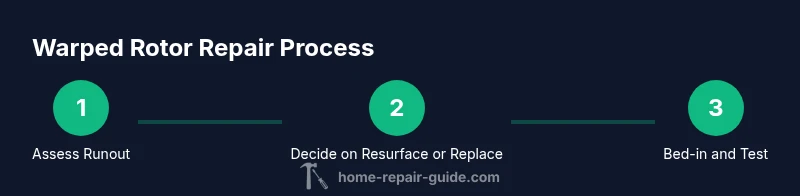
Warped brake rotor repair involves diagnosing runout, choosing resurfacing or rotor replacement, and following a safe, step-by-step process to restore braking performance. This guide helps you measure runout, decide between resurfacing and replacement, and complete the repair with common tools. You’ll learn safety basics, how to select the right approach, and how to bed-in new or resurfaced rotors for optimal grip.
What warped brake rotor repair is and why it matters
Warped brake rotor repair refers to the process of correcting or mitigating rotor distortion that causes pulsing, vibration, or reduced braking efficiency. When a rotor is warped, the contact surface isn’t perfectly flat, which can lead to uneven pad wear and heat buildup during braking. According to Home Repair Guide, warped rotors are most often caused by excessive heat from heavy braking, repeated hard stops, or improper brake assembly. Left unaddressed, warping can compromise stopping distance and damage other components such as pads, calipers, and wheel bearings. In this guide, we focus on reliable, practical approaches homeowners and renters can use to assess whether resurfacing is possible, and when replacement is the safer option. We’ll cover how to measure runout, what tool you need, and the sequence for safely lifting, inspecting, and reassembling the brake system. The goal is safer, smoother braking and longer rotor life, not just a quick fix. The Home Repair Guide team emphasizes patience, accuracy, and adherence to vehicle manufacturer specifications.
Signs your rotor may be warped
Pulsating brake pedal, steering wheel vibration during braking, or a noticeable shudder when you apply the brakes are common indicators of rotor warp. You may also see uneven pad wear or audible grinding noises. It’s important to differentiate rotor warp from issues like a sticking caliper, warped wheel bearings, or a damaged pad shims. According to Home Repair Guide, persistent signs should trigger a careful inspection rather than assuming replacement is always needed. A proper diagnosis helps you choose between resurfacing and rotor replacement with confidence.
Resurfacing vs replacement: when to choose
Resurfacing a rotor can restore a true, flat braking surface if there are no heat cracks, grooves, or excessive thinning. If the rotor’s minimum thickness spec is approaching or you observe deep scoring, heat cracks, or structural damage, replacement is safer and will prevent future issues. The decision also hinges on caliper condition and pad material; if misalignment or pad contamination persists, resurfacing won’t fix the underlying problem. Home Repair Guide notes that replacing rotors in pairs often yields the best balance and braking feel, especially on modern vehicles with linked braking systems.
Safety first: precautions before you start
Before you touch any braking components, park on a level surface and engage wheel chocks. Wear eye protection and gloves, and disconnect the battery if you’re performing work near electrical components. Use jack stands on a solid, flat surface and never work under a car supported only by a floor jack. Keep a clean workspace; brake dust and oil can be slippery and may contain contaminants. Always verify torque specs from the vehicle manufacturer and use a torque wrench for all fasteners to avoid over-tightening or under-tightening.
Measuring rotor runout: techniques and tools
Accurate runout measurement is critical to decide the proper repair path. A dial indicator mounted to a stable stand is the most common method; you’ll rotate the rotor and record the readings at multiple points around the surface. A runout greater than manufacturer spec typically means resurfacing or rotor replacement is required. If you don’t have a dial indicator, you can perform a rough check by feeling for wobble through the caliper or rotor with the wheel off, but this is not a substitute for precise measurement. Home Repair Guide recommends verifying both lateral (side-to-side) and total runout to ensure a true assessment.
The resurfacing process explained (if viable)
If resurfacing is deemed viable, you’ll need access to a brake lathe or a professional shop with a safe, calibrated resurfacing setup. The rotor must be securely mounted, with runout within tolerance before and after resurfacing. Surface removal should be even and limited to preserve rotor thickness. After resurfacing, clean the rotor, inspect for cracks or grooves, and verify that the new surface is flat and parallel to the mounting surface. The goal is a uniform, smooth finish that provides consistent pad contact.
Rotor replacement steps and considerations
When replacement is indicated, choose a rotor that matches the vehicle’s specifications and is compatible with the caliper and hub. Remove the old rotor, inspect the hub for corrosion or damage, and install the new rotor with correct torque on the retaining screws or fasteners. Refinish or inspect the rotor seating surface if you have a two-piece rotor. Ensure the rotor runs true with a light spin and check that the caliper slides freely. This approach avoids repeating the causes of warp and ensures long-term braking reliability.
Reassembly, bedding-in, and testing
Reassemble the brake system in the reverse order of disassembly. When installing a new or resurfaced rotor, perform a proper bedding-in procedure: several controlled, moderate stops from moderate speeds to gradually transfer a consistent layer of pad material to the rotor. Avoid heavy braking until you’ve completed the initial bedding cycle. After reassembly, test the brakes at low speed in a safe area to confirm there’s no unusual noise, grab, or vibration before normal operation. Regular inspection after a first drive helps catch any issues early.
Common mistakes and how to avoid them
Common errors include mixing incompatible pads with resurfaced rotors, neglecting to remove rotor shims or coatings, and failing to torque fasteners to spec. Don’t rely on a single measurement; double-check runout and rotor thickness. Avoid replacing rotors without inspecting the caliper condition, as sticking calipers can cause recurrent warping. Lastly, never perform brake work if you’re uncertain about the torque specs or alignment; consult a professional if needed.
Maintenance to prevent rotor warping
Regular brake fluid checks, rotor and pad inspections, and timely replacement when vibration or noise appears can prevent warp from becoming a safety issue. Consider replacing rotors in pairs for symmetry, especially on vehicles with linked braking systems. Monitor braking temperature under hard-use conditions (like mountain driving) and allow cooling between heavy stops. The goal is consistent heat management and even wear across all rotors and pads.
Tools & Materials
- Floor jack(Use on level ground; for safety, place on a solid base.)
- Jack stands(Two or more; key for safety after lifting.)
- Wheel chocks(Place to prevent rolling while elevated.)
- Lug wrench or impact wrench(To remove wheel quickly and safely.)
- Dial indicator or runout gauge(For precise measurement of rotor runout.)
- Brake cleaner(To remove grease and dust before inspection.)
- Torque wrench(To torque caliper bolts and hub fasteners to spec.)
- Caliper tool or C-clamp(If you need to retract pistons.)
- Replacement rotor(s) or resurfacing service(Based on inspection results.)
- Caliper and pad set (if replacing)(Ensure compatibility with the vehicle.)
- Gloves and eye protection(Personal safety gear.)
Steps
Estimated time: 60-120 minutes
- 1
Prepare and secure the vehicle
Park on level ground, apply parking brake, chock wheels, then safely lift with a floor jack and set on jack stands. This creates a stable workspace and prevents accidental movement during the repair.
Tip: Double-check the stands' base and use wheel chocks on all non-working wheels. - 2
Remove wheel and inspect components
Loosen lug nuts, remove the wheel, and visually inspect the caliper, pads, and rotor surface for obvious wear or damage. Note any sticking calipers or pad debris that could contribute to warp.
Tip: Take photos of the setup to reference during reassembly. - 3
Measure rotor runout
Mount a dial indicator on a stable fixture and rotate the rotor to record runout at multiple points. Compare results to manufacturer specs to determine if resurfacing or replacement is required.
Tip: If you don’t have a dial indicator, you can still note roughness by feel, but use measurement for accuracy. - 4
Decide on resurfacing or replacement
If runout is within spec and there are no cracks or deep grooves, resurfacing may be viable. Otherwise, replace the rotor and inspect related components for wear or misalignment.
Tip: Always verify minimum thickness before resurfacing. - 5
Resurfacing (if chosen)
If allowed, have the rotor resurfaced by a professional shop or use a calibrated brake lathe. Ensure the surface is flat and within thickness spec after resurfacing.
Tip: Do not remove excessive material; preserve rotor integrity. - 6
Rotor replacement (if chosen)
Remove the old rotor, inspect the hub surface for corrosion, clean as needed, and install the new rotor. Torque the hub and retaining fasteners to spec.
Tip: Clean the hub mating surface to ensure true seating of the new rotor. - 7
Reassemble caliper and pads
Reinstall the caliper, ensure the pads seat evenly, and slide the caliper mounts smoothly. Reconnect any sensors or clips as needed.
Tip: Do not force caliper pistons back without a proper tool if needed. - 8
Bed-in and test brakes
Perform a controlled bed-in sequence with light-to-moderate stops to transfer a uniform pad layer. Do a careful test drive to verify stability and stopping power.
Tip: Avoid aggressive braking until you complete the bedding process.
FAQ
What causes rotor warping and can it be prevented?
Rotor warp is typically caused by excessive heat, heavy braking, or caliper issues. Regular maintenance and proper cooling after long, aggressive stops help prevent warp. Address sticking calipers and ensure pads are properly matched to rotors.
Rotor warp is usually caused by heat and caliper issues. Regular maintenance helps prevent it; fix sticking calipers and match pads to rotors.
Can warped rotors be resurfaced safely?
Resurfacing can be safe if the rotor is thick enough, has no heat cracks, and the runout is within spec. If not, replacement is the safer option to maintain braking efficiency.
Resurfacing is safe only if the rotor is thick enough and free of cracks; otherwise, replace the rotor.
How do I know if I should replace or resurfacer rotor?
Use runout measurements, rotor thickness, and surface condition. If there are deep grooves, heat cracks, or the thickness is near minimum, replacement is recommended.
Measure runout, check thickness and cracks; replace if near minimum thickness or if cracks are present.
Is rotor replacement a DIY-friendly job?
Rotor replacement is doable for many DIYers with the right tools and torque specs, but brake systems are critical for safety. If you’re unsure, seek a professional.
Replacing rotors can be a DIY project if you’re comfortable with the setup and torque specs. If not, hire a pro.
What costs should I expect for rotor work?
Costs vary by vehicle and whether you resurface or replace. Expect parts and labor to vary; consider replacing in pairs for best balance and performance.
Prices vary; plan for parts and labor and consider replacing rotors in pairs for best braking balance.
How long does resurfacing or replacement last?
Resurfacing can extend rotor life if done correctly, but performance depends on driving and heat. Replaced rotors typically last as long as normal wear, with maintenance.
Resurfaced rotors can last as long as proper use allows; replaced rotors last similarly with good maintenance.
Watch Video
Key Takeaways
- Assess runout accurately before deciding on resurfacing or replacement
- Follow manufacturer specs for thickness and torque
- Bed-in new or resurfaced rotors to ensure optimal braking
- Inspect related components (calipers, pads, hubs) to prevent recurrent warping