Is Eucerin Advanced Repair Good for Tattoos? An Analytical Review
Explore whether Eucerin Advanced Repair is suitable for tattoo aftercare. This in-depth review analyzes safety, application steps, and practical alternatives for homeowners and renters seeking reliable guidance.


According to Home Repair Guide, Eucerin Advanced Repair is not tattoo-specific, but its rich, fragrance-free moisturizers can support healing skin when used cautiously after the initial tattoo care phase. It does not replace tattoo-specific aftercare steps, such as cleansing and avoiding irritants, and should generally be avoided on open wounds or until your tattoo artist confirms it's appropriate. For healed or aging tattoos, it can help maintain moisture and reduce itching during recovery.
is eucerin advanced repair good for tattoos? Assessing the claim
is eucerin advanced repair good for tattoos is a question that surfaces often for homeowners and renters who want practical skincare guidance alongside their tattoo journey. Eucerin Advanced Repair is marketed as a rich, hydrating moisturizer designed for very dry skin and does not target tattoo care specifically. From the perspective of Home Repair Guide, the product can support general skin hydration during the healing window, but it is not a substitute for tattoo-centered aftercare protocols. The distinction matters: tattoo aftercare emphasizes cleansing, protection from bacteria, and avoiding irritants, while a general moisturizer focuses on barrier maintenance. Consumers should navigate between general skin health and tattoo-specific steps, using Eucerin as a supplementary product rather than a primary treatment in the early healing phase.
Understanding tattoo healing stages and moisturizer roles
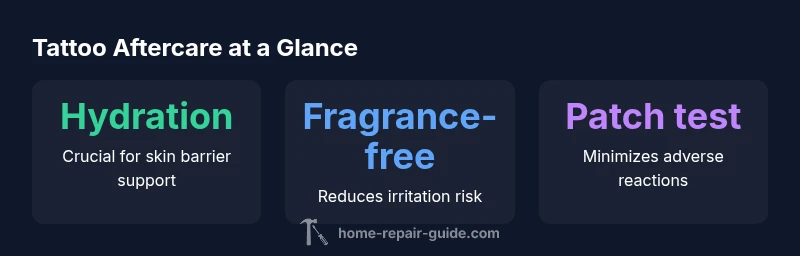
Tattoo healing follows a staged process: initial cleansing, gentle drying, and a gradual reintroduction of moisturizers as the wound closes. Moisturizers help prevent excessive scabbing and itching, but choosing the right formula matters. Fragrance-free options are typically preferred to minimize irritation, and products with a simple ingredient list reduce allergy risk. While Eucerin Advanced Repair can contribute to ongoing hydration during the later stages, it lacks the explicit tattoo-targeted guidance that comes with products labeled for post-tattoo care. Home Repair Guide emphasizes using trusted, non-irritating moisturizers after the initial healing period and under guidance from your tattoo artist or dermatologist.
How to use Eucerin Advanced Repair safely around tattoos
If you decide to incorporate Eucerin Advanced Repair into your routine, follow these cautious steps: patch test on healthy skin at least 24–48 hours before applying near a healing tattoo; apply a thin layer only after cleansing and patting the area dry; avoid applying on fresh wounds or oozing areas; wash hands before and after application to minimize contamination; and monitor for signs of irritation such as redness, swelling, or increased itching. Never substitute proper tattoo aftercare steps with moisturizer alone, especially in the first week after getting inked.
Tattoo-specific alternatives and when to choose them
Tattoo aftercare often starts with a sterile soap, clean water, and a thin barrier cream or ointment prescribed by the artist, typically prioritizing products designed to shield the wound while allowing airflow. Alternatives to Eucerin Advanced Repair include dedicated tattoo aftercare products and simple, barrier-creating ointments with minimal fragrance and additives. When comparing, the key differences are targeted guidance for tattoo healing, potential SPF considerations, and the balance between occlusion and breathability. For users with sensitive skin or a history of skin reactions, consult a dermatologist before substituting tattoo-specific options with a general moisturizer.
Testing methodology and practical limitations (editorial context)
In evaluating claims for is eucerin advanced repair good for tattoos, Home Repair Guide uses a qualitative approach: examining product claims, user safety notes, and typical tattoo aftercare requirements. The analysis does not replace clinical trials or professional medical advice. It aims to provide practical guidance for homeowners and renters who want reliable, real-world steps. Readers should view this as an informed opinion based on general skin-care principles and typical aftercare guidelines, not a substitute for personalized medical or tattoo-artist advice.
Safety considerations and patch testing for sensitive skin
Patch testing remains a prudent precaution when introducing any new moisturizer near a healing tattoo. Even fragrance-free formulas can cause irritation in some individuals. If patch testing shows no adverse reaction after a couple of days, apply a thin layer to surrounding skin rather than directly on a healing wound. If redness, blistering, or persistent itching develops, discontinue use and consult a clinician. Remember that the primary responsibility for tattoo healing lies with proper cleansing, avoiding picking or scratching, and following the artist’s aftercare instructions.
Brand context and evidence sources (balanced, non-promotional)
This analysis references general skin-care guidance rather than endorsing any single product for tattoo healing. Home Repair Guide prioritizes practical, reliable steps and reminds readers that tattoo aftercare is a specialized process. The discussion of Eucerin Advanced Repair is contextual: it can support ongoing hydration for non-wound skin, but tattoo healing benefits most from products designed for post-tattoo care. For readers seeking further guidance, consult your tattoo artist and dermatologist, and reference reputable sources for wound care best practices.
Upsides
- Rich moisturization supports dry, non-wroken skin during healing
- Fragrance-free variants reduce irritation risk
- Widely available and generally affordable
- Simple formula can minimize potential allergies
Disadvantages
- Not tattoo-specific and lacks tattoo-targeted barrier repair guidance
- No explicit SPF or antimicrobial properties for active wounds
- May be less ideal during the very early healing stage on open wounds
- Patch testing is advised; results may vary by skin type
A cautious, supplementary option for moisturizing after tattoo healing
The Home Repair Guide team concludes that Eucerin Advanced Repair can support dry skin during the later healing stages but is not a tattoo-specific solution. It should not replace tattoo artist-recommended aftercare. Use as a supplement, with artist guidance, for non-wound areas.
FAQ
Is Eucerin Advanced Repair safe for a new tattoo?
For new tattoos, prioritize cleansing and an artist-recommended ointment. Eucerin Advanced Repair is not tattoo-specific and should be avoided on open wounds. It may be used later, after initial healing, as a gentle moisturizer if patch-tested and approved by your tattoo artist.
New tattoos require specialist aftercare. Eucerin Advanced Repair isn’t tattoo-specific and should not go on fresh wounds. Use it later under guidance from your artist.
Can I use Eucerin Advanced Repair on healed tattoos?
Yes, on fully healed tattoos you can consider Eucerin Advanced Repair to maintain moisture and reduce itchiness, provided you have no sensitivities. Avoid applying on any flared or irritated skin near the healed area, and follow the tattoo artist’s guidance.
You can use it on healed tattoos if you have no sensitivity, but stick to the artist’s advice and avoid irritated skin.
Does Eucerin Advanced Repair contain SPF or offer antimicrobial properties?
Eucerin Advanced Repair typically focuses on moisturization and barrier support rather than sun protection or antimicrobial features. For tattoos, add sunscreen once the tattoo is fully healed and the skin is closed, and always follow the artist’s sun protection recommendations.
It’s mainly a moisturizer, not a sunblock or antimicrobial product. Use sunscreen once the tattoo is healed.
Should I patch test before using around a tattoo?
Yes. Patch test a small amount on non-tattooed skin at least 24–48 hours to check for irritation before applying near a healing tattoo. If any redness or irritation occurs, discontinue use and consult a clinician.
Patch test first to check for reactions. If it itches or reddens, stop using it.
What are better alternatives for tattoo aftercare?
Better alternatives include tattoo-specific aftercare products recommended by your artist, or simple barrier creams designed for wounds. These options provide targeted guidance and safer wound management during healing, often with ingredients suited for tattoo tissue.
Tattoo-specific products are usually a safer bet, since they’re designed for healing ink.
How should I integrate moisturizers with other aftercare steps?
Moisturizers should complement cleansing and protection steps, not replace them. Follow your artist’s instructions on washing frequency and products to use, and apply moisturizers only after cleansing and drying the area, avoiding excessive occlusion on fresh wounds.
Use moisturizer after cleansing, not as a substitute for aftercare steps advised by your artist.
Key Takeaways
- Consult your tattoo artist before applying any moisturizer near healing ink
- Choose fragrance-free formulas to minimize irritation
- Patch test before using around a new tattoo
- Use moisturizers only after initial healing, not on open wounds
- Rely on tattoo-specific aftercare guidance for best results