Bond Repair vs Protein Treatment: Is It the Same?
Explore whether bond repair is the same as protein treatment, how each works, and how to choose based on hair goals. A clear, analytical comparison with practical guidance for homeowners and renters caring for hair health.


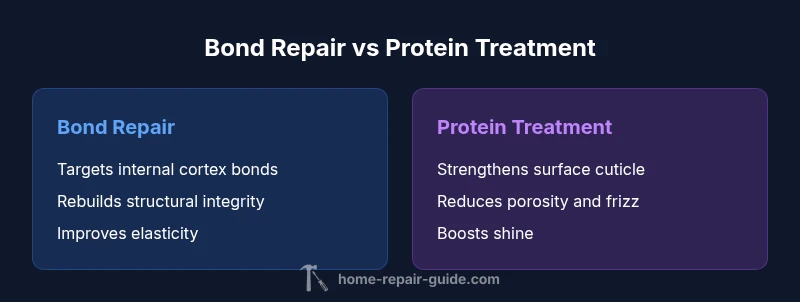
Is bond repair the same as protein treatment? The quick answer is no, though they share a common goal of improving hair health. Bond repair targets internal bonds within the cortex to restore elasticity, while protein treatment adds surface-strengthening proteins that reinforce the cuticle. Your choice hinges on whether your primary issue is bond integrity or surface reinforcement, and a strategic plan may combine both.
What is the core question behind is bond repair the same as protein treatment?
Across consumer hair care discussions, many readers ask is bond repair the same as protein treatment. In practical terms, the answer is that these two approaches operate at different levels of the hair structure. Bond repair focuses on internal rebuilding of the disulfide and related bonds within the cortex, which can restore strength and reduce breakage from deep damage. Protein treatment, by contrast, delivers exogenous proteins that align with the hair’s surface layers, bolstering the cuticle and improving texture and manageability. When you ask if is bond repair the same as protein treatment, you should judge by which layer you intend to support—the cortex or the cuticle—and then decide how to sequence care across sessions. A thoughtful plan often involves initial bond repair to stabilize the core structure, followed by protein treatments to maintain surface integrity and shine over time. For many readers, the guiding question is is bond repair the same as protein treatment in practice, and the answer is that both can be part of a balanced strategy.
What is bond repair and what hair science says?
Bond repair refers to procedures or products designed to rebuild internal hair bonds that are damaged from chemical processing, heat, or environmental stress. The concept is to restore the hair’s natural architecture, especially at the level of the cortex where the most critical structural links reside. While there is debate about the permanence of bond restoration, most professionals agree that you can improve resilience by supporting these bonds with proper chemistry and careful heat management. When evaluating is bond repair the same as protein treatment, keep in mind that bond repair is about internal scaffolding, whereas protein treatment focuses on surface reinforcement. The long-term health of your hair depends on maintaining both depths of integrity, though the sequence you choose may vary by hair type and damage history.
What is a protein treatment and how does it work on hair?
Protein treatments introduce high-molecular-weight proteins or protein-like molecules that integrate with the outer layers of the hair to reinforce the cuticle. The goal is to reduce porosity, control frizz, and increase the hair’s resistance to everyday wear. When you consider is bond repair the same as protein treatment, note that protein treatments do not directly reconstruct the cortex’s bonds but rather protect and strengthen the external structure. They can be especially beneficial for damaged, porous hair that lacks surface cohesion. A typical regimen might involve a protein treatment after a bond-focused service to maintain overall integrity and appearance.
How the two approaches complement each other in practice
In many cases, is bond repair the same as protein treatment is a false dichotomy. They address different mechanical failures in hair. Bond repair helps with elasticity and internal resilience, while protein treatment improves surface strength and smoothness. The most effective routines often start with bond repair methods to address structural weaknesses, followed by periodic protein treatments to seal the cuticle and minimize moisture loss. This dual approach can be tailored to your hair’s porosity, density, and processing history, producing a result that balances strength, shine, and manageability over time.
Real-world scenarios: when to prioritize bond repair
If your hair shows frequent breakage at the mid-lengths, shedding after heat styling, or a chalky texture indicating internal weakness, the question is is bond repair the same as protein treatment? In such cases, focusing first on bond repair makes sense because the core structure is compromised. You’ll typically see improvements in elasticity and reduced snap-back after gentle combing. Combining this with a technique to protect the cuticle—whether a protein treatment or a restorative mask—helps sustain gains. Practitioners often use a phased approach: bond repair first, then protein-based protection to lock in the repair and extend results across washes.
Real-world scenarios: when to prioritize protein treatment
In contrast, if the hair feels dry, frizzy, and lacks surface gloss despite a strong core, you may be asking is bond repair the same as protein treatment? Protein treatments can address porosity and surface damage that prevents light from reflecting cleanly. They are particularly helpful after chemical services or multiple heat exposures. The aim is to build surface resilience and improve detangling. When you combine a prudent bond-repair strategy with periodic protein care, you can achieve a balanced outcome that supports both internal integrity and external durability.
Practical guidance for a beginner audience
For readers just starting to consider is bond repair the same as protein treatment, begin with a mid-length inspection of your hair’s response to recent processing. If you notice a lot of breakage with minimal resilience, a bond repair-focused approach could be the first step. If you see roughness, dullness, or high porosity, a protein treatment can immediately improve texture. A well-rounded plan may alternate sessions: an in-depth bond repair service, followed by a lighter protein treatment to keep the cuticle sealed. Record your observations after each step to determine whether you need to adjust frequency, intensity, or product choice.
Safety, frequency, and product selection
As you contemplate is bond repair the same as protein treatment, be mindful of product compatibility, especially if you use both approaches in sequence. Avoid overlapping formulations that could overfill the hair with protein and weigh it down. Always patch test new products and closely monitor scalp sensitivity. Frequency depends on your hair’s reaction and the service provider’s guidelines, but restraint is wise: gradual, measured steps reduce the risk of buildup and stiffness. The broader takeaway is that is bond repair the same as protein treatment is less important than understanding what each step achieves and aligning it with your hair’s needs.
Comparison
| Feature | Bond repair | Protein treatment |
|---|---|---|
| Target area | Internal bonds in the cortex | Surface proteins and cuticle reinforcement |
| Mechanism | Reconstructs disulfide and related bonds | Adds or reinforces surface proteins and keratin-like materials |
| Typical ingredients | Bond-rebuilding agents that support elasticity | Hydrolyzed proteins and keratin-like components |
| Application frequency | Depends on damage; often spaced sessions | Every few weeks or per product directions |
| Best for | Severely damaged or elastic hair needing internal repair | Dry, porous hair needing surface protection |
| Expected results | Improved elasticity and reduced breakage | Smoother texture, more shine, reduced porosity |
Upsides
- Addresses different damage layers with targeted care
- Can reduce breakage when used together as a plan
- Improves long-term hair health when properly implemented
- Offers flexibility to tailor to hair type and processing history
Disadvantages
- Can require multiple sessions for noticeable results
- Overuse or improper sequencing may cause buildup
- Not all products permanently restore cortex bonds
- Requires careful product selection and professional guidance
Bond repair and protein treatment are not the same, but they complement each other when used strategically.
Use bond repair to address internal structural damage, then supplement with protein treatments to protect and strengthen the surface. Tailor the routine to your hair type and damage history for best results.
FAQ
Is bond repair better than protein treatment for all hair types?
No single approach fits every hair type. Bond repair excels where internal damage is evident, while protein treatment benefits porous or damaged surfaces. The best plan often combines both in a tailored sequence.
No single approach fits every hair type. Bond repair helps internal damage, protein treatment helps the surface. A tailored sequence often works best.
Can I use both treatments on the same day?
Yes, but spacing sessions or products is usually advised to avoid buildup. Start with bond repair to address core strength, then follow with a protein treatment to seal and protect the cuticle.
Yes, but avoid stacking products. Start with bond repair, then follow with a protein treatment to seal the cuticle.
How soon will I see results from bond repair?
Results vary by hair type and damage history, but improvements in elasticity and breakage resistance are common after a dedicated bond repair session. Ongoing maintenance enhances longevity.
Results vary, but you often notice better elasticity after a bond repair session. Ongoing maintenance helps keep gains.
Are there any risks or side effects?
Potential risks include product buildup, scalp irritation if misused, and sometimes over-processing if combined improperly. Always follow professional guidelines and perform a patch test before full use.
Risks include buildup and irritation if misused. Follow guidance and patch-test new products.
How often should I use each treatment?
Frequency depends on your hair’s condition and the product line. Bond repair sessions are typically spaced out, while protein treatments may be used periodically to maintain surface integrity.
Frequency depends on hair condition. Bond repair sessions are spaced out; protein treatments are used periodically.
What about DIY vs salon professional products?
DIY products can help between salon visits, but professional bond repair procedures often deliver more reliable results for significant damage. Consider consulting a licensed stylist.
DIY options can help between visits, but professionals often deliver stronger results for serious damage.
Key Takeaways
- Identify your hair damage type before choosing a treatment
- Bond repair targets internal cortex bonds for resilience
- Protein treatment reinforces the hair surface and reduces porosity
- Sequence matters: start with bond repair, then add protein care
- Monitor results and adjust frequency to prevent buildup