How to Repair with Kids After Yelling: A Practical Guide
Learn compassionate, actionable steps to repair trust with kids after yelling. This educational guide walks you through calming, listening, and rebuilding safety with concrete strategies for parents and caregivers.


You’ll repair with kids after yelling by creating a calm space, validating emotions, and co-creating a repair plan together. Start with a brief apology, invite kids to share their perspective, set simple boundaries, and agree on a brief, predictable rhythm for communication. A quick check‑in ritual helps restore safety and trust.
Why repairing after yelling matters
When families experience anger, the impulse may be to withdraw or repeat the cycle. However, choosing to repair with kids after yelling strengthens trust and teaches essential lifelong skills: emotional regulation, empathy, and collaborative problem-solving. The phrase how to repair with kids after yelling isn’t just about saying sorry; it’s about restoring safety, validating each person’s feelings, and turning a heated moment into a teachable opportunity. Research on family dynamics shows that repaired conflict lowers long-term stress and supports healthier communication patterns. According to Home Repair Guide, steady, predictable repair routines help kids learn how to navigate strong emotions without fear. By modeling calm behavior and using explicit repair steps, parents can reduce future outbursts and build resilience. The home becomes a platform for learning, not a stage for blame. This article provides a practical, evidence-informed approach you can start today.
Setting the stage: create a safe, calm environment
The first priority after a yelling incident is to lower arousal and create a context where a repair conversation can happen. This means choosing a quiet space, turning off distractions, and setting a brief, shared intention for the talk. You might say, “Let’s talk when we’re both calm.” For kids, predictability matters: a short, consistent routine reduces anxiety and makes repair feel like a collaborative process rather than a punishment. Keep the environment neutral, without judgment or sarcasm, so emotions can be expressed honestly. If a parent is still heated, take a 1‑2 minute pause to breathe and reset. Even a quick reset signals to kids that repair is possible and that emotions will be met with care, not judgment. The Home Repair Guide team emphasizes that a reliable de‑escalation routine is one of the most powerful tools in family communication.
The repair conversation framework
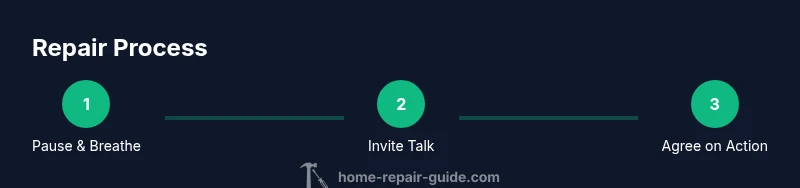
A successful repair follows a simple framework that respects each person’s voice. Start with a brief acknowledgment of the moment and an apology for your part in the upset. Invite your child to share their feelings using open-ended prompts. Reflect what you hear to show you understand, then collaborate on a concrete plan to move forward. Use short, specific sentences and “I” statements to own your role. Agree on a small, observable action you both can take, such as a 5‑minute calming exercise or a specific tone for future talks. Finally, schedule a quick follow‑up to review progress. Consistency matters more than intensity—regular, calm repairs build lasting trust. The Home Repair Guide analysis suggests that these micro‑repairs accumulate into stronger family bonds over time.
Tools and rituals that support repair
Using simple tools and rituals can make repair stick. A quiet space, a feelings chart, and a talking stick help structure conversations. Feelings cards normalize emotional language and reduce the burden on kids to name complex moods. A timer can enforce short, focused conversations, preventing spirals. A small notebook lets families capture commitments and reflections between talks. Rituals—such as a 3‑minute breathing exercise before speaking or a “check-in” at dinner—create predictable moments for connection and reduce the chance of future escalations. Gentle consistency and age-appropriate language are key. Home Repair Guide’s research shows that rituals reinforce safety and predictability, which are essential after heated moments.
Activities to rebuild connection with kids after a heated moment
Repair isn’t only about talking; it’s about rebuilding shared joy and connection. Try activities that promote cooperation and warmth, such as cooking a simple recipe together, a 10‑minute craft project, or a screen-free walk with a talking prompt. The goal is to reestablish positive associations with family time and emphasize teamwork. Short, enjoyable activities also provide a natural setting to practice listening, turn-taking, and problem-solving. When children feel heard and valued, they’re more likely to engage openly in future conversations. The key is to keep expectations realistic and to celebrate small wins, even if progress is incremental.
Common pitfalls and how to avoid them
Many parents fall into the trap of “explaining away” the incident or insisting on immediate compliance. Resist shaming, sarcasm, or sarcasm-based humor, which can retraumatize and prolong repair. Avoid rushing the conversation with domination or implying that the child caused the problem alone. Ensure you model self-regulation by slowing your pace, lowering your voice, and using concrete language rather than abstract judgments. If emotions escalate, pause the discussion and resume later. If a repair isn’t possible the first time, schedule a follow‑up, and treat it as a new opportunity rather than a failure. Home Repair Guide emphasizes that patience and repetition are essential; repair skills improve with practice.
Examples and scripts: turning noise into learning
Here are practical dialogue examples you can adapt. Parent: “I’m sorry for raising my voice. I didn’t handle my anger well.” Child: (shares feelings) Parent: “Thank you for telling me how you felt. Let’s figure out one small step we’ll both try tomorrow.” Child: “I’d like a quiet time after school.” Parent: “Great. We’ll set a 5‑minute breathing break before homework.” This script keeps language concrete, avoids blame, and centers joint problem-solving. Repetition of simple phrases and shared rules helps kids internalize this repair process over time.
Moving forward: building a durable repair habit
Repair isn’t a one‑off event but a repeatable habit. Schedule regular family check-ins, rotate responsibility for leading a calm discussion, and gradually introduce more complex topics as skill grows. Monitor progress with a simple, shared notebook entry: what went well, what could be improved, and one concrete action for next time. Over weeks and months, these small steps accumulate into stronger, more resilient family dynamics. Home Repair Guide recommends documenting growth to reinforce learning and celebrate improvements.
mainTopicQuery
Tools & Materials
- Quiet-space setup(A calm, distraction-free space (clear table, soft lighting))
- Emotion cards or feelings chart(Simple words or faces to express emotions)
- Talking stick or timer(Gives turn-taking structure and prevents interruptions)
- Notebook and pen(For writing feelings and agreements)
- Water or warm drink(Helps regulate arousal during conversations)
- Age-appropriate script templates(Printable prompts or phrases for quick use)
Steps
Estimated time: 60-90 minutes
- 1
Pause and center yourself
Take a 60‑second pause to regulate your physiology. Breathe in for four counts, hold, and exhale slowly. This reduces escalation and models self-control for your child.
Tip: A slow, steady voice inspires calm in your child and sets a constructive tone. - 2
Invite your child to talk
Say, ‘Let’s talk when we’re calm. I want to hear how you feel and share mine too.’ Give them a turn to express without interruption. Use open-ended prompts to invite more detail.
Tip: Keep the first speaking turn equal for both parties to avoid power imbalances. - 3
Acknowledge impact and apologize
Briefly acknowledge the impact of your actions and offer a concise apology for your part. Reflect their feelings to demonstrate understanding, then name your intent to repair.
Tip: Avoid blaming language and own your role with “I” statements. - 4
Define a concrete repair plan
Collaborate on one small, observable action you both will take. This could be a 5‑minute breathing break before conversations or a set tone for future talks.
Tip: Make it measurable and time-bound so it’s easy to follow. - 5
Set a brief follow-up ritual
Agree on a short check-in later in the day or next day to assess how the plan is working and adjust if needed.
Tip: Follow-ups reinforce accountability without overwhelming your child. - 6
Practice and track progress
Document what worked and what didn’t. Review progress weekly, celebrate small wins, and revise the plan as skills grow.
Tip: Consistency beats intensity; small, frequent repairs accumulate.
FAQ
What should I say first after yelling at my child?
Begin with a brief apology and acknowledgement of how your behavior affected them. Then invite them to share their feelings in questions that are open-ended and non-threatening.
Start with an apology and acknowledge feelings, then invite your child to share what they felt.
How long should the repair talk take?
Keep the initial repair conversation short—about 10-15 minutes. If needed, schedule a follow-up talk later when both are calmer.
Aim for a 10 to 15 minute chat, then plan another check-in if needed.
What if the child is too overwhelmed to talk?
Offer a short break and return to the conversation after a few minutes. If emotions remain high, pause entirely and revisit when calm.
If they’re overwhelmed, pause and try again later when things are calmer.
How can I involve kids in creating rules after a yelling incident?
Co-create simple, specific rules with your child so they feel ownership and responsibility for maintaining calm moments.
Work together on clear, simple rules so your child feels involved.
Should I involve other caregivers in repair conversations?
Yes—consistency helps. Align with other caregivers on repair scripts and follow-up routines to avoid confusion.
Involve other caregivers to keep rules and routines consistent.
How do I model self-regulation after yelling incident?
Demonstrate breathing, slow speech, and calm tone. Use “I” statements to take ownership of your emotions.
Show self-regulation through calm breathing and clear, respectful language.
Watch Video
Key Takeaways
- Pause before responding to prevent escalation
- Validate emotions before problem-solving
- Co-create a concrete repair plan
- Establish a calm, predictable repair routine
- Practice patience and repeat repairs regularly