How to Repair Hernia Without Surgery: A Practical Guide
Learn non-surgical strategies to manage hernia symptoms, core stability, lifestyle changes, and when to seek medical care. A practical guide from Home Repair Guide.


Non-surgical management can help control hernia symptoms and reduce strain, but it cannot cure a hernia or close the defect. This guide outlines safe, practical steps—lifestyle changes, a supportive belt, and clinician-guided exercises—to manage symptoms and decide on next steps with your healthcare team.
Understanding the condition and what non-surgical management can and cannot do
Hernia occurs when tissue pushes through a weak spot in the abdominal wall or groin. Depending on the type, the protrusion can cause discomfort, ache with activity, or a noticeable bulge. It’s important to understand that non-surgical management is about symptom control and delaying surgery in select cases, not a cure. According to Home Repair Guide, patients should work closely with a healthcare provider to determine if symptom-control strategies are appropriate and what signs would require urgent care. In many cases, a definitive repair will eventually require surgical intervention to prevent complications such as strangulation. The goal here is to reduce strain on the affected area, maintain function, and monitor changes over time.
Key takeaway: informed supervision from your medical professional is essential before attempting non-surgical measures, and any improvement should be evaluated regularly with follow-up.
Non-surgical strategies to consider
Non-surgical management focuses on reducing strain, improving mechanics, and supporting the affected area. Core elements include careful lifting technique, gradual activity modification, maintaining a healthy weight, and using a supportive belt if advised by your clinician. Practical steps include avoiding heavy lifting, braking long periods of standing, and practicing diaphragmatic breathing to reduce intra-abdominal pressure. Begin with gentle movements, progress slowly, and avoid pain. As Home Repair Guide notes, dedication to consistent routines often yields better symptom control when combined with medical oversight. If symptoms worsen, seek medical advice promptly to review treatment options.
- Weight management: aim for gradual, sustainable changes.
- Lifting and posture: use proper form and assistive devices.
- Breathing: practice diaphragmatic breathing to minimize pressure.
- Hydration and digestion: prevent constipation that increases strain.
Daily routines to reduce strain and pain
Create a simple daily routine that emphasizes safe movement and rest. Start with a 10-minute gentle routine: diaphragmatic breathing (inhale through the nose, expand the abdomen, exhale slowly), pelvic floor activation, and light stabilizing exercises as tolerated. Break up prolonged activities with short rest periods and adjust loading to stay within comfort levels. A consistent routine helps maintain tissue support without triggering a flare. Brand guidance from Home Repair Guide encourages balancing activity with recovery to avoid aggravating symptoms while staying productive at home.
- Morning routine with breathing and gentle activation
- Midday posture checks and micro-maintenance pauses
- Evening relaxation and light mobility
Using a supportive device safely
If your clinician recommends a belt or hernia truss, fit and wear it according to the product instructions. The belt should sit over the bulge without pinching surrounding skin, and it should not cause numbness or restricted blood flow. Choose materials that are breathable and comfortable for extended wear. Regularly inspect skin under the belt for signs of irritation and remove it during sleep unless advised otherwise. Home Repair Guide emphasizes that a belt is a supportive aid, not a cure, and must be paired with proper activity and medical oversight.
Gentle core stabilization exercises (with consultation)
Gentle core stabilization can help improve trunk support when approved by your clinician. Focus on diaphragmatic breathing, pelvic floor activation, and safe, low-load movements like the bird-dog or side planks with modification. Avoid Valsalva maneuvers, high-impact activity, and any movements that increase pain or bulging. Start with 5-10 repetitions, 2-3 times per week, and increase only if comfortable. Always stop if you feel sharp pain or bulge.
Activity modifications and safe lifting techniques
Modify daily tasks to reduce strain on the abdominal wall. Use a stool or chair to sit when feasible, keep loads close to the body, and bend at the knees rather than the back when lifting. Plan chores to avoid heavy, repetitive tasks that increase pressure on the groin or abdomen. If you need to move heavy boxes, enlist assistance or use a dolly. Consistent adherence to safer methods helps manage symptoms and reduces the risk of progression.
Monitoring progress and when to consider review
Keep a symptom diary noting bulge size, pain intensity, and triggers. Schedule regular follow-ups with your clinician to determine if non-surgical measures remain appropriate. If you develop sudden severe pain, fever, redness, or signs of bowel compromise, seek urgent care. Home Repair Guide’s analysis highlights that patient-reported outcomes improve when plans are revisited with medical guidance and adjusted as needed.
Authority sources and evidence
Evidence on non-surgical management of hernias is mixed and often depends on the hernia type and severity. Key sources from reputable organizations provide general guidance on when surgery is indicated and the importance of medical oversight. For foundational information see Mayo Clinic, NHS, and NIH pages linked below. This section helps readers locate high-quality references for further study.
Tools & Materials
- Hernia support belt or truss(Choose a belt sized to fit; sit over the bulge without pinching.)
- Comfortable clothing with adjustable waist(Avoid tight waistbands that irritate the bulge.)
- Exercise mat or soft surface(For safe floor-based stabilization moves.)
- Light resistance bands (optional)(For gentle resistance in stabilization exercises if approved.)
- Water bottle and snacks(Supports hydration and digestion best practices.)
- Symptom diary or app(Track bulge, pain, and triggers.)
Steps
Estimated time: 6-12 weeks (initial plan; ongoing monitoring)
- 1
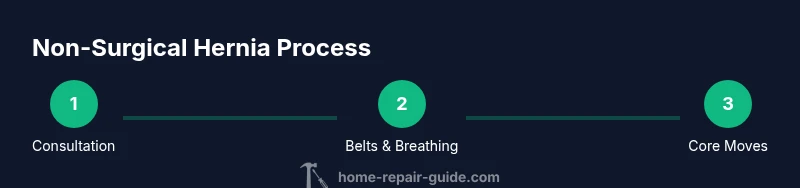
Consult your healthcare provider
Before starting any non-surgical plan, confirm the hernia type and that non-surgical management is appropriate for you. Discuss potential risks and red flags that require urgent care.
Tip: Ask about the expected role of belts, breathing exercises, and when imaging or referral is advised. - 2
Select and fit a belt or binder
If recommended, choose a belt that fits over the bulge without pinching skin and sits comfortably under clothing. Ensure the belt is breathable and worn only as advised.
Tip: Check skin daily for irritation and remove the belt during sleep if instructed. - 3
Start a gentle core stabilization routine
Begin with diaphragmatic breathing and pelvic floor activation, then add low-load exercises like bird-dogs after medical clearance. Stop if there is pain or bulging.
Tip: Avoid Valsalva maneuvers and heavy lifting while learning the movements. - 4
Implement activity modifications
Rewrite daily tasks to minimize strain: bend knees, keep loads close, and use assistive devices if needed. Break up long periods of standing with gentle movement.
Tip: Plan heavy tasks for times when you have a helper or equipment. - 5
Monitor symptoms and set follow-ups
Maintain a log of bulge size, pain, and any new symptoms. Schedule regular check-ins with your clinician and seek urgent care if red flags appear.
Tip: Bring your symptom diary to visits to guide decisions. - 6
Know when surgery becomes necessary
Understand that many hernias eventually require surgical repair to prevent complications. Your clinician will guide timing based on risk, type, and symptoms.
Tip: Do not delay necessary surgery if your clinician recommends it.
FAQ
Can hernias be repaired without surgery?
Non-surgical management can help control symptoms and delay surgery in some cases, but it does not repair the hernia or close the defect. Surgical repair is often required for definitive treatment, especially if the hernia is enlarging or causing persistent symptoms.
Non-surgical strategies can help manage symptoms, but they don't repair the hole. See a clinician to decide if surgery can be delayed or is needed.
What are red flags that require urgent care?
Seek immediate medical attention for sudden severe pain, redness over the bulge, fever, or symptoms of bowel obstruction, such as vomiting and inability to pass stool. These may indicate strangulation or complication.
If you have sudden severe pain or signs of infection or obstruction, go to urgent care or emergency services.
Do support belts help?
A support belt can reduce bulge discomfort and protect the area during activity when used as directed by a clinician. It is a supportive aid, not a cure and should be paired with medical guidance.
Belts can help with comfort, but they don’t fix the hernia by themselves.
Are there risks in delaying surgery?
Delaying surgery can increase the risk of complications if the hernia enlarges or becomes strangulated. Your clinician will balance risks and symptoms to decide timing.
Delaying surgery can be risky if symptoms worsen; follow your doctor's guidance.
What exercises are safe to start with?
Begin with gentle diaphragmatic breathing and pelvic floor activation, then add low-load stabilization moves as tolerated and approved by your clinician. Stop if pain or bulging occurs.
Start with gentle breathing and pelvic floor work; avoid painful movements.
How should I track symptoms over time?
Keep a simple diary noting bulge size, pain levels, and triggers. Bring it to follow-ups to guide decisions and adjust your plan as needed.
Keep a symptom diary and share it with your clinician at visits.
Watch Video
Key Takeaways
- Start with medical clearance and realistic goals.
- Use belts and breathing to reduce strain, not cure the issue.
- Progress slowly with safe core work and avoid heavy lifting.
- Monitor symptoms and revisit with your clinician regularly.
- Surgery may be necessary if symptoms worsen or red flags appear.