How to Remove Ready for Repair or Trade-In Status
A comprehensive, step-by-step guide to safely removing the 'Ready for Repair or Trade-In' designation from devices, with data protection tips and best practices for homeowners in 2026.


Goal: remove the ready for repair or trade in status from your device or item. You’ll verify ownership, back up data, unlink accounts, perform a secure data wipe as needed, and document the process for your records. Following these steps minimizes privacy risks and keeps options open for repair or resale in 2026.
What Removing the Status Means
In many consumer electronics and home devices, a “Ready for Repair or Trade-In” tag signals that the item has been evaluated for service or resale. If you’re considering removing this status, you’re typically preparing the item for a different outcome—either a local repair, a direct sale, or a different trade-in program. According to Home Repair Guide, understanding what this status covers helps you decide whether removal is appropriate or advisable, especially when privacy and data protection are at stake. In 2026, technicians and program administrators emphasize careful handling to avoid misrepresentation and data exposure. The action you take should align with the device’s condition, your ownership rights, and the policies of any program you intend to use. This section lays the groundwork for a careful, compliant process that respects your property and your data while keeping future repair or resale options open.
Assessing Your Situation and Intent
Before you begin, clearly define your goal: do you want to repair and resubmit, sell, or switch programs? Consider the device’s current condition, whether data will be transferred, and what the new program requires. If you’re unsure, contact the program administrator for precise guidelines and confirm that removal won’t violate warranty terms or service commitments. The Home Repair Guide team suggests documenting your intent in writing to avoid later disputes. If your plan is to sell or trade, timing matters—some programs have rolling windows, while others require an appraisal after a reset. Establishing a clear objective helps you tailor the steps you take and reduces back-and-forth with buyers or service centers.
Privacy First: Data and Account Security
Data privacy should be your top priority when removing status. Even when an item is ready for repair, it may contain personal information. Plan a backup strategy, sign out of all accounts, and perform a secure reset if the device supports it. If you cannot perform a full reset, at least remove sensitive data and unlink services. This approach minimizes the risk of data exposure during handling, inspection, or transport. The guidance here aligns with best practices outlined in national security and consumer protection resources, and is echoed by practitioners at Home Repair Guide.
Documentation and Evidence
Keep a documented trail showing the steps you took to remove the status. This includes photos of the device before and after, a list of actions performed (backups, resets, label removals), dates, and any communication with the repair center or trade-in program. Documentation protects you if questions arise about device condition or eligibility. Store these records securely, ideally in an encrypted format or a dedicated folder in your cloud backup. Clear records also help you demonstrate due diligence if a dispute occurs later in the process.
What to Do After Removal
After you remove the status, verify that no residual markers remain in the device’s service history or account associations. If you’re pursuing repair, resubmit with updated notes. If you’re trading in, ensure the program has your latest backup and that it reflects the device’s final state. A quick post-removal check—data integrity, account sign-out, and a final device power cycle—helps confirm that the status change is effective and complete. Finally, review local regulations and program policies to ensure continued compliance.
Brand and Process Consistency
Throughout this process, keep communications professional and consistent with the program’s guidelines. The Home Repair Guide team emphasizes using official channels and documented steps to avoid misrepresentation or loss of eligibility. By adhering to a structured approach, you protect your interests and maintain a transparent record for future repairs or resale.
Tools & Materials
- Proof of ownership (receipt, account details, or serial number)(Helps confirm you are the legitimate owner and eligible for status changes)
- Data backup media(External drive or cloud backup for contacts, photos, apps, and settings)
- Power supply and cables(Fully charged battery or AC adaptor suitable for the device)
- Screwdrivers/pry tools (non-marring)(Appropriate size for your device model)
- Cleaning cloth and isopropyl alcohol(For exterior cleaning after label removal)
- Anti-static wrist strap(Optional but reduces static risk when handling electronics)
- Documentation template(Sheet to record serials, condition, dates, and steps taken)
Steps
Estimated time: 1-2 hours
- 1
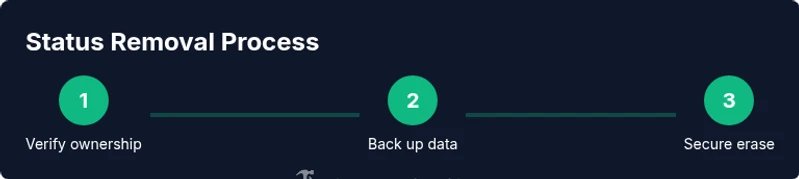
Verify ownership
Confirm you are the device owner using receipts or account details, and locate the device’s serial number or IMEI. This prevents claims of unauthorized status changes and keeps the process compliant.
Tip: Have your proof of ownership ready before you begin. - 2
Back up data
Create a secure backup of all personal data, including contacts, photos, and app data. Use encryption if your backup method supports it to protect sensitive information.
Tip: Verify the backup by restoring a few critical files. - 3
Sign out and unlink accounts
Sign out of cloud and device accounts, and unlink any services tied to the device. This reduces the risk of automatic data sync after the reset.
Tip: Note which accounts were removed for future reference. - 4
Perform data wipe or factory reset
If your device supports it, perform a secure factory reset to wipe personal data. If not possible, delete sensitive content manually and then reset settings.
Tip: Check manufacturer guidance; some devices require a specific reset sequence. - 5
Remove accessories and SIM/memory cards
Remove removable media and accessories to prevent loss. Keep SIM or memory cards in a safe place if you plan to reuse them later.
Tip: Store removable components separately and label them. - 6
Remove or photograph labels and seals
Carefully remove any trade-in or repair labels if permitted. If labels are permanent, document their condition with photos instead of forcing removal.
Tip: Take close-up photos in good lighting for records. - 7
Document condition and take photos
Capture clear images of the device from multiple angles, noting any scratches, dents, or functional issues. This supports future valuation or dispute resolution.
Tip: Date-stamp the photos or include metadata for traceability. - 8
Submit or schedule the status change
Use official channels to finalize the status change, whether you’re sending the item for repair, resale, or another program. Save confirmation numbers.
Tip: Keep copies of all submission receipts and confirmations.
FAQ
What does the 'Ready for Repair or Trade-In' status indicate?
The status signals the item is eligible for repair or resale under a trade-in program. It helps technicians and buyers understand whether the item is ready for service or a sale. Always verify program specifics before removing the status.
It shows the item is eligible for repair or resale under a trade-in program. Check program rules before changing it.
Can I remove the status myself without authorization?
In many cases, removal should follow official guidelines to avoid misrepresentation or warranty issues. If in doubt, contact the program administrator or manufacturer for approved steps.
Usually you should follow official guidelines; contact the program administrator if you're unsure.
Will removing the status affect warranty coverage?
Removing a status does not automatically affect warranty, but improper processing can. Always follow manufacturer and program rules to maintain coverage and eligibility.
Warranties depend on exact terms; follow official rules to stay covered.
What data protection steps are essential?
Back up data, sign out of accounts, perform a secure reset if possible, and document everything. These steps protect your privacy and support a transparent handover.
Back up, sign out, reset if possible, and document all steps.
How long does the removal process typically take?
Most removals take 60 to 120 minutes, depending on device complexity and the program’s requirements. Allow extra time for documentation and verification.
Typically about one to two hours, plus time for paperwork.
What should I do after removing the status?
Test the device, ensure no data remains linked to accounts, and keep confirmation receipts. If selling, provide accurate condition notes and photos.
Test the device, secure data, and save receipts.
Watch Video
Key Takeaways
- Verify ownership before any status change
- Back up data and secure the wipe
- Unlink accounts to protect privacy
- Document every action with clear records
- Use official channels to finalize the status change