EVAP System Repair: A Practical Step-by-Step Guide
Learn how to diagnose, inspect, and repair evaporative emission system issues safely with this homeowner-friendly guide from Home Repair Guide.


By following these steps, you will identify common evaporative emission system faults, perform safe inspections, and complete a basic repair or secure components until you can seek professional service. You’ll need a basic car repair toolkit, safety gear, and the vehicle’s service information. This guide from Home Repair Guide helps homeowners and renters diagnose EVAP issues confidently.
What is the evaporative emission system?
According to Home Repair Guide, the evaporative emission system repair (EVAP repair) is part of your vehicle's emissions control dedicated to preventing fuel vapors from escaping into the atmosphere. The system captures vapors from the fuel tank and routes them to the engine to be burned, reducing pollution and improving overall efficiency. Key components include the charcoal canister, purge valve, vent valve, hoses, and the gas cap. Leaks or faulty valves can allow vapors to escape, trigger a check-engine light, and worsen emissions performance. Understanding these parts helps homeowners and renters approach EVAP issues with confidence and safety.
Symptoms to Watch For
EVAP problems often present through indirect symptoms since the system is closed and designed to minimize vapor release. Common signs include a illuminated check engine light, persistent fuel smell around the vehicle, difficulty filling the tank, rough idle, and emissions-related diagnostic trouble codes (DTCs) such as P0440 or P0455. If you notice any of these, approach EVAP repair as a systematic diagnosis rather than a single fix. Regular readers of Home Repair Guide will recognize that many EVAP leaks come from simple failures like a loose gas cap or cracked hose.
Essential safety considerations for EVAP work
Gasoline vapors are highly flammable, so always work in a well-ventilated area away from sparks or flames. Park on a stable, level surface, engage the parking brake, and use wheel chocks if needed. Wear safety glasses and chemical-resistant gloves when handling hoses or cleaners, and keep rags and cleaners away from ignition sources. Never attempt EVAP work with the engine running or in a closed space. These precautions align with Home Repair Guide safety guidance to help you avoid unnecessary risk during evaporative emission system repair.
How EVAP components interact during a typical diagnosis
The EVAP system relies on a sealed network: a gas cap keeps the system closed, hoses route vapors to the charcoal canister, and purge/vent valves manage vapor flow. A leak anywhere in this network can cause the system to trigger trouble codes and reduce fuel economy. By understanding the flow path, you can prioritize inspections (gas cap seal first, then hoses and valves). This section lays the groundwork for the DIY steps without getting ahead of the process.
A practical, non-scar-friendly approach to diagnosing EVAP leaks
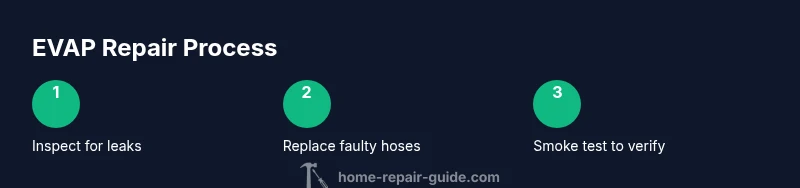
Start with non-invasive checks: inspect hoses for cracks, look for loose clamps, and test the gas cap by tightening or replacing it if the seal appears degraded. If a scan tool is available, pull EVAP-related codes and monitor freeze-frame data. Consider a smoke test if you have access to proper equipment; it can reveal small leaks that visual checks miss. For homeowners, this method minimizes risk while providing actionable results.
Repair options: when to replace parts versus reseal
Minor issues like a cracked hose or a loose clamp are often fixable with basic hand tools. More significant problems — such as a cracked canister or a failed purge valve — typically require component replacement. In some cases, resealing connections with appropriate clamps or approved sealants is enough to restore function, but avoid over-reliance on temporary fixes. Home Repair Guide emphasizes using manufacturer-recommended parts and following vehicle-specific guidelines for best results.
Next steps after any inspection
Document what you find with photos and notes so you can compare post-repair results. Reconnect any disconnected components carefully, clear any codes if your tool supports it, and perform a drive cycle to verify the fix. If the check engine light remains on after repairs, or if you detect a strong fuel odor, pause DIY work and seek professional service to prevent further damage or emissions non-compliance.
Tools & Materials
- Safety glasses (ANSI Z87.1 or equivalent)(Protect eyes from splashes and debris)
- Nitrile gloves(Chemical-resistant and latex-free)
- Mechanic's flashlight or headlamp(Illumination for hard-to-see areas)
- Screwdrivers (flathead + Phillips)(For hose clamps and small fasteners)
- Pliers and hose clamps(Open/adjust hose clamps safely)
- Rags or shop towels(Contain spills and absorb odors)
- Gas cap replacement (OEM if possible)(Rule out cap seal as a leak source)
- Smoke machine or EVAP tester (optional)(Helps locate leaks not visible to eye)
- Vehicle service information or OEM repair guide(Model-specific instructions)
- Digital camera or smartphone(Capture before/after condition)
Steps
Estimated time: 60-120 minutes
- 1
Inspect for obvious leaks and loose connections
Begin with a calm, well-ventilated area. Visually inspect all EVAP hoses, clamps, and the gas cap for cracks or looseness. Tighten clamps and reseal if needed, documenting any changes for later reference.
Tip: Take clear photos of each connection before changing anything. - 2
Check the gas cap seal
Turn the gas cap to ensure it seats snugly. If the cap is cracked or the seal looks worn, replace it with an OEM-cap or an equivalent. A bad cap is a frequent source of EVAP codes.
Tip: Keep a spare cap in your tool kit for quick swaps. - 3
Scan for EVAP-related codes
Use a scan tool to pull DTCs related to the EVAP system. Note the codes, read freeze-frame data, and cross-check with your vehicle's service manual for typical causes.
Tip: Clear codes only after you’ve verified repairs to avoid false positives. - 4
Perform a visual hose and valve check
Inspect purge and vent valves, along with all hoses, for cracks, soft spots, or disconnections. Replace any suspect hoses and ensure clamps are secure.
Tip: Look for small hairline cracks that may leak under pressure. - 5
Conduct a smoke test if available
A smoke test pressurizes the EVAP system to reveal leaks. This step requires specialized equipment and should be done in a controlled environment.
Tip: Follow equipment instructions and wear safety gear at all times. - 6
Replace faulty components
Swap damaged valves or a compromised canister as needed, following the supplier instructions. Ensure all connections are clean and dry before reassembly.
Tip: Use OEM parts for reliability and emissions compliance. - 7
Reassemble and secure clamps
Reconnect hoses and ensure clamps are tight but not over-tightened. Recheck routing to prevent rubbing against hot engine components.
Tip: Avoid cross-threading by lining up hoses carefully before tightening. - 8
Test after repair and review codes
Run a drive cycle to verify the repair. Re-scan for EVAP codes to confirm the system is cleared and operating normally.
Tip: If codes persist, re-evaluate components and consider professional service.
FAQ
What is the evaporative emission system and why does it fail?
The EVAP system captures fuel vapors to reduce emissions. Failures typically come from cracked hoses, loose clamps, a bad gas cap, or a faulty purge/vent valve. Addressing the root cause is essential to restore proper operation.
The EVAP system captures fuel vapors to reduce emissions, and leaks usually come from hoses, clamps, or valves. Fix the real source to restore proper function.
Can I repair EVAP leaks myself?
Small hose leaks and a bad gas cap are often DIY-friendly fixes. More common issues like a failed canister or purge valve may require replacement parts or professional service. Always follow OEM guidelines and safety precautions.
Small leaks can sometimes be fixed at home, but bigger issues may need professional help.
What are common signs of EVAP problems?
Look for a check engine light, fuel odor, difficulty fueling, or rough idle. Emissions-related codes like P0440 or P0455 can indicate EVAP faults that warrant inspection.
Check engine light and fuel smells often point to EVAP issues; a codes check helps pinpoint causes.
Is a professional smoke test necessary for leaks?
A smoke test is a highly effective way to locate leaks, especially when visual checks fail. It requires proper equipment and should be performed by someone trained in EVAP diagnostics.
A smoke test is very helpful to find leaks, but it requires proper equipment and training.
Will replacing the canister fix all EVAP problems?
Not always. A canister replacement may fix certain leaks, but valves or hoses can also fail. Diagnose to confirm the root cause before replacing multiple parts.
Replacing the canister helps when it's the source, but other parts may cause the problem too.
How often should EVAP components be inspected?
Inspect EVAP components during major maintenance or when the check engine light appears. Regular inspection helps prevent leaks from escalating into costly repairs.
Check EVAP parts during big maintenance or if the light comes on.
Watch Video
Key Takeaways
- Inspect EVAP components methodically before replacing parts
- Start with the gas cap and visible hoses to rule out simple fixes
- Use a smoke test if available to locate hidden leaks
- Verify repair success with a drive cycle and codes check