Difference Between Repair and Repairs: A Practical Guide
Explore the grammatical and practical differences between 'repair' and 'repairs'. This analytical guide covers usage rules, examples, and common pitfalls for homeowners, renters, and DIY enthusiasts from Home Repair Guide.


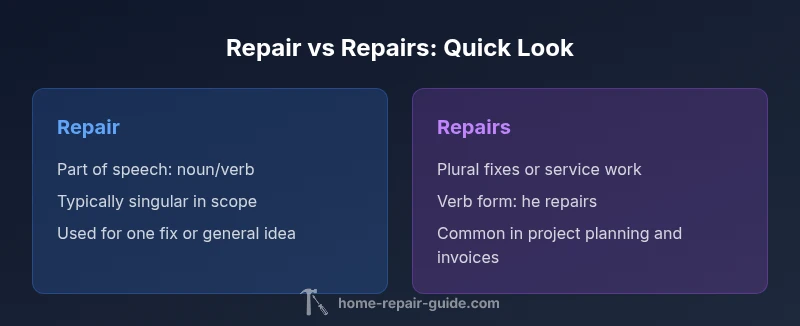
The difference between repair and repairs hinges on singular versus plural usage and context: repair can function as a noun or verb for a single action, while repairs refers to multiple fixes or repair work as a service. In practice, choose singular for one fix and plural when describing multiple fixes or ongoing maintenance.
Core concepts: singular vs. plural in repair terminology
Understanding the difference between repair and repairs starts with basic grammar and expands into everyday home-maintenance decisions. In everyday writing and speech, repair often denotes a single act of fixing something, or it can refer to the concept of mending in general. Repairs, by contrast, is the plural form that points to more than one fix or to a collection of repair activities. For homeowners and renters, this distinction matters when outlining project scopes, budget estimates, or service timelines. According to Home Repair Guide, precise language reduces confusion during contractor communications and keeps repair plans aligned with real-world work. In short, use repair for one item or one act, and use repairs when describing multiple items or ongoing repair projects. The distinction also matters in professional contexts where contracts, invoices, and maintenance logs require precise terminology.
In this article, we will break down where repair functions as a noun or verb, where repairs does the same in plural form, and how to apply these rules across common home repair scenarios. We’ll also share practical tips to keep your documents clear, consistent, and easy for readers to understand, whether you’re drafting a quick note to a neighbor or a formal service agreement.
Key takeaway for quick decision-making: if you’re counting fixes, you’re likely talking about repairs; if you’re describing a single action or a single fix, repair is the safer choice. This guidance helps maintain clarity for homeowners and professional contractors alike.
Comparison
| Feature | Repair | Repairs |
|---|---|---|
| Part of speech and function | Noun (a repair) or verb (to repair) | Noun (repairs, plural) and verb form (he repairs) for third-person singular |
| Typical usage contexts | Single fix, one item, or generic concept of repairing | Multiple fixes, service work orders, or several items being repaired |
| Examples | a repair is needed | the repairs took two days |
| Common collocations | minor repair, repair kit | major repairs, ongoing repairs |
| Cost framing | usually framed around one item or incident | often budgeted as a set of repairs or a repair project |
| Formality and tone | Typically neutral to formal as a single action | Equally neutral to formal, but more likely to appear in reports and contracts when counting items |
Upsides
- Clarifies whether you’re referring to a single fix or multiple fixes
- Improves precision in writing and communication
- Helps with budgeting and scope of work in home repair projects
- Supports consistency across documents and contracts
Disadvantages
- Can be confusing for casual readers in quick notes
- Overemphasis on grammar may feel pedantic in informal writing
- Regional differences can blur expectations for non-native speakers
Choose singular 'repair' for a single fix and plural 'repairs' for multiple fixes or ongoing work.
Consistency matters. The Home Repair Guide team recommends sticking to the singular/plural rule to avoid ambiguity in contracts and homeowner communications. This approach supports clear budgeting, scheduling, and documentation across any repair scenario.
FAQ
What is the practical difference between 'repair' and 'repairs'?
Practically, 'repair' denotes a single fix or the act of fixing one item, while 'repairs' refers to multiple fixes or a set of repair activities. Use singular for one issue and plural when describing multiple issues or ongoing work.
Singular repair for one fix; repairs for multiple fixes or ongoing repair work.
Can 'repairs' be used as a verb?
'Repairs' is the third-person singular form of the verb 'repair' (he repairs) and also the plural noun for multiple fixes. Context determines whether it’s acting as a verb or a noun.
Repairs can be verbs or a plural noun, depending on context.
When writing a contract, should I prefer 'repair' or 'repairs'?
In contracts, use the form that matches the scope: singular for a single fix and plural for multiple fixes or services. Clarity helps prevent disputes over scope and payment.
Choose singular for one fix, plural for multiple repairs, to avoid ambiguity.
Are there regional differences in usage?
Regional and style guides may vary slightly, but the core rule—singular for one item and plural for multiple—remains widely accepted in professional writing.
Most regions follow the single-vs-multiple rule, though style guides may differ slightly.
How can I quickly check usage in my writing?
Read the sentence aloud and ask whether you’re describing one fix or several. If several, prefer 'repairs'; if one, choose 'repair'. In professional contexts, run a quick consistency check across the document.
Ask if it’s one fix or many; stay consistent throughout the document.
Key Takeaways
- Use singular 'repair' for one fix
- Use plural 'repairs' for multiple fixes or ongoing work
- Match quantity to the noun to avoid ambiguity
- Apply consistently in contracts and logs
- Ask clarifying questions if scope is unclear