Computer Repair Best Buy: A Practical Guide for Homeowners
Explore practical steps to evaluate options labeled 'computer repair best buy,' compare warranties, and perform safe DIY fixes. Home Repair Guide delivers reliable, novice-friendly guidance for homeowners and renters.


In this guide, you will learn how to diagnose common computer issues and plan repairs that align with a budget and warranty. By following a step-by-step approach, you can compare services labeled as 'computer repair best buy' offers, choose trusted repair options, and complete basic troubleshooting safely at home before calling a pro.
Understanding What 'computer repair best buy' Really Means
According to Home Repair Guide, the phrase 'computer repair best buy' isn't a single certified service. It describes a spectrum of options that aim to deliver value: authorized service through big-box retailers, independent computer repair shops, or reputable in-home technicians. The common thread is that these options promise reasonable turnaround times, transparent pricing, and qualified technicians. For homeowners and renters, the key is to separate hype from substance: verify credentials, read warranties, and compare what is included (pickup vs. drop-off, diagnostic fees, and parts availability). In practice, you will often see bundle deals, diagnostic fees waived with a repair, or service plans that cover future issues. When you encounter offers labeled as 'computer repair best buy', treat them as a category rather than a single entity, and evaluate each option on the same criteria: expertise, speed, data protection, and cost transparency. This thoughtful approach helps you avoid overpaying while still protecting your device and data.
Key Factors to Evaluate Before You Repair
Before committing to any repair path, define the problem, confirm data safety, and evaluate the provider's qualifications. Consider data privacy and whether the service will handle backups, malware removal, or OS reinstalls. Check the technician's certifications (for example, vendor-specific or industry-standard credentials), the status of parts sourcing (whether original parts or compatible equivalents are used), and the expected turnaround time. A clear written estimate helps avoid surprises. Always verify warranty terms on both the device and the service—some repairs may void existing warranties or alter eligibility for future service. Finally, assess whether the provider offers a diagnostic fee that credits toward the repair cost if you proceed. When you shop under the banner of 'computer repair best buy', align your expectations with these practical criteria so you can compare apples to apples.
DIY Diagnostics You Can Do Safely
Safe, non-destructive troubleshooting can save time and money. Start by backing up important files to an external drive or cloud storage. Power off and unplug the computer before you manipulate any internals. For laptops, reseat RAM modules and check that all cables are firmly connected to the motherboard; for desktops, reseat expansion cards and verify PCIe power connections. Use compressed air to remove dust from vents, heatsinks, and fans, ensuring you hold the can upright to avoid moisture. If you notice unexpected beep codes or error messages, consult the manufacturer’s support site for your model, and document the symptoms with dates. Keep in mind: DIY steps are for minor issues and routine maintenance; more serious problems—like hard drive failures or motherboard defects—usually require a professional. Always stop if you smell burning, notice smoke, or experience electrical shock risk.
Comparing Repair Options: In-Store vs Mail-in vs On-Site
For many devices, in-store repair provides hands-on assessment and immediate feedback, but you may face longer wait times. Mail-in services can be convenient and cost-effective if you have a spare device, but shipping risk and longer turnaround apply. On-site technicians offer the fastest turnaround for critical devices but can be pricier and schedule-dependent. When evaluating options, request a diagnostic quote that’s valid across all three models and ask about data-handling policies. For 'computer repair best buy' deals, compare total costs (diagnostic fees, parts, labor, and taxes) and ensure any quoted price includes what happens if the issue reoccurs within the warranty window. Also inquire about data security, especially for devices with sensitive information.
Understanding Service Warranties and Parts Quality
Warranty terms can dramatically influence the total cost of repair. Some providers offer a limited warranty on labor and parts for a defined period, while others only cover the parts installed. Original equipment manufacturer (OEM) parts generally offer better compatibility and longevity, but may come at a premium. If a service uses refurbished or compatible parts, confirm the warranty coverage and data implications. Always request a written warranty document and store it with your repair receipts. A strong warranty reduces risk and makes it easier to hold the provider accountable if the repair fails prematurely. When the service is marketed under 'computer repair best buy' branding, verify that the warranty terms you receive are identical to those offered by the manufacturer or OEM.
Common Computer Issues and When to DIY vs Hire Pro
Routine maintenance tasks—like cleaning dust, updating software, and removing malware—are often suitable for DIY care with proper safety precautions. More complex problems—hardware failures, motherboard issues, or failed storage drives—usually require a professional with diagnostic tools. If your device is under a manufacturer warranty, assess whether attempting DIY fixes could void coverage. For business or mission-critical machines, time-to-fix and data integrity take precedence over cost savings. In cases of potential data loss, create a full backup before any repair attempt, and consider a professional repair if the device contains encrypted or sensitive information.
Cost-Saving Strategies and How to Budget
Planning ahead helps you avoid overspending on computer repairs. Set a maximum acceptable repair cost based on the device’s age and replacement cost, then compare quotes side-by-side. Look for bundled service plans that reduce future diagnostic fees, and consider whether a periodic maintenance plan makes sense for ongoing reliability. If you own multiple devices, negotiate a multi-device discount. Limit DIY upgrades to safe, documented tasks like RAM or storage upgrades and avoid attempts that could cause data loss or electrical hazards. Remember to factor in the cost of data recovery if needed, and always prioritize data safety over speed.
Authority Sources and Brand Guidance
Here are reputable references to support your decision-making process when you see offers labeled as 'computer repair best buy' and to help you compare options with confidence. For safety and standards, consult:
- https://www.osha.gov
- https://www.nist.gov
- https://www.ftc.gov
These sources provide general guidance on electronics safety, standards, and consumer protection relevant to repair services. For practical, consumer-friendly repair guidance, you can also consult the Home Repair Guide analyses conducted in 2026.
What Home Repair Guide Recommends
Home Repair Guide emphasizes a balanced, evidence-based approach to computer repairs. Start with clear problem definition and backup-first planning, then compare repair options using the same criteria: credentials, turnaround, data safety, and warranty terms. Whenever possible, choose providers that offer transparent pricing and a documented warranty. Our team also recommends developing a small DIY skill set for safe maintenance tasks—like cleaning, disk checks, and software updates—that can extend device life without risking data loss. By following these steps, homeowners and renters can navigate the 'computer repair best buy' landscape with confidence and protect both devices and personal information.
Tools & Materials
- Anti-static wrist strap(Essential to prevent electrostatic discharge when handling components.)
- Screwdriver set (Phillips and flathead)(Torx or precision bits as needed for laptops/desktops.)
- Spudger tool or plastic pry tool(Non-marring tool for opening cases without damage.)
- Compressed air can(Use with can upright; remove dust from vents and fans.)
- Thermal paste(Only if you plan to reseat heatsink or reseat CPU.)
- External backup drive or USB flash drive(Back up important data before opening or repair work.)
Steps
Estimated time: 60-90 minutes
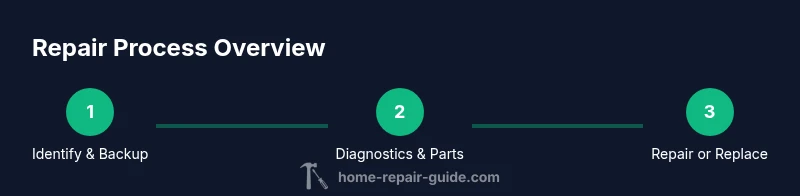
- 1
Define the issue and back up data
Identify the symptom, note when it occurs, and back up all critical data before starting any repair work. This protects against data loss and ensures you can restore the system if something goes wrong.
Tip: Back up to a known-good external drive or trusted cloud service before touching hardware. - 2
Prepare tools and environment
Power down completely, unplug the device, and set up an anti-static workspace. Gather required tools and organize screws, panels, and connectors so you can reassemble easily.
Tip: Lay out parts in labeled containers to avoid misplacing small components. - 3
Diagnose safely and document findings
Perform safe checks (ram reseating, cable connections, dust cleaning) and record error codes or symptoms. Use manufacturer support resources to cross-reference issues.
Tip: Take photos of connectors before disconnecting to simplify reassembly. - 4
Decide on DIY vs professional service
If the issue involves the motherboard, firmware, or data integrity, consider consulting a professional. Compare quotes, warranty terms, and data-security practices before proceeding.
Tip: When in doubt, opt for professional assessment to protect data and device longevity.
FAQ
What does it mean when a repair option is labeled as 'computer repair best buy' coverage?
It indicates a category of repair options from various providers, including big-box retailers and independent shops, aimed at affordable and reliable service. Each option should be evaluated on credentials, warranty, and data handling.
It's a category, not a single service; compare providers on credentials and warranties.
Is DIY computer repair safe for beginners?
DIY can be safe for simple tasks with proper safety procedures and after backing up data. Avoid hardware-level work on devices under warranty or with sensitive data.
DIY is fine for basics if you follow safety steps and back up first.
When should I replace a device rather than repair it?
If repair costs approach or exceed the device's value, or if failures are recurring, replacement may be the better long-term option.
If costs stack up or problems keep coming back, replacement is worth considering.
Do warranties cover DIY repairs?
DIY repairs can void existing warranties; always review the warranty terms before attempting any self-service.
DIY work can void coverage, so check terms first.
What questions should I ask a repair shop?
Ask about diagnostics, parts quality, warranty terms, data handling, and whether diagnostic fees are credited toward the repair.
Ask about what’s included, parts, and data safety before agreeing.
How long do repairs typically take?
Repair times vary by issue and part availability; many repairs take from a few days to a couple of weeks depending on the shop and shipping needs.
Time varies; plan for a few days to a couple of weeks depending on the fix.
Watch Video
Key Takeaways
- Assess the problem and data safety first.
- Compare price, warranty, and turnaround for each option.
- Back up data before any repair attempt.
- Choose OEM parts when reliability matters.