How Much Is Apple Repair? Costs, Options, and Budgeting
Explore how much Apple repair costs across iPhone, iPad, and Mac, with cost ranges, warranty considerations, and practical budget tips from Home Repair Guide.


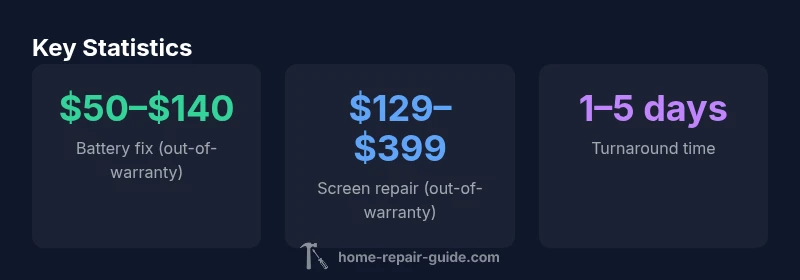
How much is Apple repair? Costs vary by device, model, and issue, with warranty status as a major driver. Common out-of-warranty ranges cover battery replacements and screen repairs, often in the low to mid hundreds and the mid to high hundreds respectively. To get an accurate figure, request quotes from Apple, authorized service providers, and reputable third-party shops. Home Repair Guide Analysis, 2026, emphasizes comparing options to avoid surprises.
What Drives Apple Repair Costs
When you ask, "how much is Apple repair?" the answer hinges on several factors. Device type and model dramatically affect part costs; a battery or screen replacement for an iPhone is priced differently from a MacBook logic-board repair. Parts quality matters too—OEM parts may come with higher price tags, while third-party components can offer savings but vary in reliability. Labor intensity is another big driver; delicate repairs demand specialized tools and expertise, which increases labor charges. Finally, warranty status and service channel (Apple Store, authorized service providers, or third-party shops) shape the final number. According to Home Repair Guide, the most important variable is whether the issue is covered by a warranty or AppleCare, which can dramatically reduce out-of-pocket expenses for eligible repairs.
Device-Specific Cost Patterns
Different devices present distinct repair cost profiles. iPhones typically incur higher screen repair costs due to display complexity, while battery replacements are relatively common and often cheaper than full display overhauls. iPads tend to have larger batteries and sturdier screens, which can push parts costs higher. Mac devices, especially MacBook Pros and Airs, may require more expensive parts and more labor time, particularly for logic-board or solid-state drive repairs. Apple Watch repairs can vary widely depending on the model and the component involved. Home Repair Guide’s analysis highlights that the same issue can cost noticeably more on newer generations due to advanced components and tighter integration.
Warranty Status and Pricing
A key price-shaper is whether the device is under Apple warranty or covered by AppleCare. Under warranty, many repairs are free or heavily discounted, while out-of-warranty work falls back to standard service prices. If you purchased AppleCare+, some incidents may incur a service fee but still be substantially cheaper than non-covered repairs. Conversely, if warranty terms exclude the issue, you’ll see the full repair price reflected in the quote. The Home Repair Guide team emphasizes verifying your coverage before authorizing work to avoid overpaying.
Third-Party vs Apple-Authorized Pricing
Authorized providers typically align with Apple’s pricing structure but may offer different diagnostic policies and turnaround times. Independent repair shops often advertise lower sticker prices for the same repair, yet variability in parts quality and warranty on the repair itself exists. When deciding between Apple-authorized and third-party services, consider future device resale value, whether the repair affects your remaining warranty, and the reliability of the parts used. Home Repair Guide notes that many homeowners achieve significant savings by obtaining multiple estimates and choosing a provider with transparent pricing and strong part warranties.
How to Estimate Costs Before Repair
Start with a clear problem description and device model. Request written, itemized quotes from Apple, authorized providers, and reputable third parties. Ask for a breakdown of parts, labor, and any diagnostics fees, and verify whether tax or disposal fees apply. If possible, obtain a price quote that includes both the repair and a post-service warranty. Our guidance at Home Repair Guide suggests bringing copy-ready details (model number, serial, and problem symptoms) to streamline the quoting process and improve accuracy.
DIY Considerations and Risks
DIY repairs can reduce upfront costs for simple tasks, but they carry risks: potential device damage, voided warranties, and safety hazards when handling batteries or high-voltage components. If you lack experience, seek professional help for critical repairs, especially battery and display work. For budget-minded homeowners, compare DIY cost estimates against professional quotes to decide if the risk is worth the potential savings, and always factor in potential future repairs caused by a failed DIY attempt.
Apple’s Official Pricing vs Authorized Programs
Official pricing through Apple often reflects the highest standard for quality and parts. Authorized programs may offer streamlined diagnostics, warranty-backed repairs, and predictable turnaround, which can be worth the premium for some models. In practice, many users find that a well-chosen third-party option plus a strong parts warranty can balance cost and reliability, especially for older devices. The Home Repair Guide team recommends weighing reliability, warranty implications, and long-term resale value when comparing official versus authorized routes.
Regional Differences in Pricing
Pricing can differ by region due to labor costs, local taxes, and part availability. Urban areas frequently have faster turnaround but may charge higher service fees, while rural locations may offer lower prices with longer wait times. Home Repair Guide advises gathering quotes from several providers in your area and asking about any region-specific warranties or service guarantees to avoid unexpected charges.
What a Fair Price Looks Like in 2026
A fair price is one that reflects the device type, the repair’s complexity, the quality of parts used, and the warranty status. Rather than chasing the absolute lowest price, prioritize providers with transparent quotes, reliable parts, and clear post-repair guarantees. Home Repair Guide’s 2026 framework emphasizes comparing multiple estimates, understanding the breakdown of costs, and confirming what’s covered under any warranty or service plan to ensure you’re paying for value, not just a lowest upfront quote.
Estimated common repair cost ranges by device type (out-of-warranty)
| Device Type | Typical Repair Cost Range (out-of-warranty) | Notes |
|---|---|---|
| iPhone battery | 50–140 | Third-party shops often cheaper than Apple; varies by model |
| iPhone screen | 129–399 | Depends on screen type (LCD vs OLED) and model |
| iPad screen | 199–499 | Larger screens can drive higher parts costs |
| Mac battery/logic board | 200–800 | Labor-intensive, higher part cost on newer Macs |
| Apple Watch screen | 199–399 | Model-dependent repair scope |
FAQ
What affects the price of Apple repair?
Several factors influence price: device type, model, repair complexity, parts availability, and warranty status. External quotes can vary by provider. Always request an itemized estimate to compare apples to apples.
Prices vary based on device, issue, and warranty—get a written estimate to compare.
Is it cheaper to use AppleCare or a third-party service?
AppleCare can reduce costs if the issue is covered; otherwise, third-party options may be cheaper but could affect warranty. Always review coverage terms before deciding.
If covered by AppleCare, costs drop; otherwise compare third-party options carefully.
Do diagnostic fees apply?
Some shops charge a diagnostic fee if you don’t proceed with repair; many waive it if you authorize service. Check the policy before scheduling.
Some places charge a diagnostic fee unless you go ahead with the repair.
Can I estimate costs before bringing the device in?
Yes. Gather device details, request written quotes, and ask for a breakdown of parts and labor. A written estimate helps you compare options accurately.
Yes—get written quotes with a breakdown before you commit.
Are DIY repairs worth it?
DIY repairs can save money but risk device damage and warranty voiding. For complex tasks like battery or display work, professional service is usually safer and more reliable.
DIY can save money but carries real risks; consider your skill level.
How long does Apple repair take on average?
Turnaround depends on parts availability and model; typical timelines range from a few days to about a week. In some cases, you may experience longer delays during peak periods.
Most repairs take a few days to a week, depending on parts.
“Repair costs are rarely fixed; the final price depends on device complexity, replacement parts, and warranty considerations. A careful price comparison often saves homeowners more than a single service.”
Key Takeaways
- Compare quotes from Apple, authorized providers, and third-party shops.
- Expect price ranges, not fixed figures.
- Warranty status can dramatically reduce costs.
- Battery and screen repairs dominate costs.
- Get written estimates before authorizing work.