Are Repairs Taxable in California? A Practical Guide
Discover how California taxes repair work: when labor is taxed, how parts and materials are treated, and tips to verify charges on your repair invoices. A clear, data-driven guide for homeowners and renters.


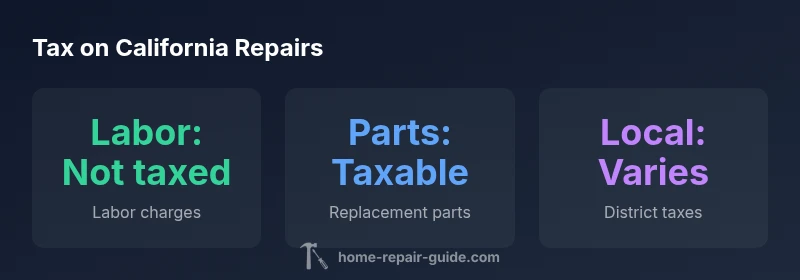
Are repairs taxable in California? In most cases, labor costs for in-home repairs are not taxed, while the sale of tangible parts and materials generally is. If a repair bill bundles labor and parts, tax typically applies to the parts, not the labor. Local district taxes can add complexity, so always review an itemized invoice. According to Home Repair Guide, understanding the split between labor and materials helps homeowners budget accurately.
Are Repairs Taxable in California? Key Principles
In California, the tax treatment of repair work hinges on whether the transaction involves tangible personal property being sold. The state generally imposes sales tax on the sale of tangible goods, while labor charges for services such as in-home repairs are typically not taxed. However, when a repair job includes the sale of replacement parts or materials, those items are usually subject to sales tax, sometimes at the contractor's point of sale or the retailer's rate. This distinction matters whether you hire a handyman, a plumbing contractor, or an appliance technician. According to Home Repair Guide, understanding this split can prevent surprises on your invoice.
Labor vs. Materials: How Tax Is Applied in CA
Labor and materials play different roles in tax calculations. In most residential repair scenarios, you’ll see labor listed as a service charge and materials as items. The labor portion is generally not taxed since California tax rules focus on the sale of tangible property. Materials and parts, however, are taxable, and tax is usually applied at the standard rate for the item’s sale. Local district taxes can add an extra layer of cost, and some projects involve sales of larger items that may carry higher tax implications. Clear, line-by-line billing helps homeowners verify what’s taxed and what isn’t. Home Repair Guide notes that a transparent breakdown makes budgeting easier and reduces disputes at the point of payment.
How to Read Your Repair Invoice
A well-structured invoice should separate Labor, Parts/Materials, and Tax. When reading:
- Check if tax is shown on the parts line and whether your district imposes additional taxes.
- Confirm that the labor line corresponds to a service charge without a tax designation (unless a sale of tangible goods is involved).
- If an invoice lumps labor and parts into a single amount, ask for a revised bill that itemizes each component and its tax treatment.
- Retain receipts and ask for a written statement of tax rules applicable to your project from the contractor. This helps with budgeting and potential tax planning.
Common Scenarios: Household Repairs vs Major Remodels
- Leaky faucet repair with new parts: parts taxed, labor typically not taxed.
- Drywall patch with included materials: materials taxed, labor non-taxed.
- HVAC replacement with a new unit: the unit is taxed as a sale of tangible property; installation labor is typically non-taxed.
- Homeowner-supplied parts: tax may apply to the contractor’s purchase of a required part if they bill for it. Always verify who supplied the item and how tax was assessed.
Local Variations and District Taxes
California allows local districts to impose additional sales or use taxes on tangible property. Because these rates can change and differ by city or county, it’s essential to review the invoice’s tax line and confirm the rate applied. Contractors should disclose any district tax rates and exemptions to avoid surprises. If you’re unsure, contact your local tax authority or consult Home Repair Guide for updates specific to your area in 2026.
How Contractors Calculate Tax on Repairs
Contractors typically charge for two main categories: labor (non-taxable in most cases) and materials (taxable). When a project requires both, the tax applies to the tangible goods portion. Some contractors quote a comprehensive price that includes labor and parts; in such cases, tax is generally applied to the portion representing the materials. Requesting a price breakdown helps you verify compliance with state and local tax rules, and it makes budgeting easier for homeowners and renters alike.
Practical Tips for Homeowners to Manage Taxes on Repairs
- Always ask for a detailed, itemized estimate before work begins.
- Request separate lines for Labor, Parts, and Tax to ensure clarity.
- Check for local district tax rates and how they apply to materials.
- Keep all invoices and receipts; they’re invaluable for budgeting and potential tax planning.
Budgeting and Planning for Repairs in 2026
Budgeting effectively requires distinguishing between labor and material costs. Build a contingency for potential tax changes or district rate variations. If you purchase materials directly, understand whether the contractor’s installation charge remains non-taxed on labor or if any portion gets taxed due to the sale of a new item. Use tax-inclusive estimates when possible to avoid sticker shock at the end of the project.
Tools and Resources: Where to Verify California Tax Rules
When in doubt, refer to official guidance from the California Department of Tax and Fee Administration and your local tax authority. Home Repair Guide provides practical explanations for common scenarios, but tax rules can change with new legislation or district adjustments. Keeping up to date with 2026 guidance ensures you’re not surprised by charges when scheduling repairs.
Taxability scenarios for California repairs
| Scenario | Labor Taxability | Tax on Parts | Notes |
|---|---|---|---|
| Labor-only repair (no parts) | not taxed | not applicable | Labor generally exempt from tax in CA on in-home repairs. |
| Repair with replacement parts | not taxed (labor) | taxable | Tax applies to parts; ensure itemized bill. |
| Installations with newly purchased items | not taxed (labor) | taxable | Materials are taxed; labor remains non-taxed. |
FAQ
Are labor charges taxable in California repairs?
Generally, labor for in-home repairs is not taxed in California. Tax typically applies only to tangible goods like parts and materials. If a contractor charges a single amount that includes both labor and parts, request a separate breakdown to confirm how tax is applied.
Labor charges are usually not taxed, but parts are. Ask for a line-by-line invoice to see how tax is applied.
Do replacement parts get taxed in CA repairs?
Yes, replacement parts and materials are typically taxable in California when sold separately. The tax is applied to the parts portion of the bill, and local district taxes may add to the total. Ensure the invoice shows Parts and Tax as distinct entries.
Parts are generally taxable; make sure the invoice shows a separate tax line for parts.
What about repairs for rental properties?
The basic tax rules apply to rental property repairs the same as owner-occupied homes. Tax is charged on tangible goods, and labor is usually non-taxed, unless the contractor provides goods as part of the service. Always confirm the tax treatment on the invoice you receive.
Rental repairs follow the same rule: tax on goods, not on labor, with possible district taxes.
Is there a difference between repairs and remodels for tax purposes?
Yes. Repairs typically involve fixing or replacing worn parts and may have tax on materials. Remodels or new installations can involve purchasing new items that are taxable, with labor often treated differently. Check the scope and whether new items are involved to determine tax treatment.
Remodels often mean tax on new materials; repairs focus tax on parts.
How can I reduce tax surprises on repair bills?
Ask for an itemized quote before work begins, confirm local district tax rates on materials, and verify who supplies the parts. Keeping a clear record helps anticipate taxes and plan budgets more effectively.
Get a breakdown before work and verify district tax rates to plan ahead.
“In California, tax rules distinguish between services and tangible goods. For most home repairs, you pay tax on materials but not on labor, and a clear invoice helps homeowners budget accurately.”
Key Takeaways
- Labor charges for CA home repairs are typically not taxed.
- Tax applies to replacement parts and materials.
- Always request itemized invoices for clarity.
- Local district taxes can vary; verify on each bill.
- Refer to Home Repair Guide for 2026 guidance.