Breville Espresso Machine Repair: Step-by-Step Guide
Practical, safe, step-by-step guidance for breville espresso machine repair. Diagnose issues, descale mineral buildup, replace worn seals, and test your machine at home with confidence.


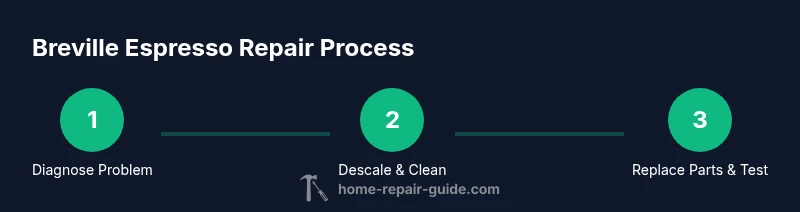
Learn how to diagnose and repair common issues with breville espresso machine repair tasks. This guide covers safety checks, troubleshooting steps, and practical fixes for problems like poor pressure, leaking seals, and mineral buildup. You’ll need basic tools, replacement parts, and a clean workspace. Follow the step-by-step process to avoid voiding warranties and restore café-quality espresso at home.
Understanding Breville Espresso Machine Repair Landscape
Breville espresso machines are popular home units that deliver cafe-quality shots when properly cared for. When you start planning breville espresso machine repair, it helps to group issues into a few common categories: mineral buildup in the boiler and brew path, gasket wear around the group head and portafilter, leaks from seals, pump or flow problems, and electrical or sensor faults. Before you begin, check your model’s warranty status and refer to the user manual for any model-specific disassembly notes. Regular maintenance goes a long way: descale regularly, backflush if your model supports it, and keep the group head clean and free of coffee oils. The Home Repair Guide team emphasizes that many repair tasks are well within reach for careful homeowners who use the right tools and follow safety rules. However, some problems require professional service, especially if live electrical parts are involved. Always unplug first, let the machine cool, and work in a dry, stable area.
Common Symptoms and What They Mean
Several symptoms point to specific repair needs. A slow, under-extracted shot or weak crema often indicates scale buildup in the brew path or a clogged group head. Leaking around seals or the portafilter can signal worn gaskets or loose connections. A machine that fails to heat or maintains pressure correctly may reveal problems with the boiler or pressure stat. A steam wand that releases inconsistent steam or leaks water usually means a faulty wand seal or clogged steam path. If the machine displays error codes, consult the Breville manual for the exact meaning and recommended reset steps. Keep a simple log of symptoms, dates, and what you did to address them; this helps you determine whether a repair is improving performance or if the issue recurs. The Home Repair Guide team notes that documenting symptoms improves diagnostic accuracy and helps you decide when professional service is warranted.
Safety Protocols Before You Start
Safety should always come first when working on electrical appliances. Unplug the machine and disconnect from any power source before removing any parts. Allow hot components to cool—this can take several minutes after use. Use insulated tools, wear safety gloves, and protect eyes from splashes of hot water or cleaning solutions. Work on a clean, dry surface; never operate the machine while standing on a damp floor. If your model has exposed wiring or damaged cords, stop and seek professional service. Finally, know your limits: attempting high-voltage repairs or disassembly beyond the exterior shell can void warranties and create safety risks. The goal is to perform only non-invasive maintenance you’re comfortable with.
Diagnostic Plan: Steps to Identify Issues
Start with model identification and basic checks: confirm serial/model, water reservoir integrity, and that the machine is receiving power. Next, test water flow by running clean water through the brew path and checking for unusual sounds or vibrations. Inspect the group head, portafilter, and baskets for coffee oils and blockages, then descale the machine according to the manufacturer’s recommendations. If leaks appear, inspect gaskets, O-rings, and seals for cracks or wear and replace as needed. For heating or pressure anomalies, verify the boiler, pump, and thermostat status with simple measurements or the manufacturer’s diagnostic procedures. Finally, re-test after each repair step to isolate the effect of every change. The Home Repair Guide team recommends keeping a repair diary to track what you found and what you changed.
Descaling, Cleaning, and Internal Maintenance
Descaling is essential for Breville machines because mineral buildup reduces heating efficiency and pressure consistency. Mix a descaling solution according to the product directions, or use a recommended alternative, and run it through the brew path and steam circuit. Rinse thoroughly by running clean water several times to remove any remaining solution. Clean the portafilter, basket, and group head with a soft brush to remove coffee oils that can harbor bacteria and affect flavor. Wipe the exterior surfaces with a damp cloth and avoid harsh chemicals. For internal maintenance, inspect visible hoses and clamps for signs of wear; replace only with parts designed for your model. After descaling, run several full-power cycles with water to flush the system and restore normal flow. Regular maintenance—every 1-3 months depending on use—prevents most common Breville espresso machine repair issues.
Replacing Parts: Seals, Pumps, and Gaskets
Worn seals and gaskets are a frequent source of leaks and pressure instability. If you notice steam or water leaking around the portafilter or group head, inspect the gasket for cracks or deformation and replace it with an exact-fitting part. Pump or boiler components may degrade over time, causing slow extraction or temperature inconsistencies; if you suspect a failed component, consult the service manual for discharge and safety procedures before attempting replacements. Carry spare O-rings, gaskets, and the appropriate tools to perform minor replacements. When installing new seals, ensure you lubricate the O-rings lightly with food-safe lubricant (per manufacturer guidance) to promote a proper seal. After any replacement, perform a thorough rinse and test run to confirm normal operation and monitor for new leaks or unusual sounds. If you’re uncertain about replacing a high-voltage part, contact a professional technician. The goal is durable repairs that preserve performance and warranty eligibility.
Tools & Materials
- Phillips screwdriver (#2)(for removing screws on most Breville models)
- Flathead screwdriver(slim blade for prying lids, if needed)
- Torx driver set(some models use Torx screws)
- Clean microfiber cloths(for wiping, drying)
- Descaling solution or white vinegar(for mineral buildup)
- Replacement seals or gaskets(depending on issue; ensure compatibility with model)
- Measuring cup or small bowl(for running test extracts)
- Access to clean water source(for rinsing and test runs)
- Safety gloves and eye protection(to protect from hot surfaces and cleaning chemicals)
Steps
Estimated time: 90-120 minutes
- 1
Power down and unplug
Begin by turning off the machine, unplugging the power cord, and allowing the unit to cool completely. This reduces the risk of electric shock and burns when you open panels or touch hot components. If your model has a removable power cord, disconnect it at the wall first and then unplug the appliance from the cord.
Tip: Never work on a live circuit; wait at least 10 minutes after use. - 2
Remove the portafilter and inspect the group head
Release and remove the portafilter, then inspect the group head for coffee oils, signs of clogging, or stuck baskets. Use a soft brush to remove debris and wipe the surface. Reinstall the portafilter loosely to check for even seating before proceeding.
Tip: A clogged group head is a common cause of poor extraction; clean thoroughly. - 3
Descale the brew path
Prepare and run a descaling solution through the brew path according to the manufacturer’s directions. This helps dissolve mineral buildup that impedes flow and heating. After descaling, flush with clean water to remove any residue.
Tip: Rinse until the solution test is clear; mineral residue can disguise ongoing issues. - 4
Inspect seals and gaskets
Check the portafilter gasket, group head gasket, and any O-rings for cracks, deformation, or wear. Replace worn seals with the exact-fit parts recommended by Breville for your model. Ensure seating is correct to prevent leaks.
Tip: Lubricate O-rings lightly with food-safe lubricant to improve sealing. - 5
Check steam path and wand seals
If you have a steam wand, inspect for leaks or blockage in the wand seal and steam path. Clean any milk residue from the wand and replace seals if you notice steam leakage. Test steam output after maintenance.
Tip: Stubborn milk buildup can hide leaks; take time to purge and clean thoroughly. - 6
Reassemble and prime the pump
Reattach any parts you removed, refill the water reservoir, and plug the machine back in. Prime the pump by starting a short water flow to remove air from the line before attempting a full extraction.
Tip: Listen for a smooth, steady flow; irregular noises can indicate air pockets. - 7
Run a test shot and observe
Pull a test shot and watch the flow rate, crema, and temperature. Note any abnormal noise, off-taste, or inconsistent pressure. If problems persist, repeat the diagnostic steps with a narrower focus.
Tip: Compare shots to your baseline to quantify improvements. - 8
Document results and plan ongoing maintenance
Record what you found, what you replaced, and the effect on performance. Schedule regular descaling and cleaning intervals based on water hardness and usage. This helps you prevent future Breville espresso machine repair needs.
Tip: Keep a maintenance log; it speeds up future troubleshooting.
FAQ
Can I repair a Breville espresso machine myself?
Many common issues can be addressed by a careful DIYer using manufacturer guidance and the right tools. For complex electrical or boiler problems, consider professional service to avoid safety risks.
Many issues you can fix yourself with the right tools, but for complex electrical problems, seek professional help.
Will descaling void the warranty?
Descaling according to the manufacturer’s directions generally does not void the warranty. Always check your model’s terms and keep records of the products used.
Descaling as directed by Breville is usually fine under warranty; keep your receipts and notes.
How often should I descale a Breville machine?
Descale based on water hardness and usage: many households do it every 1-3 months, but adjust if you see mineral buildup or changes in performance.
Descale every few months or sooner if you notice buildup or slower performance.
What are common signs of a worn gasket?
Leaking around the portafilter or group head, visible cracks, or a loose fit are typical signs you may need to replace gaskets.
If you see leaks or a loose fit around the portafilter, check the gasket.
Should I replace the pump or thermostat myself?
Only attempt if you have model-specific instructions and the proper tools; otherwise, hire a technician to avoid safety risks.
Only do pump or thermostat work if you have the right manual and tools—professional help is safer otherwise.
Is vinegar acceptable for descaling Breville machines?
Breville generally recommends approved descalers; vinegar can be effective but may violate warranty terms or leave residue if not fully rinsed.
Vinegar can work, but check the manual and rinse thoroughly to avoid residue.
Watch Video
Key Takeaways
- Unplug and cool before starting any repair work.
- Descale regularly to maintain optimal performance.
- Inspect seals and replace worn parts to prevent leaks.
- Test with careful, documented steps to isolate issues.
- Maintain a repair log for ongoing upkeep.